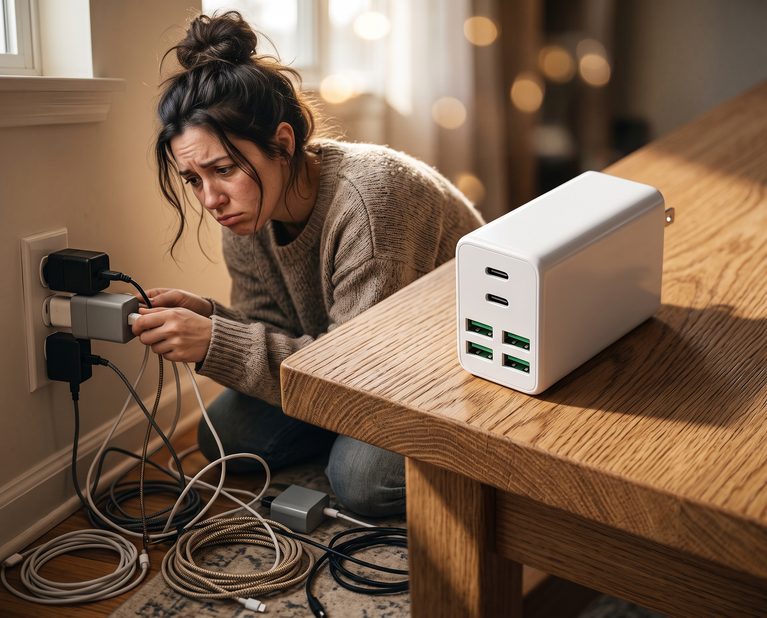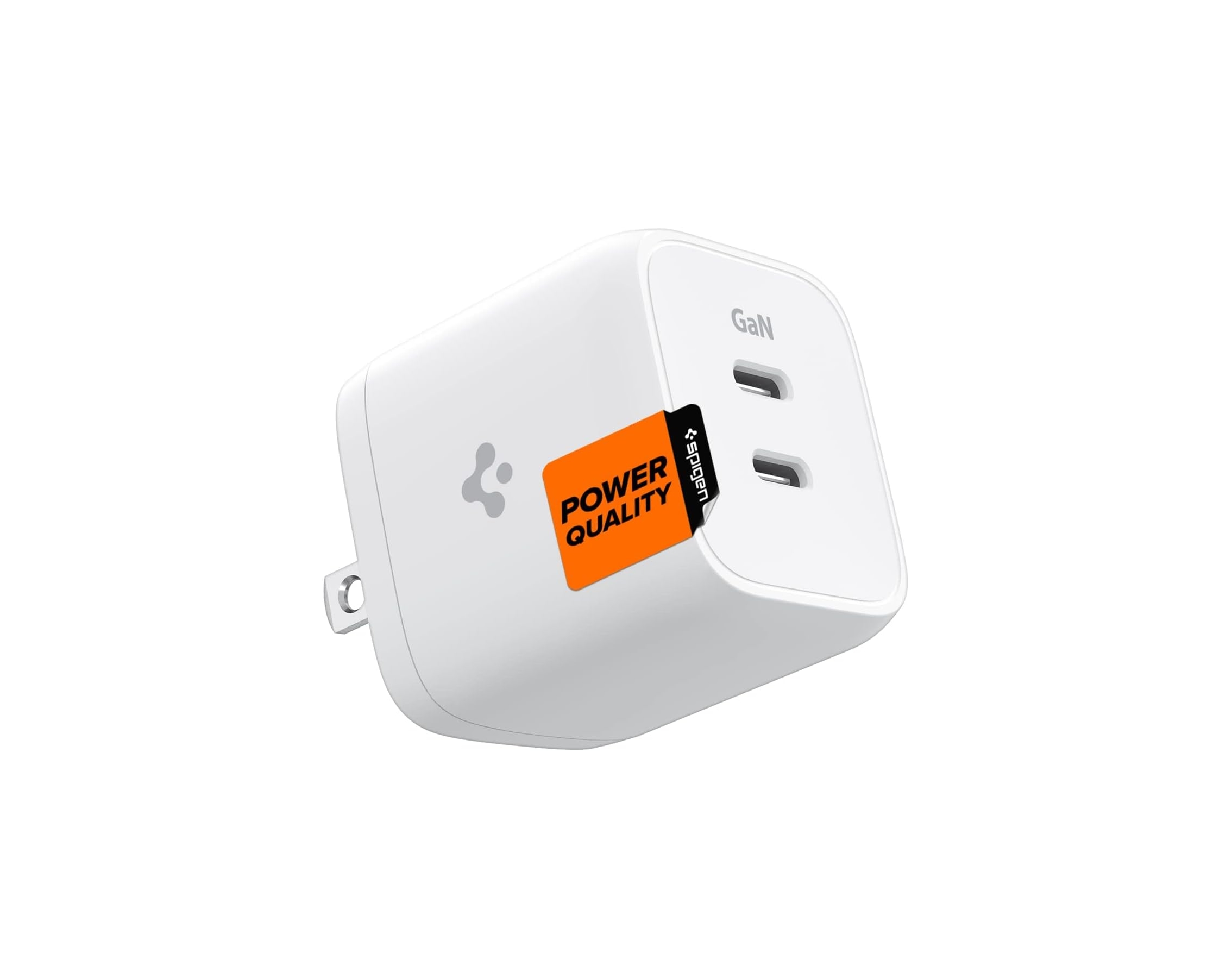
There used to be an unspoken hierarchy around outlets in shared spaces. Whoever got there first claimed the charger, the cable, the spot closest to the nightstand or the couch. The other person made do—stretched a cable across the bed, used a different outlet across the room, or just waited until morning. It wasn’t a fight, exactly, but it was a low-grade territorial negotiation that happened every night, so routine it became invisible.
That dynamic is starting to shift. Chargers with two USB-C ports have become common enough that the old assumption—one charger, one device—no longer holds. You plug in your iPhone, your partner plugs in theirs, and both charge from the same brick. The outlet is still singular, but the experience isn’t. What used to require two chargers and two outlets now happens with one of each.
The change sounds minor, but it’s altered the logistics of charging in ways that ripple through daily routines. Nightstands are less cluttered. Couples and roommates stop shuffling chargers back and forth or leaving spares in every room. The mental load of remembering whose charger is whose, or whether the living room outlet is taken, fades. It’s a small thing, not needing to negotiate who gets the outlet closest to the bed, but it’s one less friction point in a space full of them.
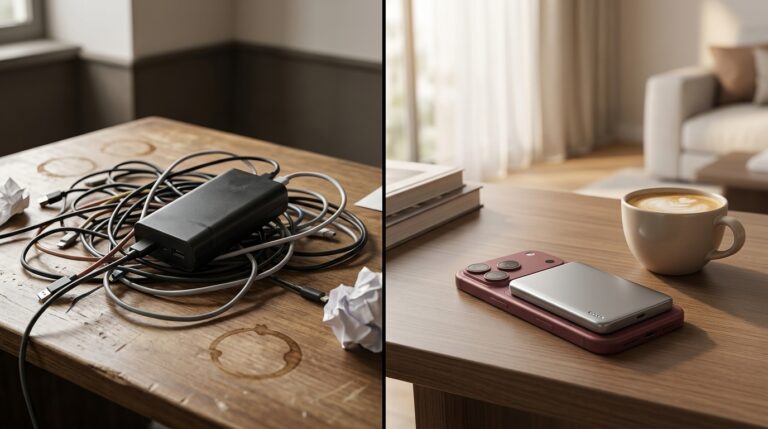
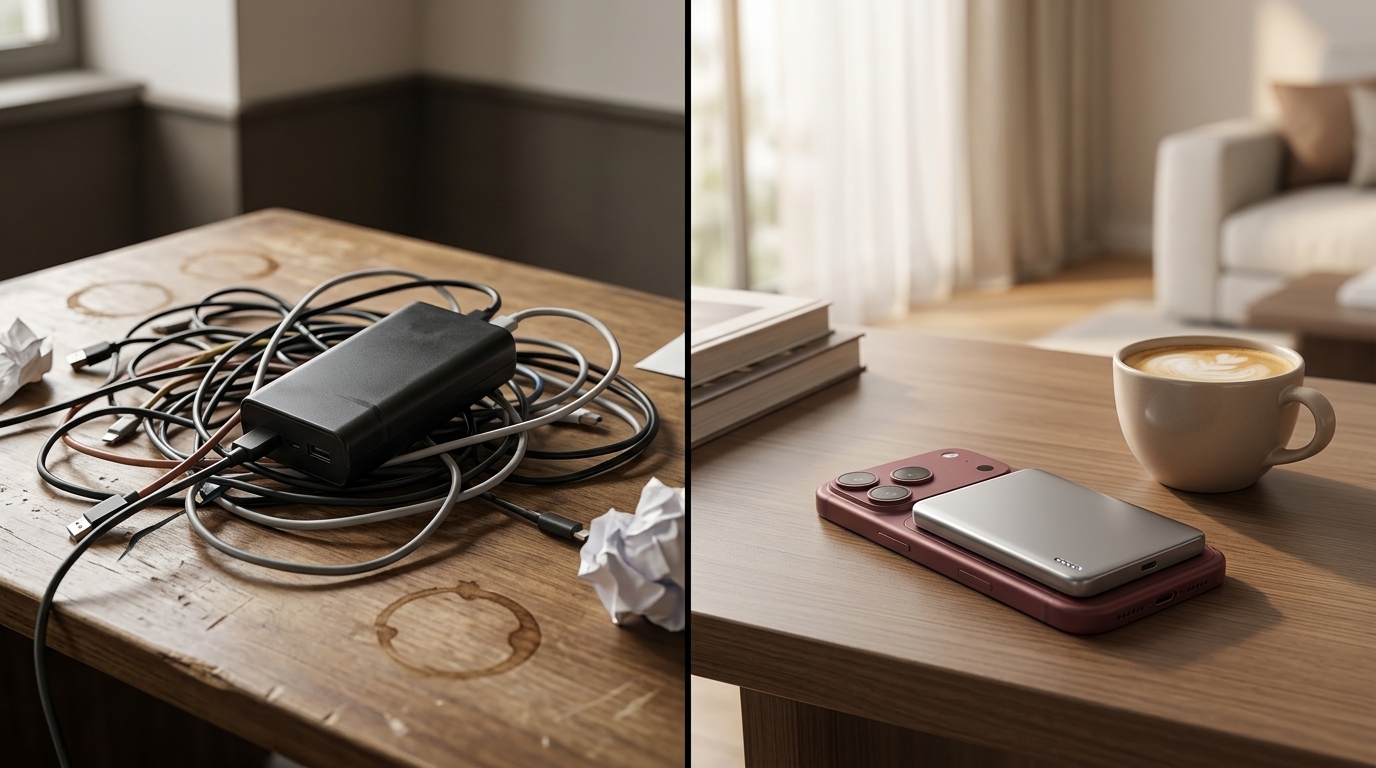
What’s striking is how much of this friction was accepted as normal. For years, the standard setup was one charger per person, each with a single port, each claiming its own outlet. That made sense when phones were the only devices people charged regularly. But the ecosystem has expanded—now it’s phones and AirPods and Apple Watches and iPads, sometimes all in the same household, sometimes all owned by the same person. The infrastructure didn’t scale with the demand. People kept buying more chargers, stashing them in drawers, losing track of which one was which.
Dual-port chargers collapse some of that sprawl. You still need cables, but you don’t need redundant bricks. The outlet that used to serve one device now serves two, which in practice means fewer adapters cluttering power strips, fewer chargers packed for trips, fewer moments where someone realizes they forgot theirs and has to borrow. It’s not revolutionary, but it’s noticeably more efficient, the kind of thing you don’t appreciate until you’ve experienced it and then can’t quite go back.
There’s also an economic angle. Dual-port chargers used to cost significantly more than single-port ones, enough that buying two separate chargers felt like the better deal. But prices have compressed—some dual-port models are currently listed on Amazon with an 80 percent discount—which has made them accessible enough that people are switching not because they need to, but because the cost no longer justifies keeping the old setup.
Not everyone has made the jump. Single-port chargers still dominate, especially the ones Apple ships with devices or the ones people bought years ago and see no reason to replace. But in households where charging has become a shared activity—where two people are trying to plug in at the same time, in the same space—the appeal of a second port is hard to ignore. It doesn’t solve every problem. It doesn’t make charging faster or batteries last longer. But it does solve the problem of scarcity, the feeling that there’s never quite enough outlets or chargers to go around.
What’s interesting is how invisible this shift is from the outside. You can’t tell by looking at someone’s nightstand whether they’re using a dual-port charger or two single-port ones. The difference only becomes apparent in the moment of use, when someone plugs in and realizes they don’t have to unplug something else first. It’s the kind of improvement that doesn’t announce itself, that only matters in the small, repeated interactions that make up a routine. But those interactions add up, and for the people who’ve switched, the change feels less like an upgrade and more like the removal of something that shouldn’t have been there in the first place.
"Note: Readers like you help support The Apple Tech. We may receive a affiliate commission when you purchase products mentioned on our website."