
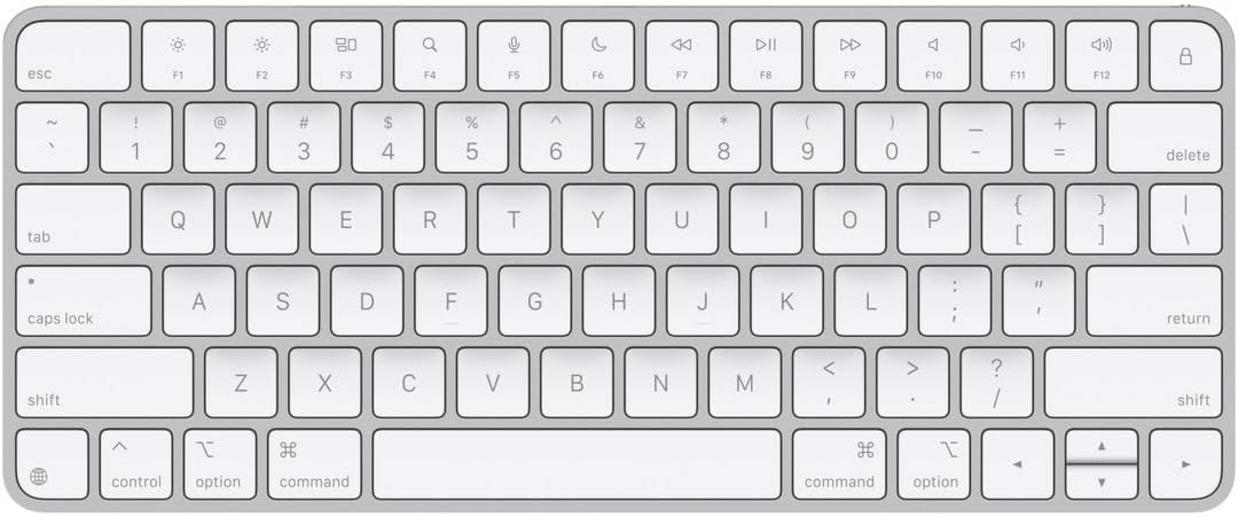
In a typical home office, the Apple Magic Keyboard often sits slightly askew alongside a MacBook, quietly defining an invisible boundary in the day’s workflow. It has become less of an object and more of a habitual partner for typing—its low-profile keys integrated into the desk’s landscape. Over weeks, using its Bluetooth connection feels less like a choice and more like an unspoken rhythm of words and commands.
As the sun shifts, the desk transforms from a command center to a resting place. A thin Lightning cable snakes around a charging stand, interwoven with earbuds and adapters. Each evening, fingers trace that path, adjusting its loops to avoid tangles. The keyboard’s battery life no longer registers as an interruption but as a gentle signal, prompting a pause in typing and a momentary recalibration of priorities before another half hour at the screen.
In the dim glow of a nightstand lamp, there’s an almost unconscious reach for the slender cable that powers the keyboard. One hand hovers over the keys, the other rummages in the bedside drawer for the connector. For a fleeting second, the tap-tap-tap of empty keys underscores a quiet dependency. It is in that minor frustration—a blinking LED, a brief connection loss—that the routine registers its presence, a small reminder of the material support behind virtual fluency.
Packing the same keyboard into a backpack alters the relationship further. It lies between notebooks and chargers, its pale surface brushing against the fabric lining. Sliding the laptop into place atop the bundle, one adjusts the keyboard’s angle to save space. This practice recalibrates expectations of portability: a thin aluminium slab that must jostle with power bricks and cables, whispering that mobility also requires negotiation.
Morning rituals include a glance at the MacBook’s Bluetooth menu, pausing to note that the Magic Keyboard hovers at eighty-three percent. The numbers elicit a predictable anxiety—enough for a day of email but perhaps not a cross-country flight. Over time, this small check evolves into a background habit, layered onto coffee routines and commute playlists, folding charging thresholds into the mental map of readiness rather than a technical afterthought.
This quiet choreography extends beyond the MacBook. When an iPad emerges from its case, the same keyboard slips into the narrative, imparting a uniform feel to notes or sketches. It is a subtle normalization: one keyboard to rule interactions across devices. The frictionless switch adds comfort but also underscores the dependence on a single peripheral, a tangible instance of how the Apple ecosystem molds the ways devices coexist and cohere.
Recent listings reflect 20% reductions compared with earlier availability.
This product is available on Amazon.
Check current availability here
How long does the Magic Keyboard battery last on a single charge?
The Apple Magic Keyboard typically holds power for about a month under standard typing use before requiring a recharge.
Can I use a USB-C charger to power the Magic Keyboard?
Yes. The keyboard uses a Lightning to USB-C cable, allowing it to charge from any USB-C power source including MacBook adapters.
How do I switch the Magic Keyboard between a MacBook and an iPad?
Open Bluetooth settings on both devices, pair once, then select the keyboard in the Bluetooth menu to switch focus as needed.
Will the Magic Keyboard retain its charge during extended travel?
If fully charged before departure, the keyboard can typically maintain functionality for several days of intermittent use without needing a midday recharge.
Verdict
In observing the subtle currents of a Bluetooth keyboard’s charge and placement, one sees a microcosm of wider adaptations to device ecosystems. The Magic Keyboard’s regular visits to a charging spot, its migration between laptop and tablet, and the minor anxieties over battery percentages reveal how low-level rituals shape daily productivity. These invisible routines persist out of habit, becoming so normalized that the friction they once introduced now quietly coordinates the rhythm of creative and administrative work.
"Note: Readers like you help support The Apple Tech. We may receive a affiliate commission when you purchase products mentioned on our website."