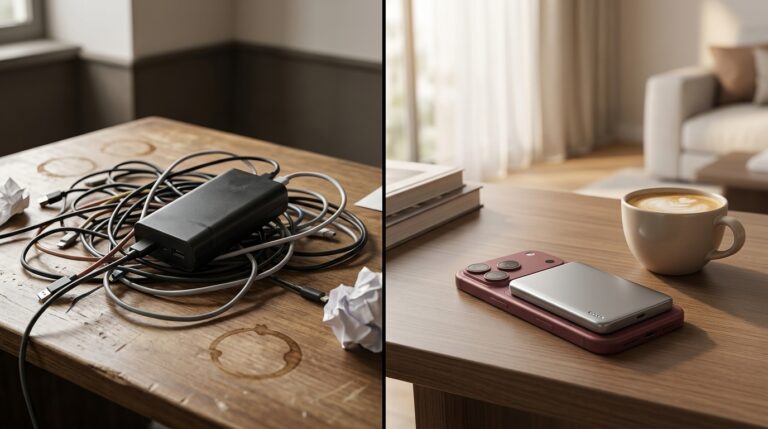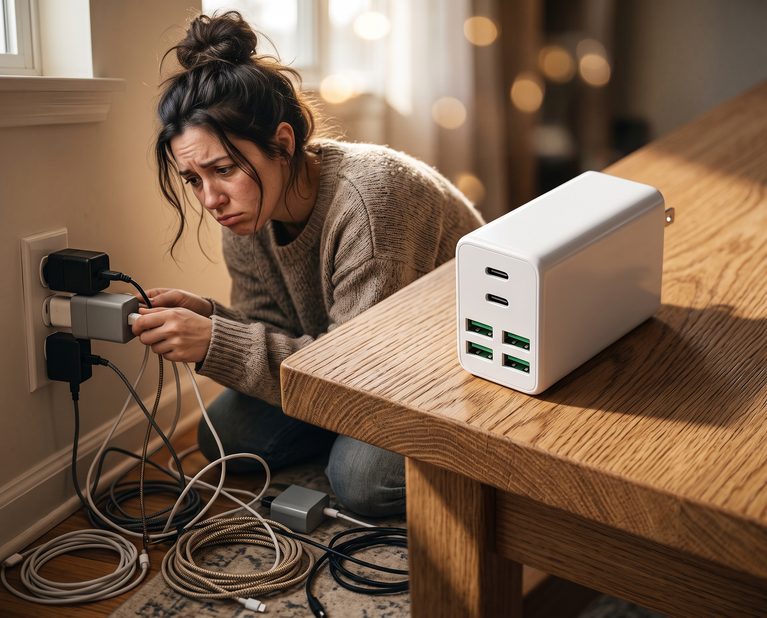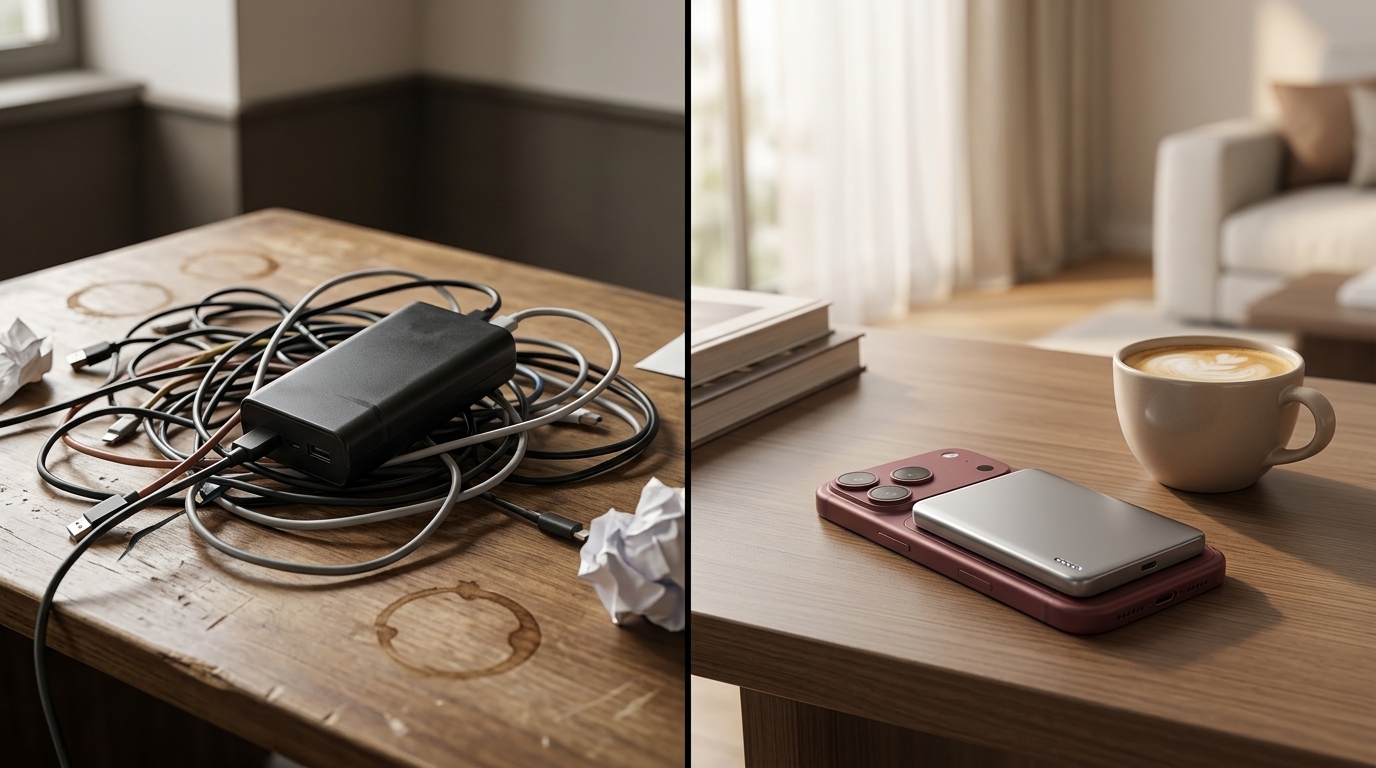

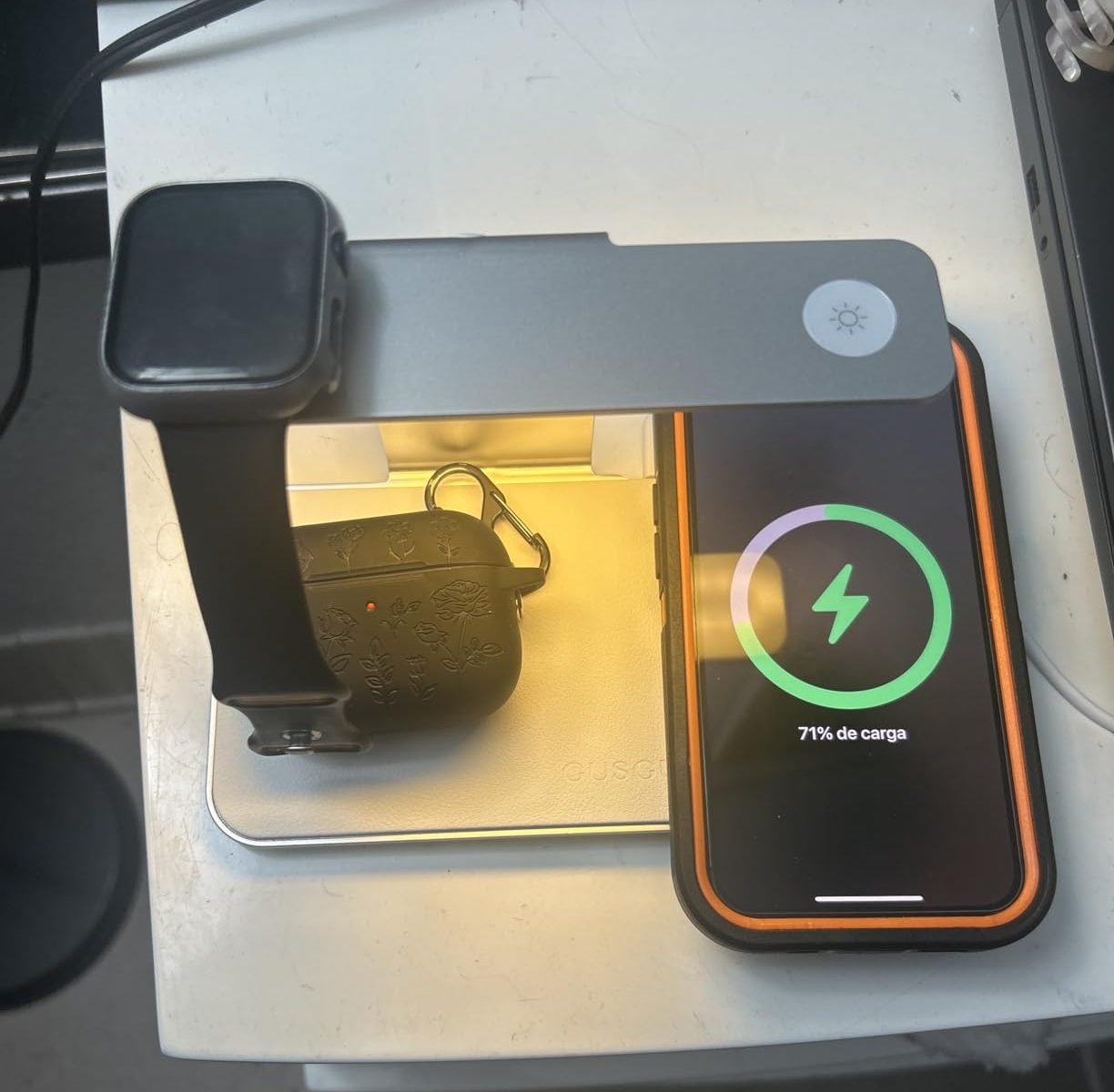
Nightstands used to be simple. A lamp, maybe a book, and whatever cables happened to be nearby. But as the Apple ecosystem expanded, so did the number of devices that needed to charge overnight. Three devices—iPhone, Apple Watch, AirPods—became the standard loadout, and each one brought its own cable. The tangle was functional but inelegant, and the market responded with all-in-one charging stations that promised to consolidate the mess.
The physical consolidation is real. A single stand replaces three separate cables and three separate charging pucks. The visual clutter drops, and the nightstand reclaims some of its surface area. For users who value minimalism or simply don’t have much space to begin with, this is a tangible improvement. The devices stack vertically or nest together, and the charging process becomes a single gesture: place everything on the stand and walk away.
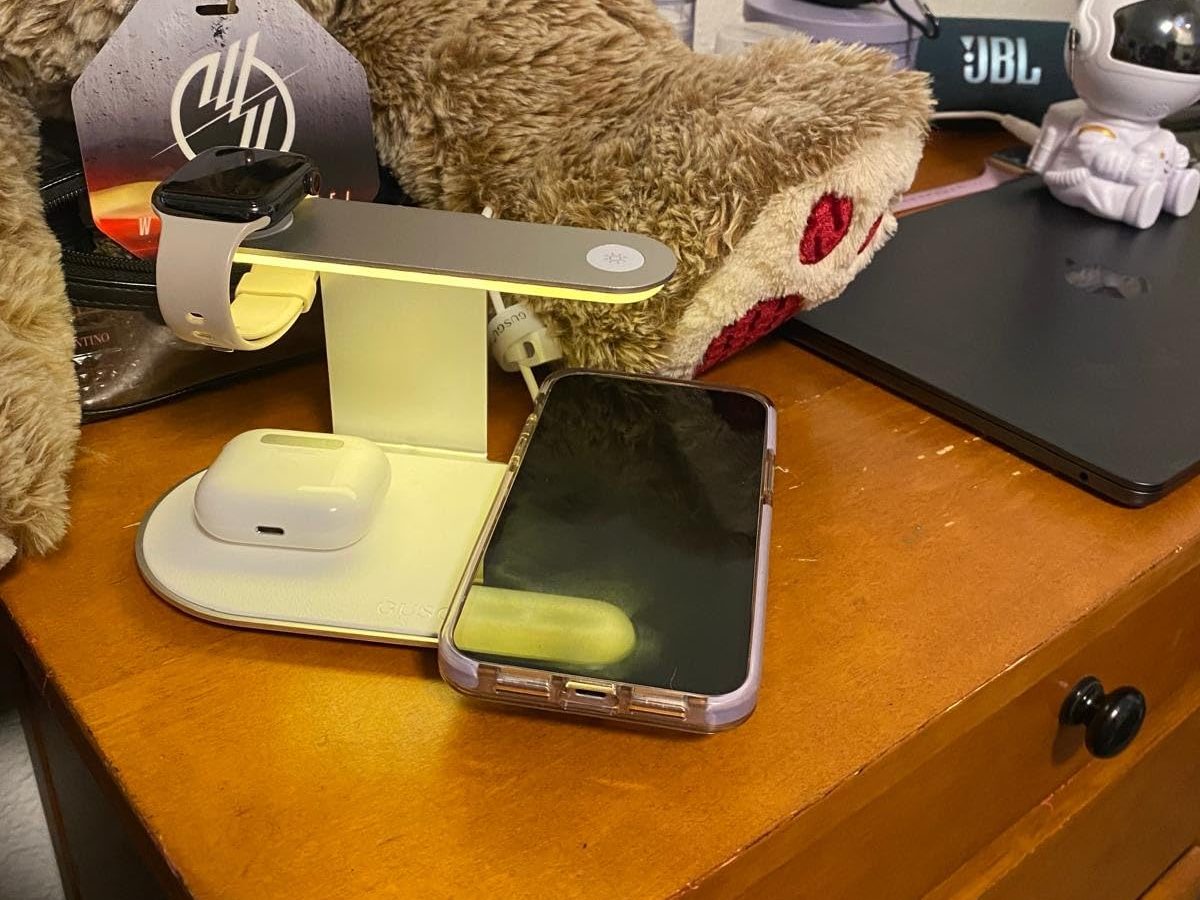
But the stand introduces its own presence. Unlike individual cables that can be tucked behind a lamp or hidden beneath a drawer, a charging station is a visible object. It has a footprint, often larger than anticipated. It has a design language—matte plastic, aluminum accents, subtle curves—that either complements the room or clashes with it. And in many cases, it has a light.
The nightlight feature is where the tension becomes most apparent. Some stands include adjustable ambient lighting, meant to provide soft illumination for late-night phone checks. But light preferences are personal. What one person finds soothing, another finds intrusive. The light can’t be fully disabled on some models, or the controls are buried in settings that require digging through documentation. The result is a low-level irritation that accumulates over weeks: the stand works, but it glows, and the glow is either helpful or maddening depending on the night.
SIMILAR
iPhone and MacBook users are compensating for a port problem Apple created
iPhone users are eliminating the tangled cable from every car charging session
iPhone users are transforming nightstands into silent charging infrastructure
Charging speed is usually adequate but not exceptional. A 15-watt max for the iPhone is faster than older standards but slower than wired charging. For overnight use, speed is largely irrelevant—eight hours is more than enough time to reach full charge. What matters more is alignment. MagSafe makes this easier, but not foolproof. A phone placed slightly off-center might not charge at all, and discovering this in the morning, when the battery is still at 20 percent, is a small failure that undermines the station’s entire value proposition.
The Apple Watch charging component is usually reliable, but the AirPods section is more variable. Some cases charge wirelessly without issue. Others require precise placement. Older AirPods models without wireless charging don’t work at all, which means the stand’s third slot goes unused, a visible reminder of ecosystem fragmentation.
Previously listed at $35.99, current listings hover around $32.39, positioning this category in the mid-tier of Apple ecosystem charging solutions. The pricing reflects a market where multi-device stands are common enough to be affordable but premium enough to signal intentional design.
The broader shift is that charging has become furniture. It’s not just a utility—it’s an object that lives in a room, that takes up space, that has aesthetic and functional demands. The nightstand, once a passive surface, is now an active site of device management, and the charging station is both the solution and the new problem.
"Note: Readers like you help support The Apple Tech. We may receive a affiliate commission when you purchase products mentioned on our website."