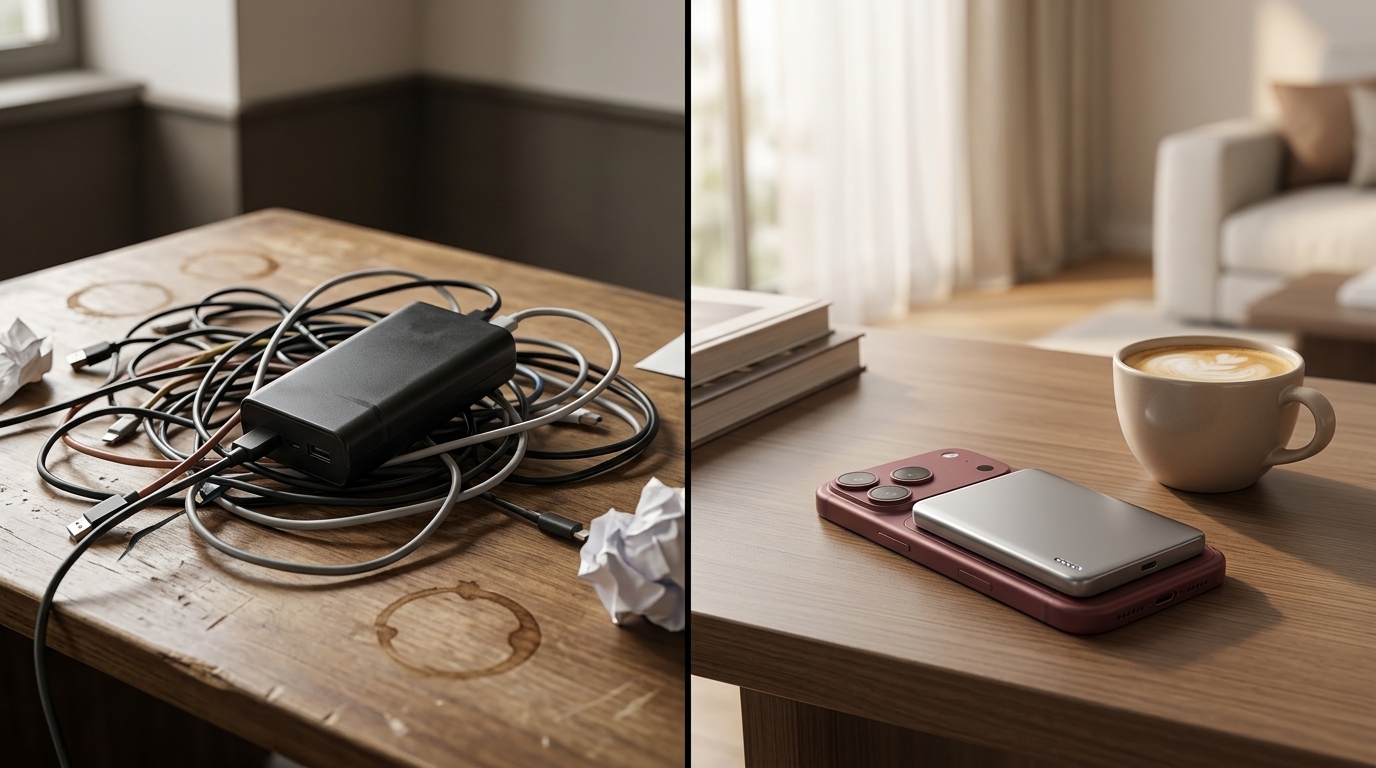
Battery packs used to live in drawers, pulled out only for long trips or anticipated heavy use days. That pattern has reversed. For many iPhone users, a compact portable charger now lives in a pocket, bag, or car console as a matter of routine. The shift reflects less about battery technology failing and more about usage patterns intensifying.
Compactness has become the defining feature. A battery pack that’s too large to carry comfortably gets left behind, which defeats its purpose. The ideal form factor is one that slips into a pocket alongside the phone itself, adding minimal bulk but meaningful capacity.

Power delivery standards matter more than raw capacity. A 10,000mAh battery that charges slowly feels less useful than a smaller pack that delivers power efficiently. Users have learned to look for fast-charging support, understanding that a rapid top-up during a lunch break can extend the phone’s usability for hours.
USB-C input and output have simplified the ecosystem. The same cable that charges the iPhone can now charge the battery pack, eliminating the need to carry multiple cables. This convergence around a single standard has made portable charging feel less cumbersome.
SIMILAR
iPhone and MacBook users are compensating for a port problem Apple created
iPhone users are eliminating the tangled cable from every car charging session
iPhone users are transforming nightstands into silent charging infrastructure
The decision to carry a battery pack is no longer about preparing for disaster. It’s about eliminating the low-level anxiety that creeps in when the battery icon drops below fifty percent and the day is only half over. The pack is insurance against uncertainty.
Multiple output ports remain relevant even on compact packs. Users don’t just charge their own phones; they help others. Sharing a battery pack during a group outing has become a small social gesture, made easier when the pack can serve two devices at once.
Trust in a battery pack builds over repeated use. The first few charge cycles determine whether the pack will become a daily carry or get relegated to a travel bag. If it charges quickly, holds its own charge over days of inactivity, and doesn’t overheat, it earns its place in the routine.
Previously listed at $25.99, current listings hover around $19.99, a price point that has made compact battery packs accessible enough to become standard everyday carry items rather than occasional-use accessories reserved for specific scenarios.
"Note: Readers like you help support The Apple Tech. We may receive a affiliate commission when you purchase products mentioned on our website."