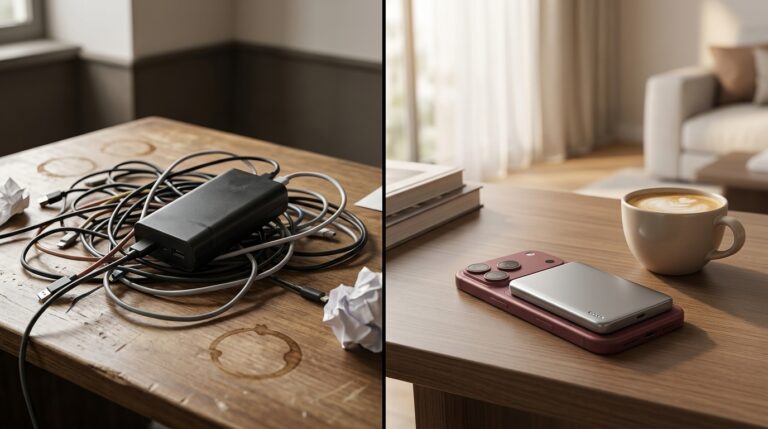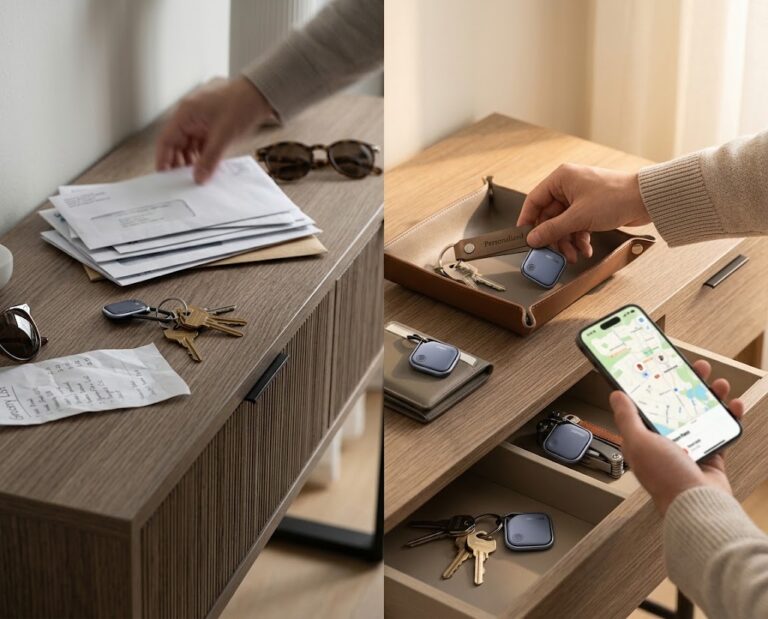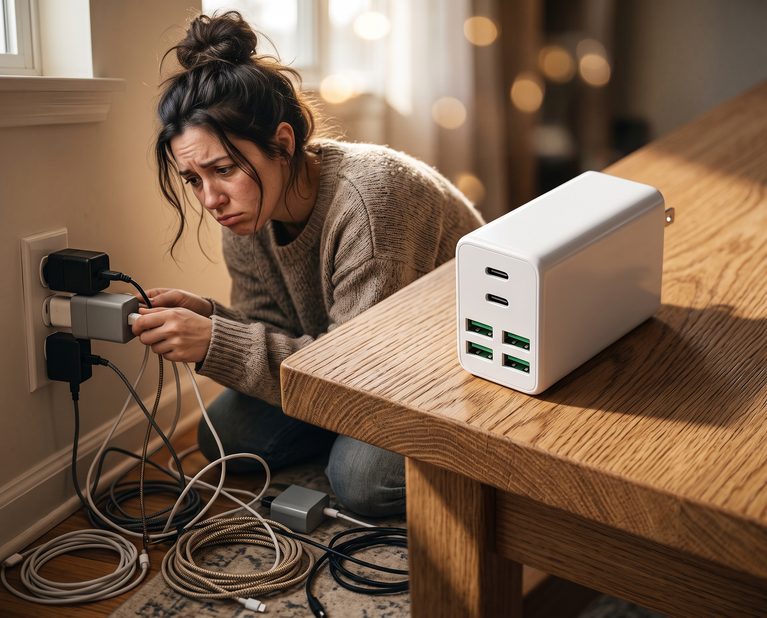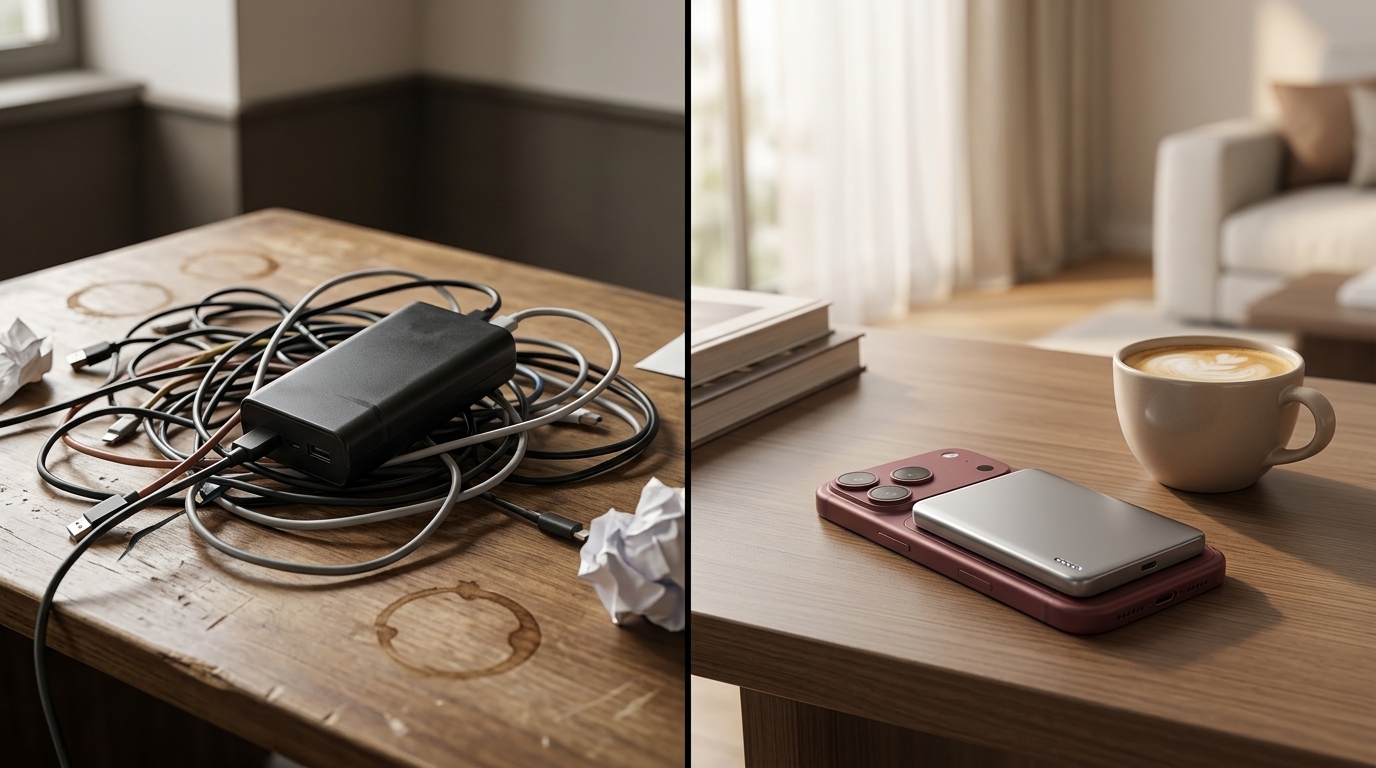


Device ownership has scaled faster than outlet availability. A household with multiple iPhones, Apple Watches, and AirPods quickly exhausts the convenient charging locations. The bedroom nightstand can’t accommodate everyone’s devices, which has prompted the rise of communal charging stations in shared spaces.
Wireless charging has made these shared stations more practical. There’s no competition for cables, no untangling required, and no confusion about whose charger is whose. Devices simply rest on designated spots, and charging begins automatically.
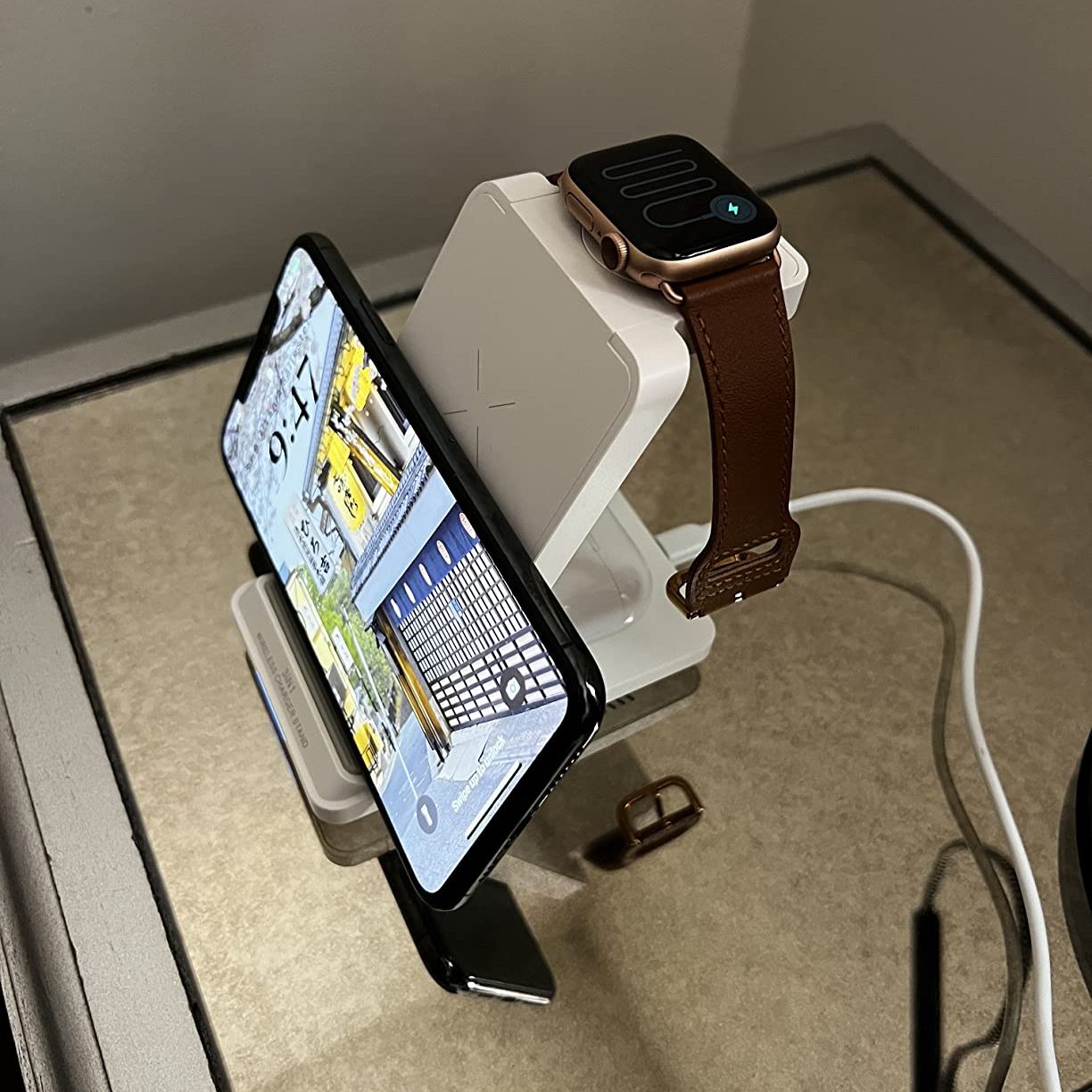
The Apple Watch complicates the design. Its proprietary charging puck doesn’t share infrastructure with other devices, so any multi-device station must account for it separately. The most successful designs integrate the watch charger seamlessly rather than treating it as an afterthought.
Speed across multiple devices becomes the hidden variable. A station that charges one iPhone quickly might slow down significantly when asked to charge an iPhone, Apple Watch, and AirPods simultaneously. Users have learned to pay attention to total wattage and how it’s distributed across devices.
SIMILAR
iPhone and MacBook users are compensating for a port problem Apple created
iPhone users are eliminating the tangled cable from every car charging session
iPhone users are transforming nightstands into silent charging infrastructure
Placement matters more in shared spaces than in bedrooms. A charging station in the kitchen or living room is visible to guests, which means aesthetics carry weight. Users gravitate toward stations that look intentional, that read as furniture rather than tech clutter.
The stand versus pad debate has largely settled in favor of stands. A pad requires laying the phone flat, which makes notifications harder to see. A stand props the phone at an angle, allowing it to function as a glanceable display even while charging—useful for checking the time, monitoring a timer, or seeing incoming messages.
AirPods charging has become the baseline expectation. Any multi-device station that doesn’t accommodate the AirPods case feels incomplete. The addition is small, requires minimal power, and rounds out the ecosystem coverage that users expect from a unified charging solution.
Previously listed at $25.58, current listings hover around $22.98, a range that reflects the maturation of the multi-device wireless charging market as more households adopt them as permanent fixtures in shared spaces rather than optional accessories confined to individual bedrooms.
"Note: Readers like you help support The Apple Tech. We may receive a affiliate commission when you purchase products mentioned on our website."