

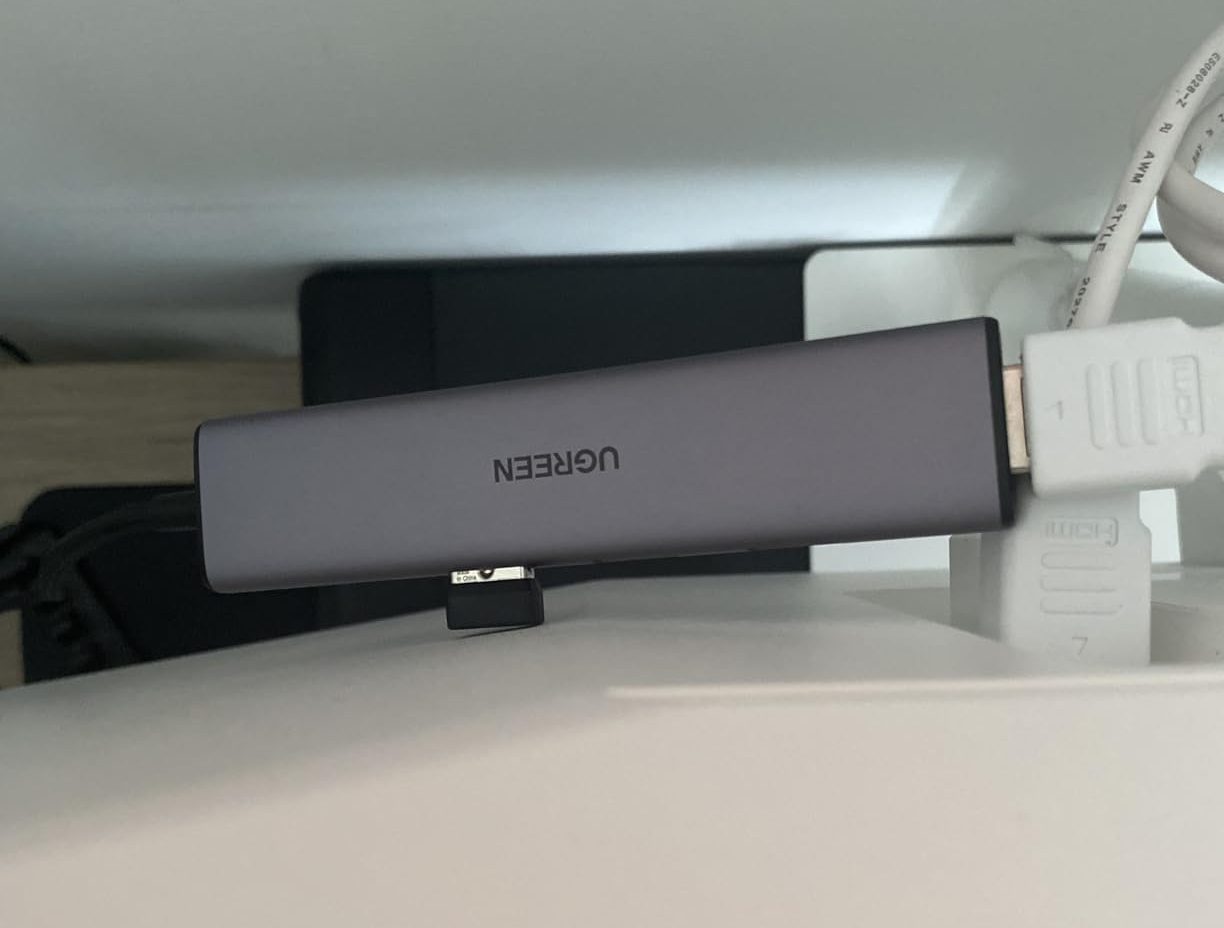
When Apple removed legacy ports from MacBooks and went all-in on USB-C, the decision was presented as simplification: one port type for everything. In practice, it meant most MacBook users immediately needed an adapter to connect the devices they already owned. HDMI monitors, USB-A flash drives, SD cards, external hard drives—none of them spoke USB-C natively. The multi-port hub became mandatory infrastructure, a small rectangle that lived in laptop bags and turned two or four USB-C ports into five or six usable connections. The hub wasn’t an upgrade, it was a translation layer between the laptop Apple built and the world that still existed around it.
The five-in-one configuration reflected the most common missing connections: HDMI for external displays, USB-A for older peripherals, and pass-through power delivery so the hub didn’t consume the only charging port. That combination handled most scenarios, but it also highlighted how much the MacBook relied on external hardware to achieve basic connectivity. The laptop itself became thinner and lighter, but only because the hub absorbed the complexity. The dongle didn’t fail—it just became the most essential accessory no one wanted to need.
iPad Pro users encountered a similar problem when Apple added USB-C to tablets. The port enabled external monitor connections and faster data transfer, but it also meant the iPad needed a hub to connect multiple devices simultaneously. The same five-in-one adapter that worked with MacBooks also worked with iPads, which created a strange ecosystem moment: the hub became a shared accessory across two device categories that Apple designed to operate independently. The universality was convenient, but it also underscored that Apple’s port reduction strategy created friction across its entire product line.
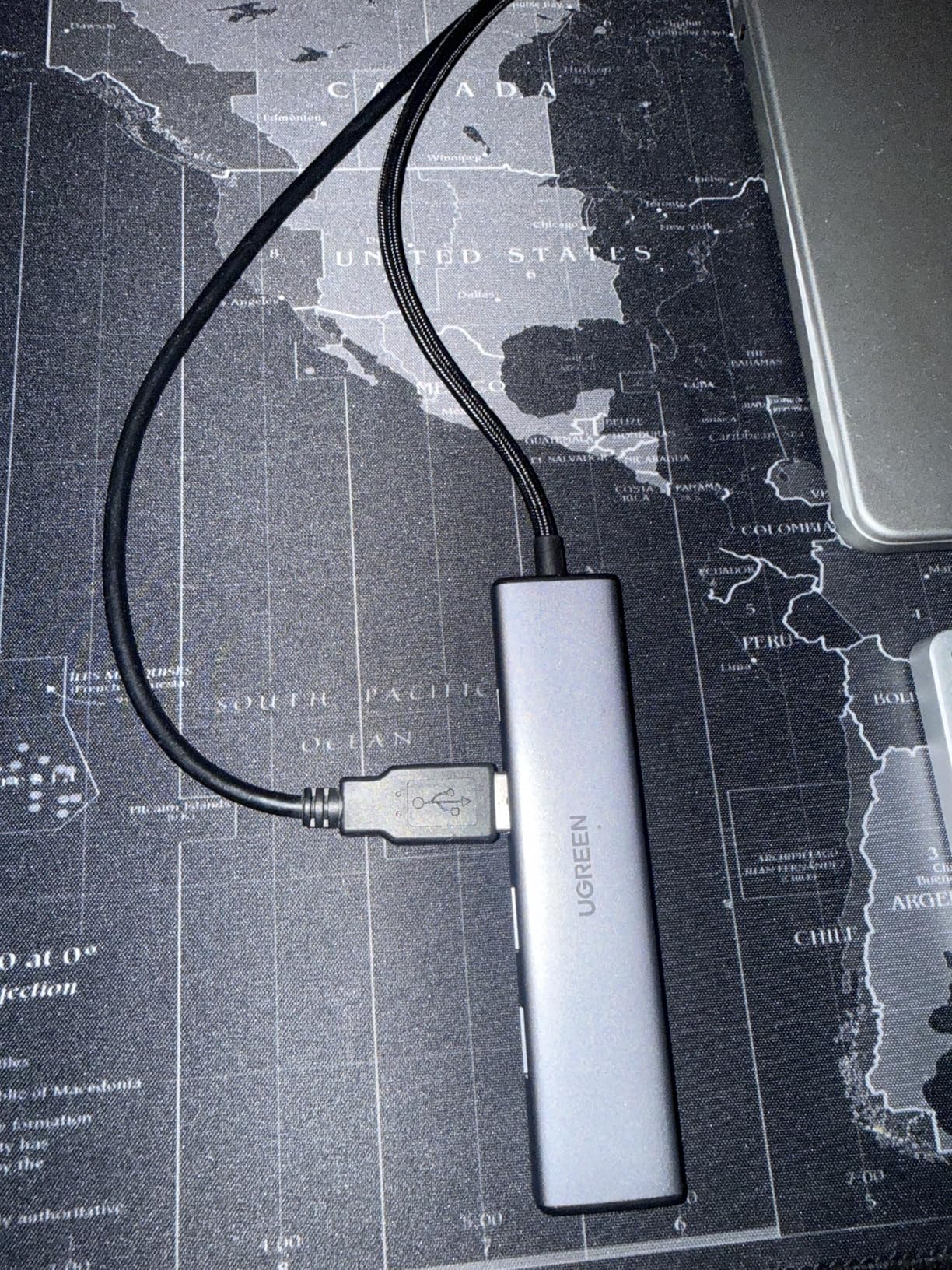
The power delivery feature mattered more than most people initially realized. Early USB-C hubs consumed the laptop’s charging port, which meant choosing between connectivity and battery life. The pass-through design solved that by routing power through the hub to the laptop while simultaneously powering the connected devices. But that routing introduced a new failure point. If the hub malfunctioned or the cable frayed, the laptop wouldn’t charge properly, even though the charger itself was fine. The hub became a single point of failure for both connectivity and power, which raised the stakes of its reliability.
The HDMI output supported 4K resolution, but only at specific refresh rates depending on the hub’s chipset. That limitation wasn’t always clear from the product description, and people often discovered it only after connecting to a high-refresh-rate monitor and finding the display capped at thirty hertz instead of sixty. The hub worked, but with caveats that only became apparent during use. For most users, that compromise was acceptable. For anyone who cared about display performance, it was a quiet source of frustration that accumulated over months of daily use.
iPhone 15 and 16 Pro models added USB-C, which meant the same hub that worked with MacBooks and iPads could now theoretically connect to phones. But the phone’s limited power output and iOS restrictions on external device support made most hub features irrelevant. The phone could charge through the hub and display video via HDMI, but it couldn’t power multiple USB peripherals the way a MacBook could. The hub’s compatibility with iPhones was technically accurate but practically limited, another example of how USB-C standardization created the illusion of interoperability without always delivering it.
Previously listed at sixteen dollars, current versions of these five-in-one USB-C hubs appear near ten dollars, a price drop that reflects their ubiquity. The hub is no longer an optional accessory—it’s assumed infrastructure for anyone using a modern MacBook. The cost signals commodification. People don’t research hub purchases anymore, they just add one to the cart alongside the laptop itself. The hub solved the port problem Apple created, but it did so by becoming a permanent dependency that users couldn’t avoid and manufacturers could barely differentiate. The dongle won by default.
"Note: Readers like you help support The Apple Tech. We may receive a affiliate commission when you purchase products mentioned on our website."