There’s a specific pressure that accompanies solo travel in the iPhone era: the expectation that you’ll return with photographic evidence not just of the places you visited, but of yourself in those places. A sunset over Santorini means nothing to your social circle if you’re not visibly in frame. A hiking trail in Patagonia demands proof you were there, not just that your camera was.
This creates a logistical problem Apple never designed for. The iPhone’s camera assumes either a photographer or a selfie—someone else taking your picture, or you holding the phone at arm’s length. But solo travel breaks that binary. There’s no one to hand the phone to. Arm’s length creates awkward angles and limited framing. The solution, increasingly, is the tripod: a device that lets you position the phone at a distance, frame yourself properly, and trigger the shutter remotely while you pose as if someone else captured the moment.
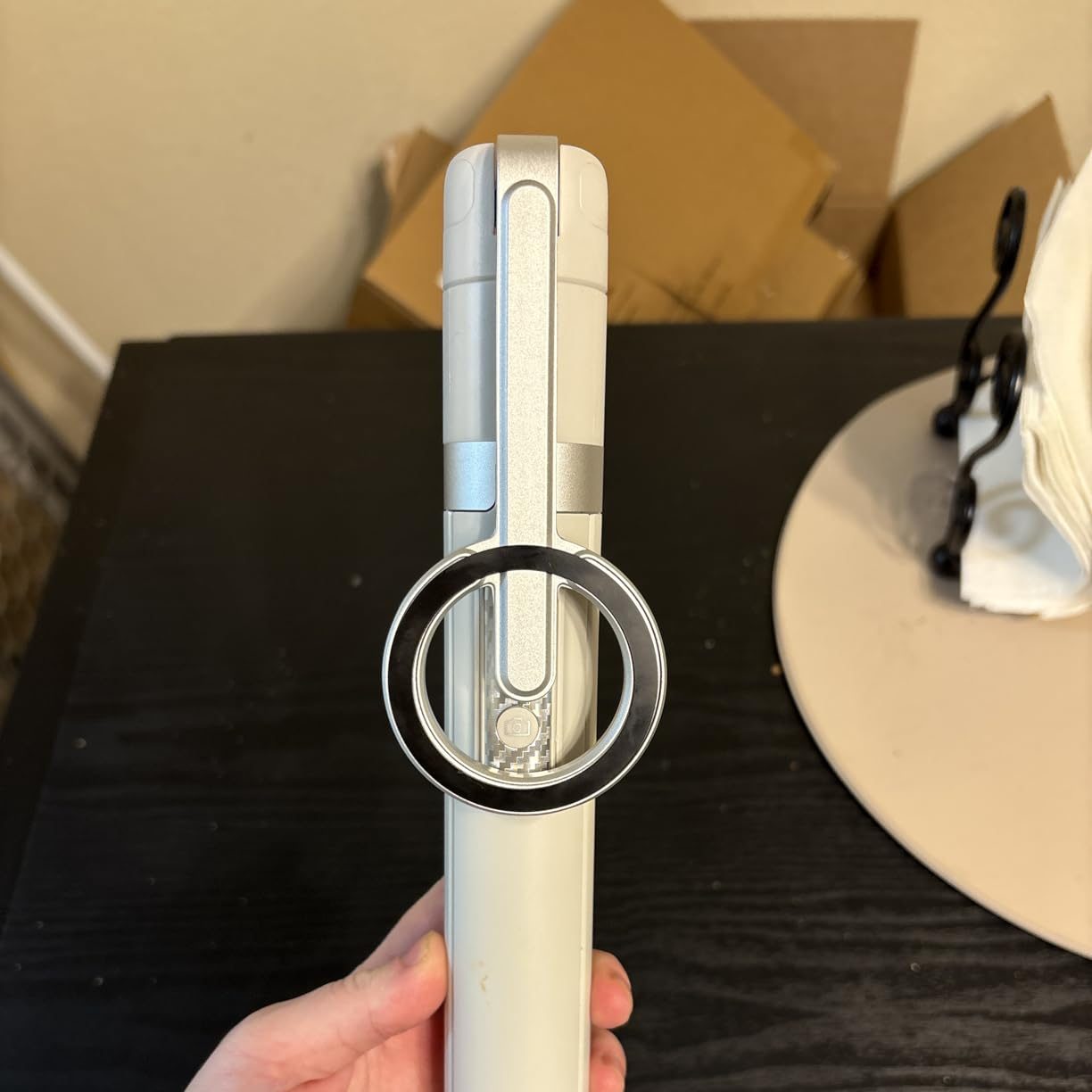
What’s notable is how elaborate this setup has become. The tripod extends to 68 inches—tall enough to simulate eye-level photography from several feet away. The magnetic mount snaps the iPhone into place without fumbling with clamps or clips. The remote trigger allows you to take multiple shots from a distance, adjusting your pose between frames, iterating until you get the shot that looks effortless even though it required fifteen attempts and five minutes of setup.
This behavior exposes a tension between how people travel and how they’re expected to document that travel. Solo travel is, by definition, a solitary experience. But Instagram, iMessage, and social expectation demand proof that’s visually indistinguishable from accompanied travel. The tripod becomes the technological workaround—a way to manufacture the aesthetic of companionship while traveling entirely alone.
SIMILAR
iPhone and MacBook users are compensating for a port problem Apple created
iPhone users are eliminating the tangled cable from every car charging session
iPhone users are transforming nightstands into silent charging infrastructure
The magnetic attachment reveals MagSafe’s unintended utility. Apple built it for charging and wallet attachment, but users co-opted it for photography infrastructure. The magnetic hold is strong enough to keep the iPhone stable during long exposures or windy conditions, and the snap-on convenience means the tripod doesn’t require fiddly adjustments every time you set up a shot. It’s faster than a traditional clamp, and speed matters when you’re trying to capture a moment before the light changes or other tourists wander into frame.
What’s lost in this setup is spontaneity. Solo travelers carrying a 68-inch tripod aren’t casually snapping photos—they’re staging them. Each shot requires scouting a location, extending the tripod, positioning the phone, framing the composition, walking into place, triggering the remote, reviewing the result, and often repeating the entire process. The act of photographing yourself becomes a multi-step production that can consume twenty minutes of a trip meant to be about experiencing the place, not documenting it.
Yet the behavior persists and scales. Travel influencers pioneered it, but it’s trickled down to everyday solo travelers who simply want a few good photos to share. The tripod becomes standard packing, slotted next to the iPhone charger and the power bank, accepted as essential gear for anyone traveling alone who wants visual proof of their presence.
Previously listed at $32.99, current listings hover around $24.69. That pricing reflects the tripod’s role as accessible infrastructure—cheap enough that buying it doesn’t feel like a significant investment, essential enough that leaving it behind means returning from a trip with only landscape shots and awkward arm’s-length selfies.
The tripod becomes a substitute companion, positioned and repositioned until the shot looks like someone else was there to take it, even though no one was. It’s a technological solution to a social expectation: that travel isn’t real unless it’s documented, and documentation isn’t credible unless it includes you, framed well, lit properly, present in the place you claim to have visited. The iPhone enabled that expectation, but it didn’t provide the infrastructure to meet it alone. The extendable magnetic tripod fills that gap, one staged solo photo at a time.
"Note: Readers like you help support The Apple Tech. We may receive a affiliate commission when you purchase products mentioned on our website."