The cable stretched when needed and retracted when released, which meant it never pooled on the floor or tangled with other items. Straight cables in cars present a management problem. At rest, they’re too long, creating loose coils that fall between seats or get stepped on. Extended to reach back seats, they’re barely adequate. Coiled cables solve both issues through elastic memory that keeps unused length contained.
The five-foot extended length represents a calculation about vehicle interiors. It’s enough to reach from a dashboard USB port to rear seats in most sedans and small SUVs. Not quite enough for larger vehicles, but adequate for the majority of personal cars where iPhone charging typically happens.
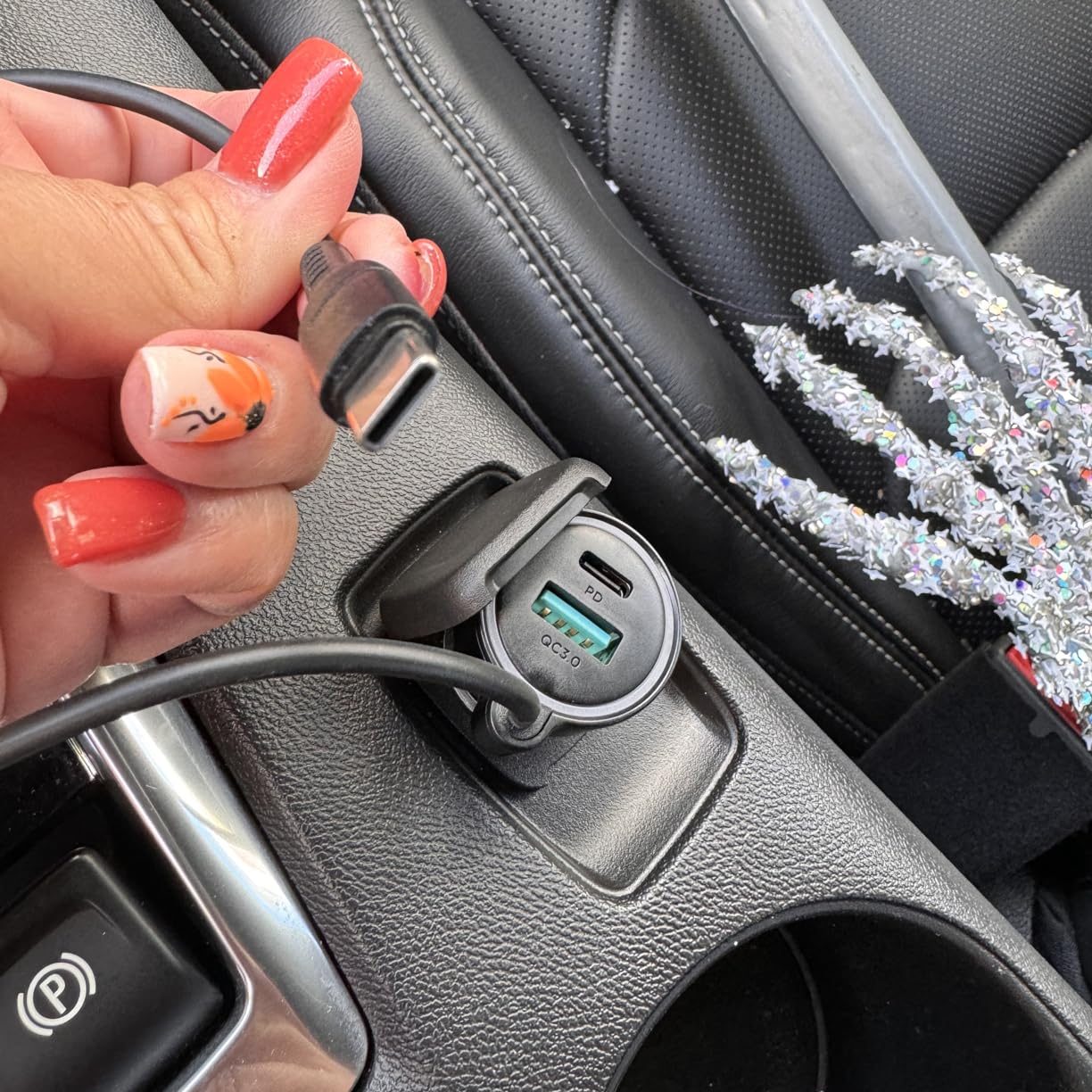
The 90W power delivery seems excessive for iPhone charging, which typically maxes out around 30W. But this specification reveals the charger’s real target: vehicles as multi-device charging stations. The USB-C port can fast-charge an iPad or even power a small MacBook while passengers’ phones charge from secondary ports. The car becomes mobile power infrastructure.
The coiled cable design creates its own friction. Coils resist extension, which means pulling the cable to reach a distant device requires force. The elastic return that prevents tangling also creates tension during use. Some users find this reassuring—the cable feels actively contained. Others find it annoying, preferring the limpness of straight cables even if they tangle.
What’s revealing is how PD and Quick Charge protocol support has become mandatory rather than optional. Passengers expect fast charging during car rides. A charger that delivers only basic 5W charging feels insufficient when a twenty-minute drive could potentially restore 30% battery on a newer iPhone with fast charging capability.
The specific device compatibility list—iPhone, Samsung Galaxy, Pixel, LG, Android, iPad—demonstrates the multi-platform reality of household vehicle use. Even in Apple-centric families, partners might use Android devices, or kids might have hand-me-down phones from various ecosystems. Car chargers need to handle whatever gets plugged in.
Previously listed at $23.89, current listings hover around $15.69. The pricing positions this as a quality car charging solution rather than a budget emergency cable, targeting users willing to pay for the coiled design’s cable management benefits.
"Note: Readers like you help support The Apple Tech. We may receive a affiliate commission when you purchase products mentioned on our website."