The stand lifted the phone to face level, which changed how people appeared in video calls—less chin, more eye contact. iPhones resting flat on desks position the camera below the user’s face, creating the notorious “up-the-nose” angle that makes video calls feel unflattering and unprofessional. Raising the phone to eye level corrects this, but requires stable elevation.
Height adjustability matters because desk setups vary dramatically. A laptop riser might mean the phone needs significant elevation to match eye level. A low desk might need less height. Different seating positions—leaning back versus sitting upright—call for different phone heights. Fixed-height stands force users to adapt their posture to the stand’s limitations.
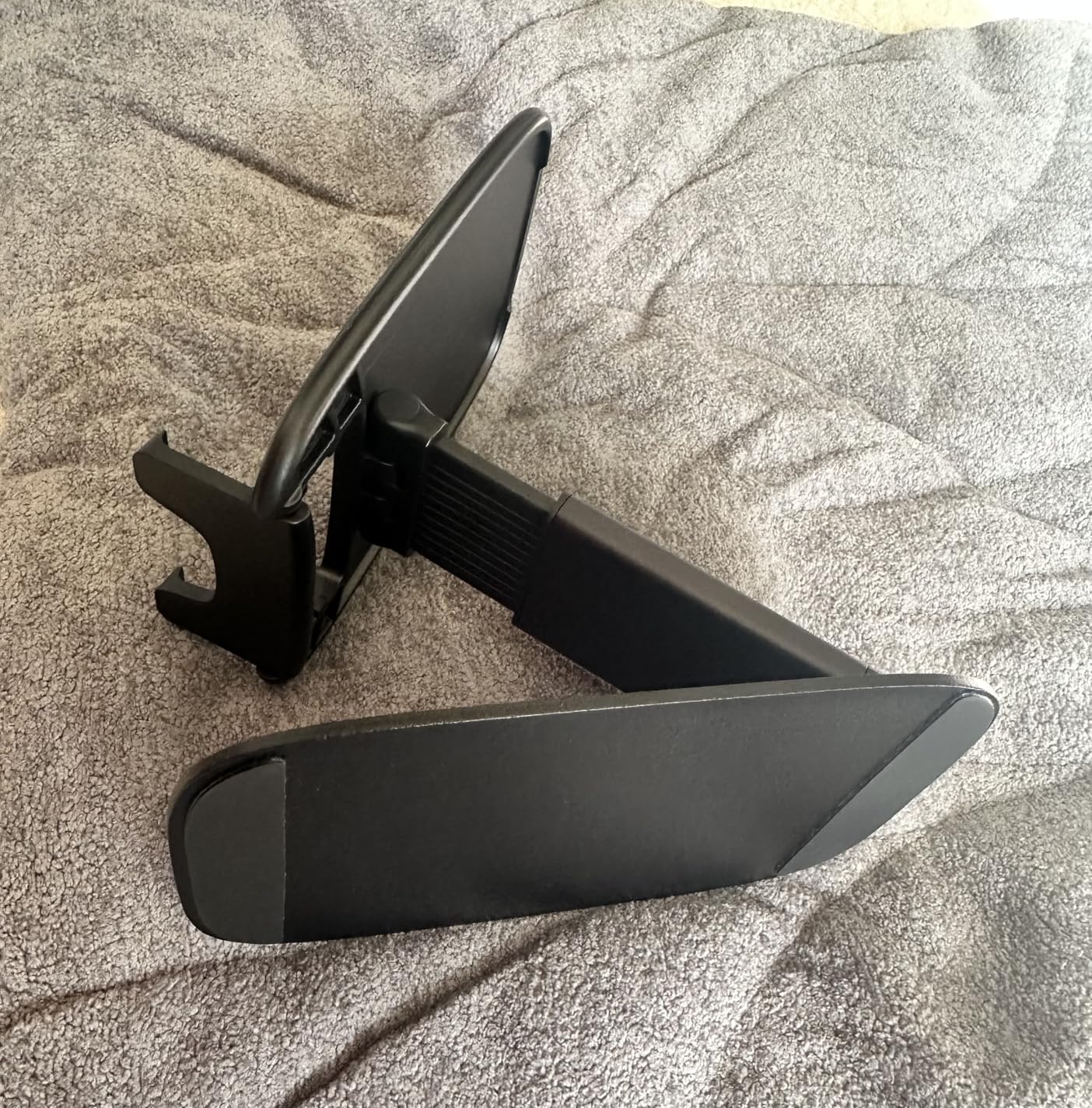
The ultra-thin foldable design addresses the tension between desktop functionality and travel portability. A permanent desk stand can be substantial and heavy. But remote workers who move between locations need stands that collapse flat enough to slide into laptop sleeves without adding meaningful bulk or weight to their carry.
But adjustable mechanisms introduce potential failure points. Hinges loosen over time. Friction joints that hold angles when new might become floppy after months of daily adjustment. The stand that’s infinitely adjustable at purchase might settle into only a few reliable positions after extended use.
The office desk accessories framing is revealing. Phone stands have migrated from novelty items to expected workspace equipment, sitting alongside monitors, keyboards, and desk lamps as standard components of functional work environments. The phone isn’t a guest on the desk—it’s a permanent resident requiring dedicated support infrastructure.
What’s notable is how video call culture has created specific product categories. Ten years ago, phone stands were for watching videos or reading recipes. Now they’re positioning devices for how others see you, not just how you see your screen. The stand’s primary value has shifted from personal viewing angle to broadcast presentation quality.
Previously listed at $11.99, current listings hover around $8.98. The low price point makes owning multiple stands viable—one for home office, one for travel, one for a secondary workspace—reflecting how phone stands have become disposable infrastructure rather than considered purchases.
"Note: Readers like you help support The Apple Tech. We may receive a affiliate commission when you purchase products mentioned on our website."