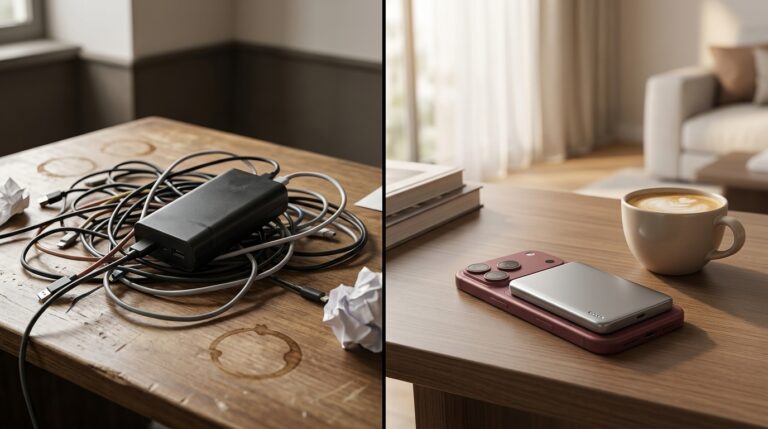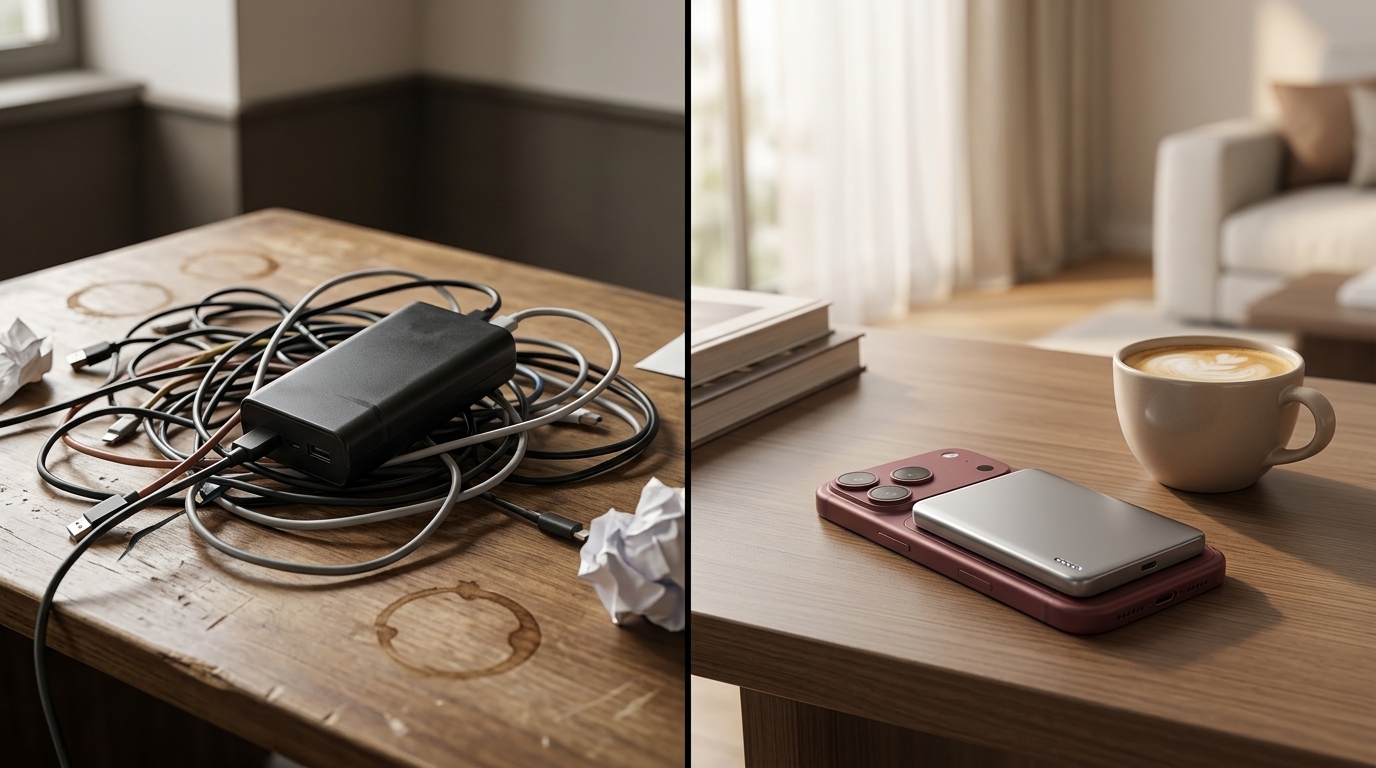

Power banks used to have one job: keep phones alive between wall outlets. The use case was obvious, the form factor optimized for pockets, and the entire category existed in service of screens. That clarity has blurred.
Heated vests and jackets have introduced a different kind of battery dependency, one where the drain comes from warmth instead of notifications. The devices don’t connect to iOS or sync with iCloud, but they’ve adopted the same modular power paradigm that iPhone users have internalized over the past decade. A battery is something you charge overnight, carry during the day, and swap when depleted. The behavior transfers seamlessly even when the application is entirely different.
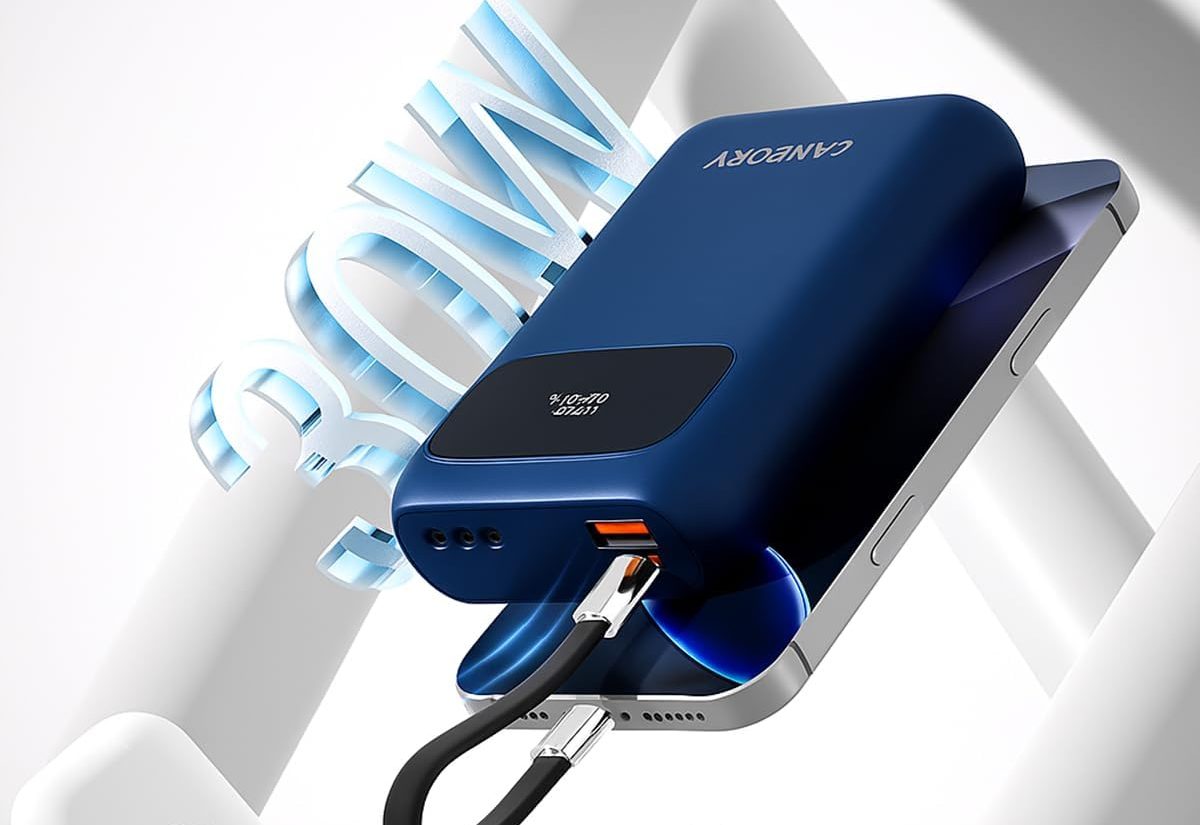
What’s notable is how these clothing-specific batteries have started incorporating features borrowed from phone accessories. LED displays that show remaining charge percentage, USB outputs that let the same pack charge an iPhone in a pinch, voltage switching that accommodates both 7.4V garments and 5V devices. The design language is converging, creating objects that live somewhere between outdoor gear and consumer electronics.
This convergence exposes a habit that’s spread beyond smartphones: the reflex to carry backup power has become so normalized that people now apply it to anything battery-dependent. The heated jacket doesn’t need constant power the way a phone does, but the anxiety about running out mid-commute or mid-hike is identical. The solution is the same too—bring a spare, keep it topped off, don’t think about it until you need it.
The expectation that batteries should be interchangeable across contexts has quietly migrated from phones to outerwear. Someone who owns three different brands of heated clothing wants one battery that works with all of them, the same way they want one charging cable for their iPhone, AirPods, and iPad. The ecosystem thinking has escaped Apple’s hardware and become a general consumer assumption.
The friction appears when these systems don’t quite align. A battery designed primarily for heated apparel might charge an iPhone, but slowly. An iPhone power bank might technically power a heated vest, but without the voltage optimization that makes it practical. People end up carrying multiple batteries not because they need redundancy, but because compatibility remains incomplete.
What’s emerging is a new category of everyday carry that has nothing to do with screens but everything to do with the power management habits that smartphones cultivated. Previously listed at $38, current versions hover near $27, positioning these hybrid batteries as impulse additions rather than specialized gear.
"Note: Readers like you help support The Apple Tech. We may receive a affiliate commission when you purchase products mentioned on our website."