
Recording video on an iPhone used to require a second person or a static tripod and careful positioning. The trade-off was always the same: either you asked someone to help, accepting their shaky hands and wandering attention, or you locked the frame and worked within its limitations. Both options imposed constraints that shaped what people filmed and how they filmed it.
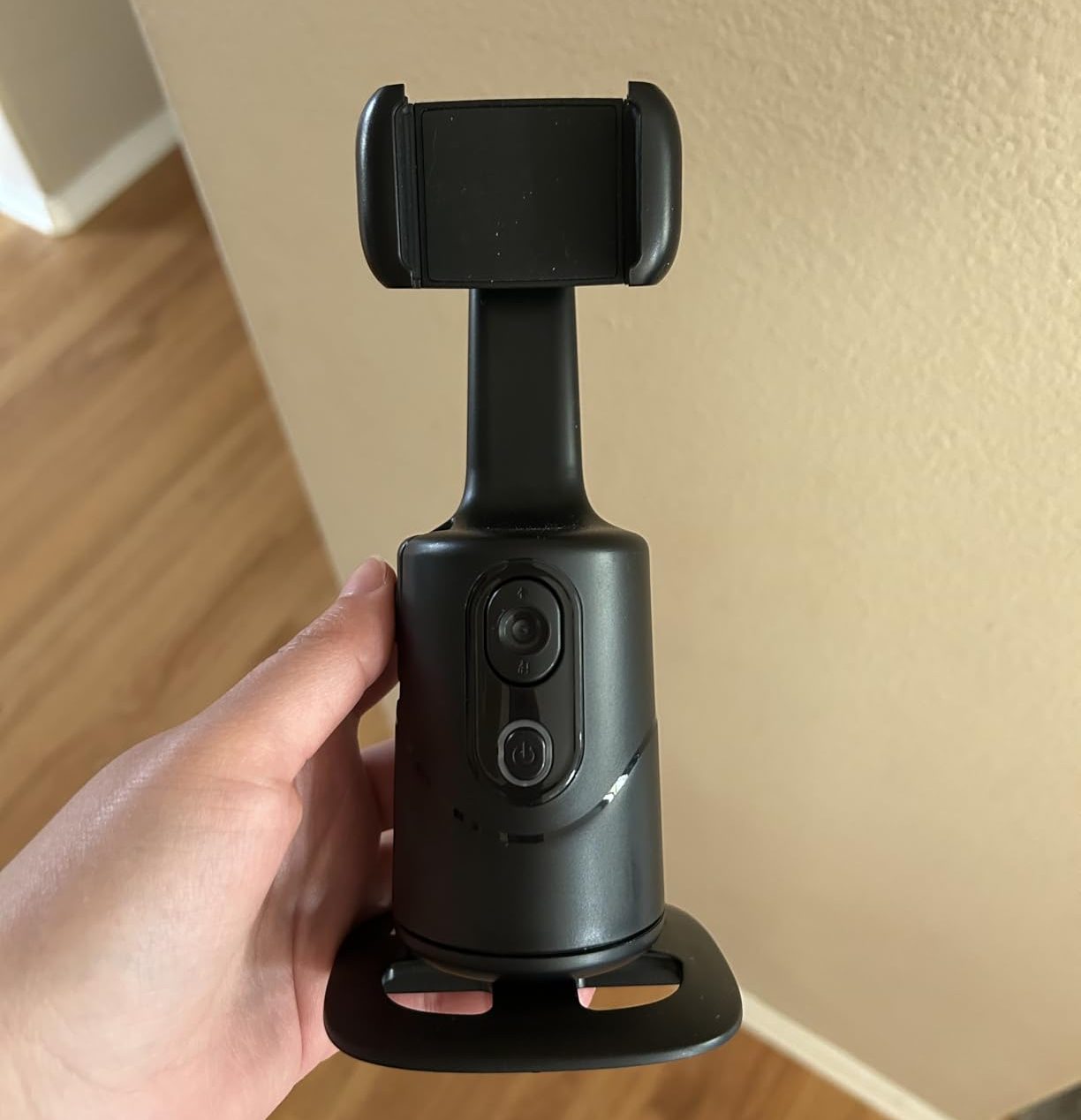
Automated tracking dissolves that negotiation. The stand follows movement, reframes as needed, and responds to gestures without requiring anyone to touch the device. What’s significant isn’t the technology itself—similar systems have existed in professional contexts for years—but the speed with which iPhone users have adopted it as a default setup rather than a special-occasion tool.
The behavior clusters around specific use cases. Remote workers recording presentations alone in home offices. Parents filming themselves with children who won’t stay still. Content creators shooting unboxing videos or tutorials without hiring camera operators. These aren’t people making films—they’re people documenting ordinary moments that happen to require video, and they’ve decided that doing it alone is preferable to coordinating with someone else.
The gesture control is particularly telling. It suggests that even reaching for the iPhone to start or stop recording feels like too much interruption. The ability to signal the camera from across the room keeps the performance unbroken, the flow intact. It’s the video equivalent of how AirPods let people take calls without fumbling for their phones—removing a small physical action that used to define the transition between states.
This shift has quietly changed what kinds of video people attempt. Someone who previously avoided filming themselves cooking because they couldn’t reach the phone with messy hands now sets up a tracking stand and forgets about the camera. The friction point that prevented the video from happening in the first place has been engineered away, and with it, the mental calculation about whether the moment is “worth” the hassle.
The assumption that someone else would hold the camera has been replaced by the expectation that the camera will simply follow you. It’s a fundamental reframing of how iPhone video capture works, moving from a tool that requires human mediation to one that operates more like ambient documentation.
What remains unsettled is how this changes the visual language of iPhone video. Automated tracking produces a specific aesthetic—smooth, centered, slightly robotic—that’s becoming increasingly common across social platforms. The tool has become recognizable in the output, creating a signature that marks the video as shot alone even when that fact goes unmentioned. Previously listed at $30, current versions hover near $24.
"Note: Readers like you help support The Apple Tech. We may receive a affiliate commission when you purchase products mentioned on our website."