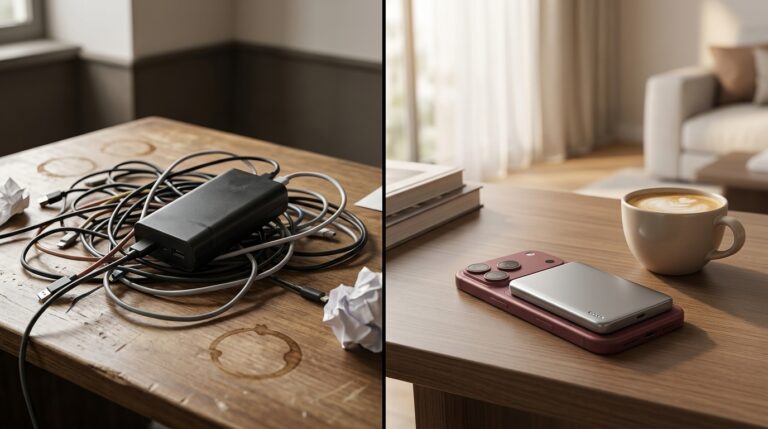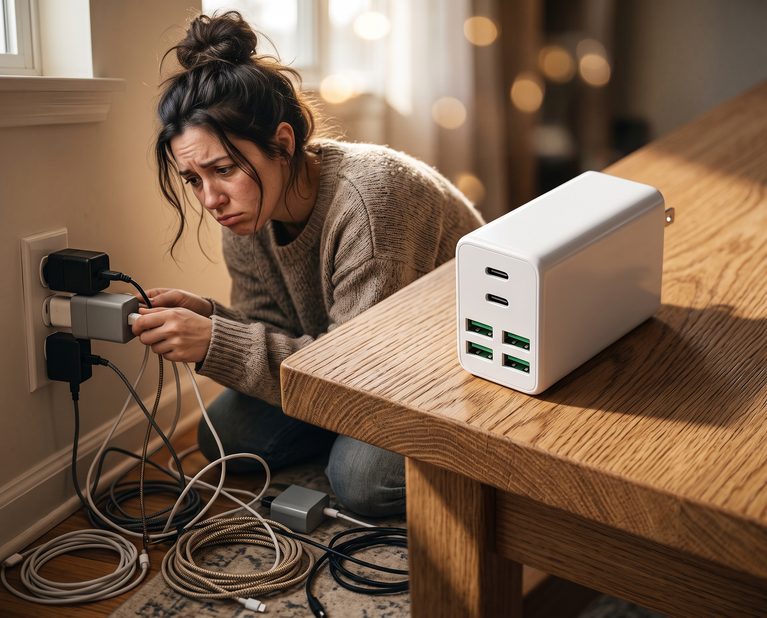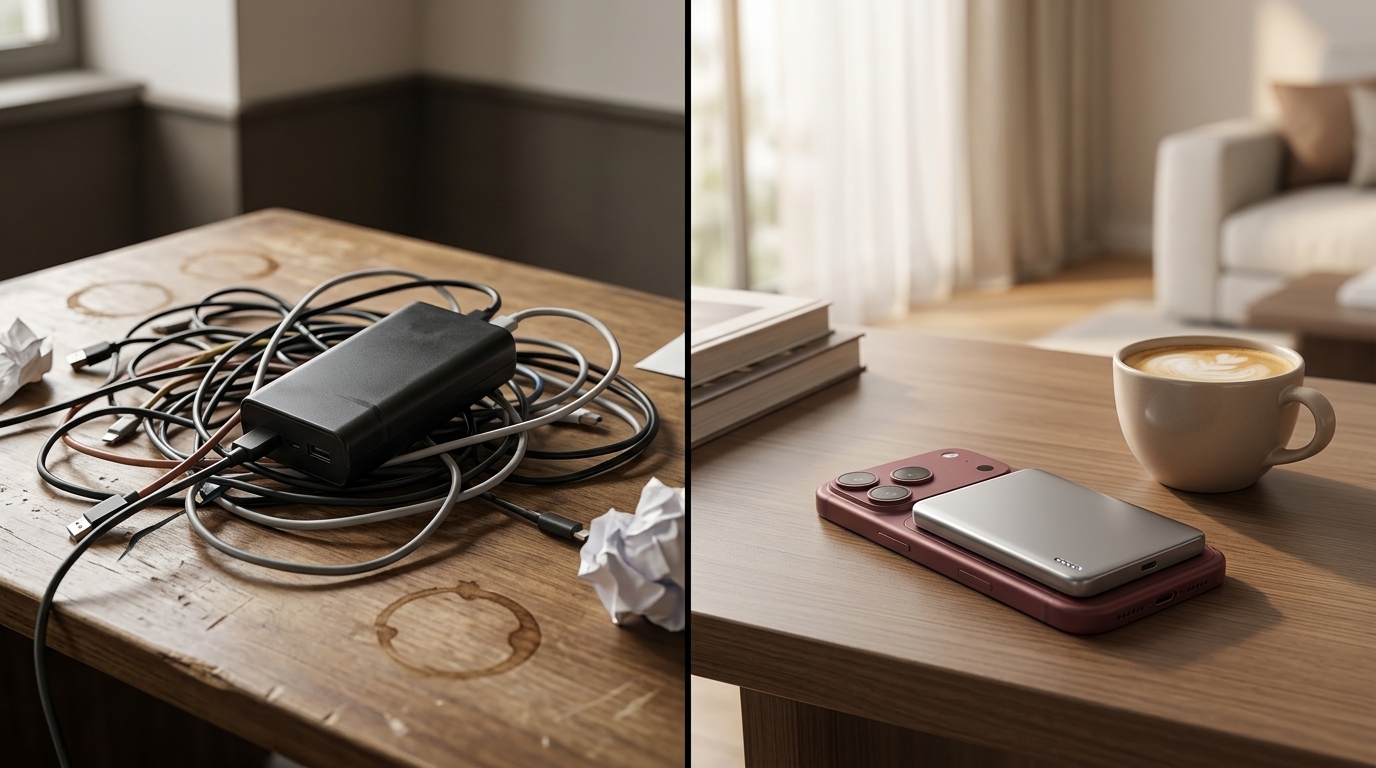

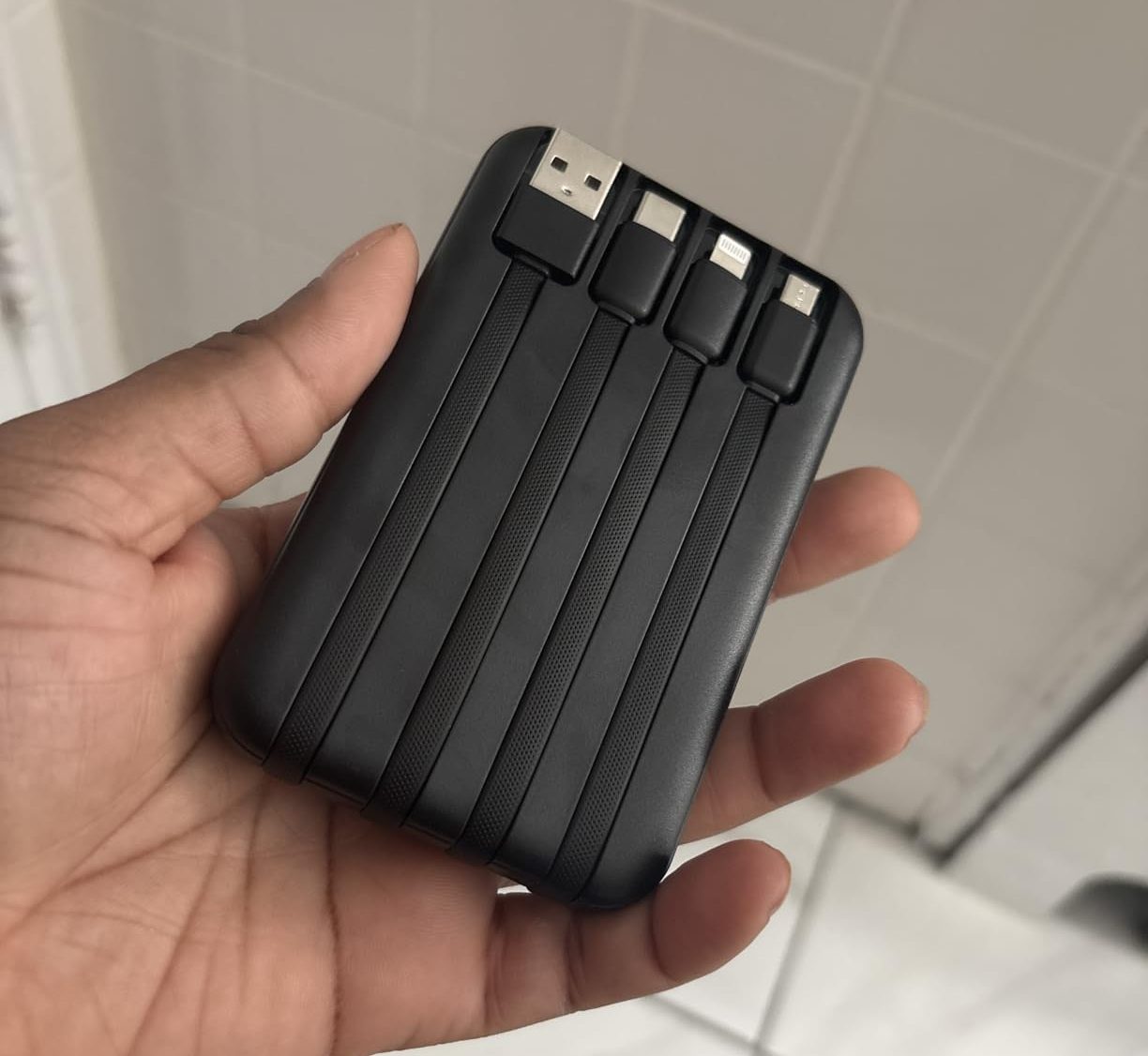
There was a time when carrying a portable charger meant carrying two things: the battery itself and a cable that may or may not be compatible with the device you needed to charge. That friction is dissolving. The new generation of compact power banks arrives with cables already attached.
Four of them, in some cases. Lightning, USB-C, Micro-USB, and sometimes a full-size USB port. The cables don’t detach. They fold flat against the body of the charger, emerging only when needed. The design is ruthlessly practical, and it reflects a shift in how people think about charging on the go.
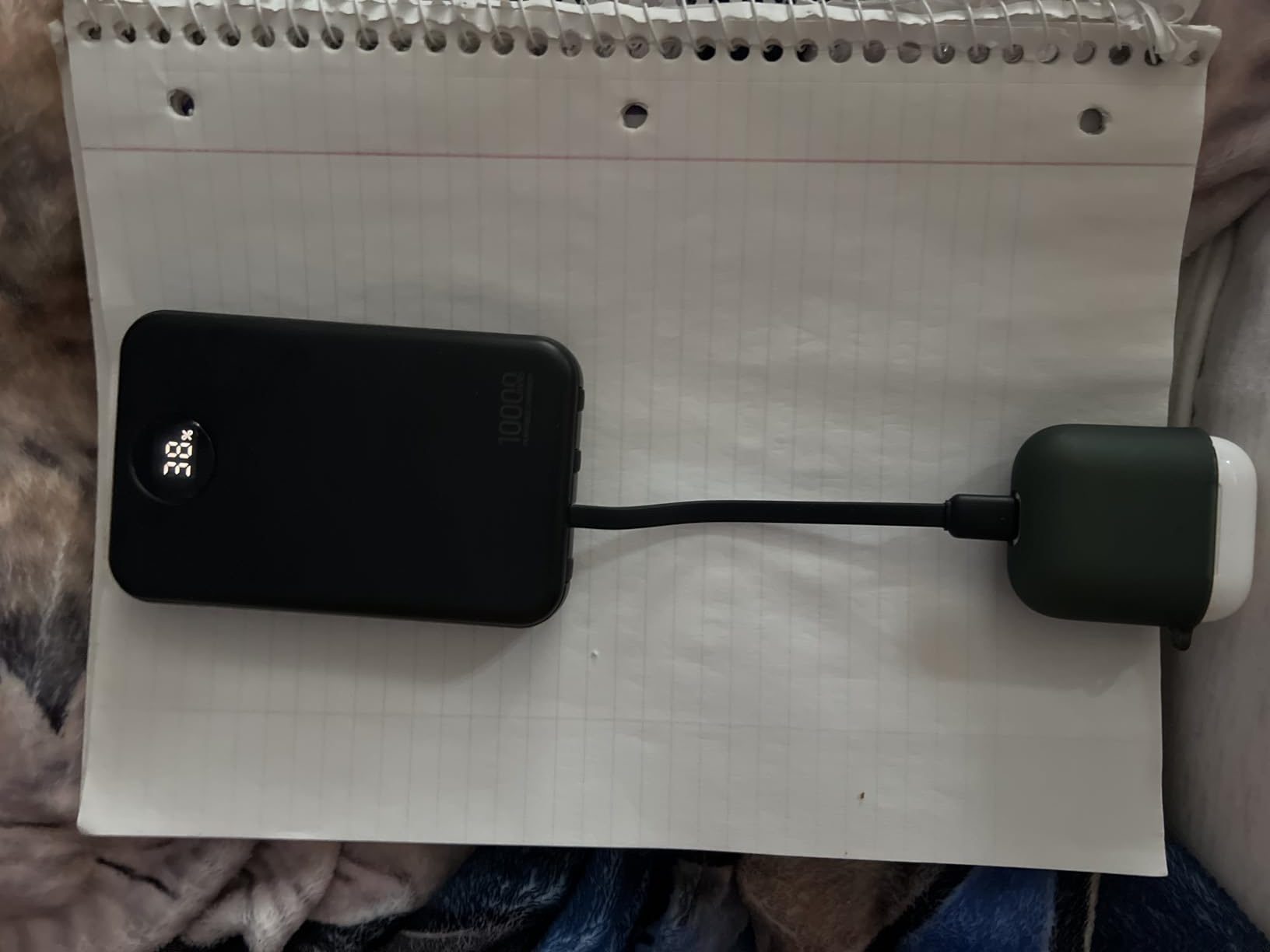
The act of charging used to require a small amount of forethought. You’d pack a cable. You’d check compatibility. You’d make sure the ends matched the devices you were traveling with. That’s gone now. The cable is always there, built into the object itself. Charging becomes an impulse, not a plan.
This matters more than it sounds. The iPhone has spent years oscillating between Lightning and USB-C, leaving users in a liminal state where they’re never quite sure which cable belongs to which device. The iPad switched earlier. The MacBook has been USB-C for nearly a decade. The AirPods case is still catching up. The built-in cable sidesteps the entire problem by offering all formats at once.
What this creates is a kind of charging redundancy. The power bank doesn’t need to be paired with the right accessory. It’s already universal. And that universality changes behavior. People charge more casually. They lend the battery to others without checking what phone they have. They plug in mid-conversation, mid-commute, mid-meeting, because the barrier to action has been reduced to almost nothing.
The LED display adds another layer of legibility. Battery percentage is visible at a glance, not estimated through guesswork or buried in a settings menu. The power bank becomes as readable as the iPhone itself.
Previously listed at $35.99, current listings hover around $21.98. The price has dropped as the design has standardized, but the real shift isn’t economic. It’s behavioral. Charging is no longer a discrete event with its own preparation and execution. It’s a reflex, integrated into the rhythm of device use itself.
"Note: Readers like you help support The Apple Tech. We may receive a affiliate commission when you purchase products mentioned on our website."