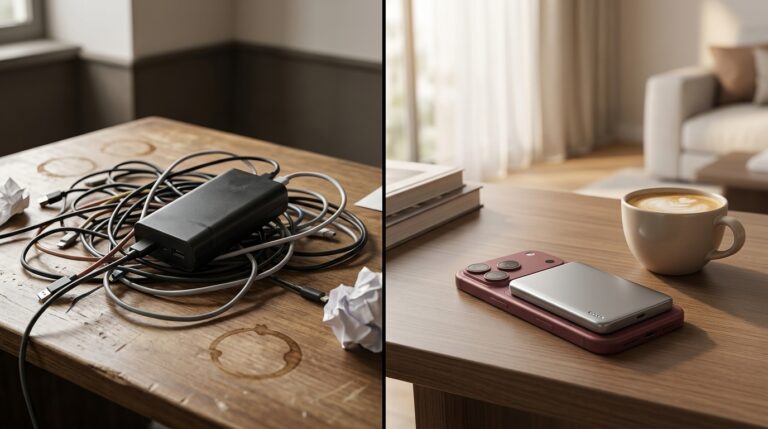

The single-port standard has quietly erased the boundaries between device categories, making it unclear which charger belongs to which Apple product in any given household.
The cable that charged a MacBook in the morning now powers an iPhone at night, with no adaptation required and no one quite remembering when this became normal. USB-C’s arrival on the iPhone 15 collapsed distinctions that had persisted for over a decade. Lightning was phone territory; USB-C belonged to laptops and iPads. That division no longer exists, and the behavioral shift has been more subtle than the technical one.
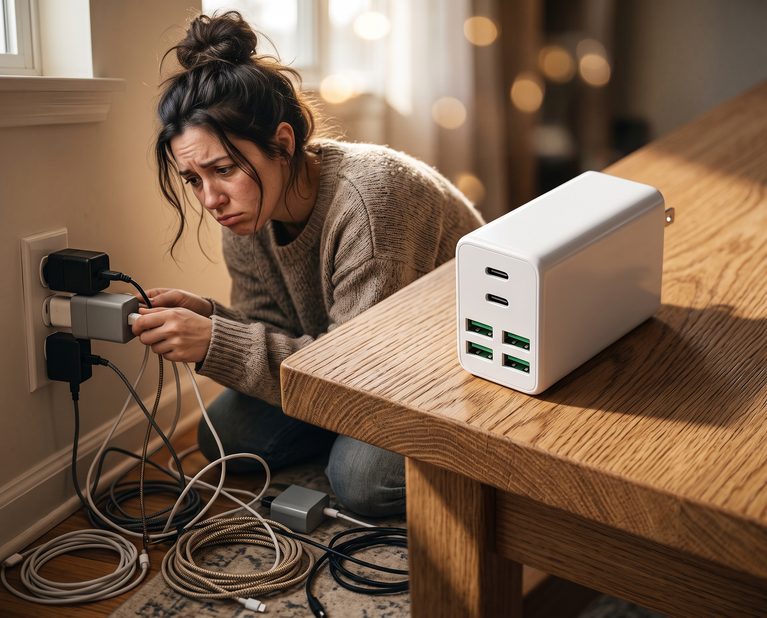
Chargers have become communal property in ways they weren’t before. A 45W adapter can handle a MacBook Air during work hours and an iPhone 16 Pro in the evening without requiring anyone to think about wattage or compatibility. The infrastructure is interchangeable now, which sounds convenient until someone needs to charge two devices simultaneously and realizes there’s only one cable within reach. The problem isn’t scarcity—most households have multiple USB-C cables by now—but rather the assumption that any cable will do, which breaks down the moment two people need power at once.
Apple’s own charging accessories haven’t fully acknowledged this convergence. The company sells chargers by device category: iPhone chargers, MacBook chargers, iPad chargers. The wattages differ, but the ports are identical. Users have learned to ignore the marketing and simply grab whichever adapter is closest, trusting that USB-C’s intelligence will negotiate the appropriate power delivery. This works, mostly, though it introduces a small cognitive load that didn’t exist when cables were device-specific by physical design.
The compact form factor of newer chargers has made them easier to carry but harder to differentiate. A foldable plug and a slim profile are now standard features, not premium ones. What varies is output—whether the adapter can push 20W, 30W, 45W, or higher—but these differences aren’t visible from across a room. Users identify their chargers by location rather than specification. The one on the desk is for the laptop. The one by the bed is for the phone. Until someone moves them.
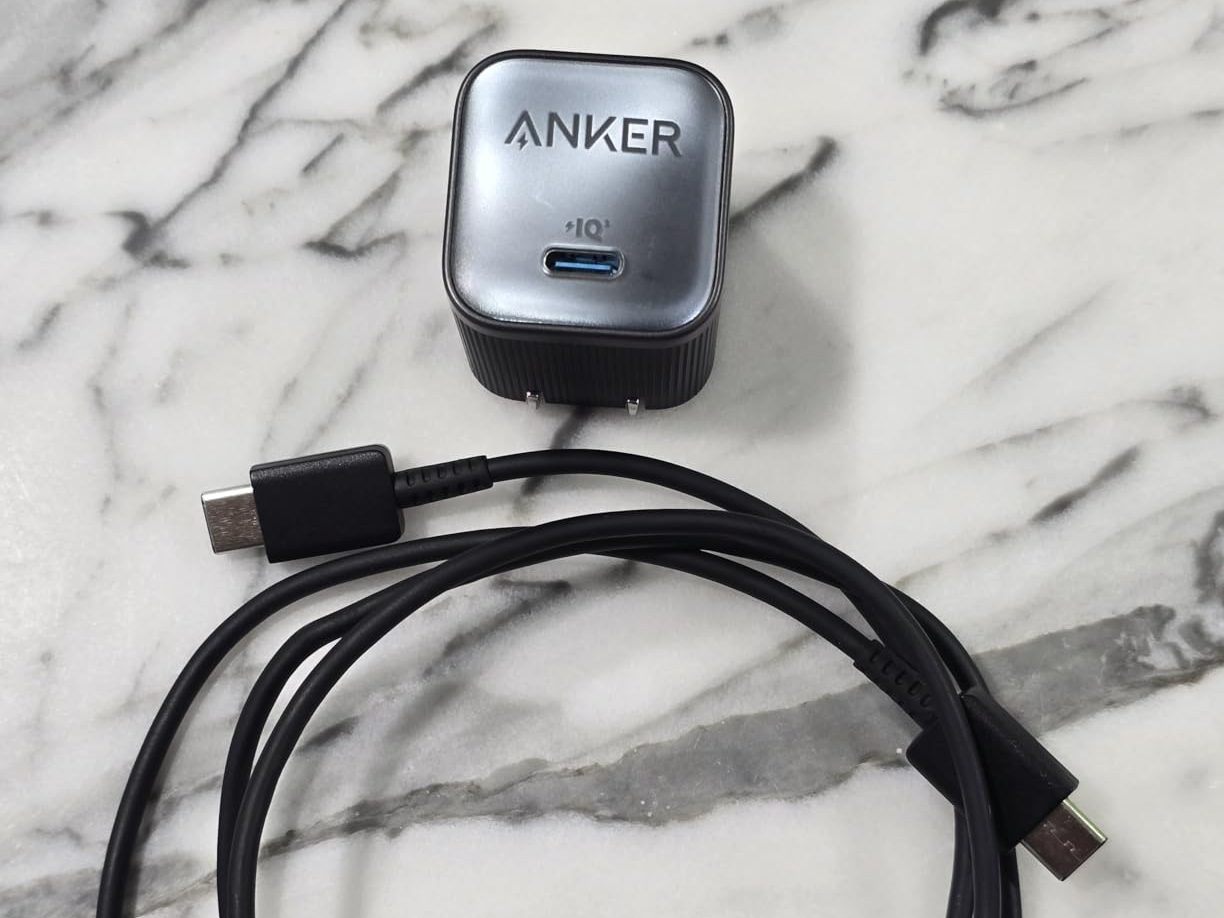
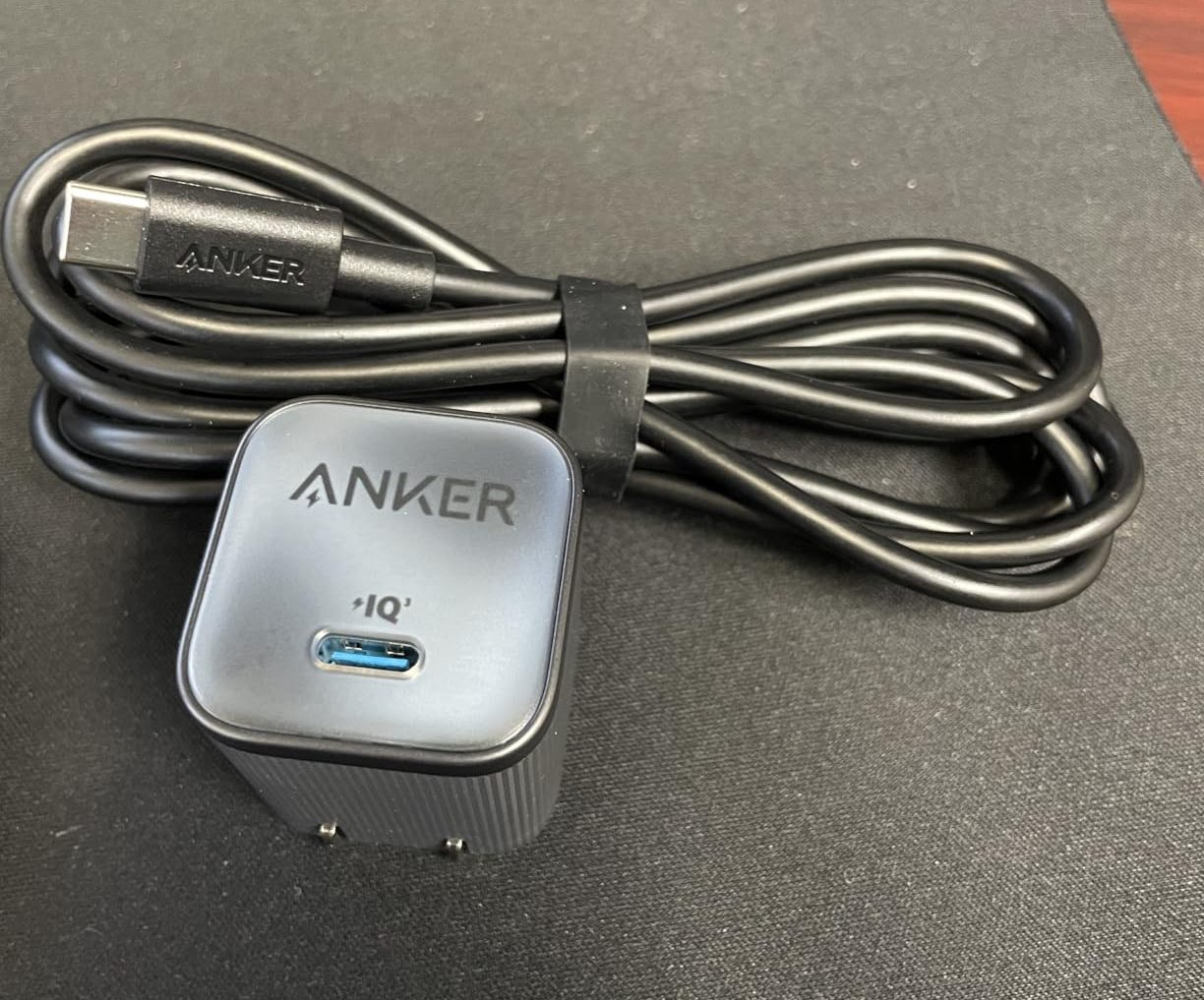
Third-party manufacturers have responded by bundling cables with chargers, attempting to solve the interchangeability problem by keeping the two components together. This doesn’t always work. Cables detach, get used elsewhere, end up in different bags. What remains is the adapter itself, a small white or black brick that could belong to any device in the Apple ecosystem and frequently does, depending on who reaches for it first.
The shift has practical implications for travel. iPhone users who once packed a dedicated Lightning cable and low-wattage adapter now find they can rely on their MacBook charger for both devices. This reduces bulk but also means that forgetting one charger can strand multiple devices. The redundancy that came with incompatible standards had a certain resilience. USB-C’s universality introduces new efficiencies and new vulnerabilities in equal measure.
Pricing on these accessories has stabilized as USB-C adoption became universal across Apple’s product lines. Previously listed at $34.99, current listings hover around $19.99 for 45W adapters with foldable plugs and included cables. The consistency suggests a category that’s found its equilibrium, though the behavioral patterns it supports are still settling into place as households figure out what charging infrastructure looks like when everything uses the same port.
"Note: Readers like you help support The Apple Tech. We may receive a affiliate commission when you purchase products mentioned on our website."