
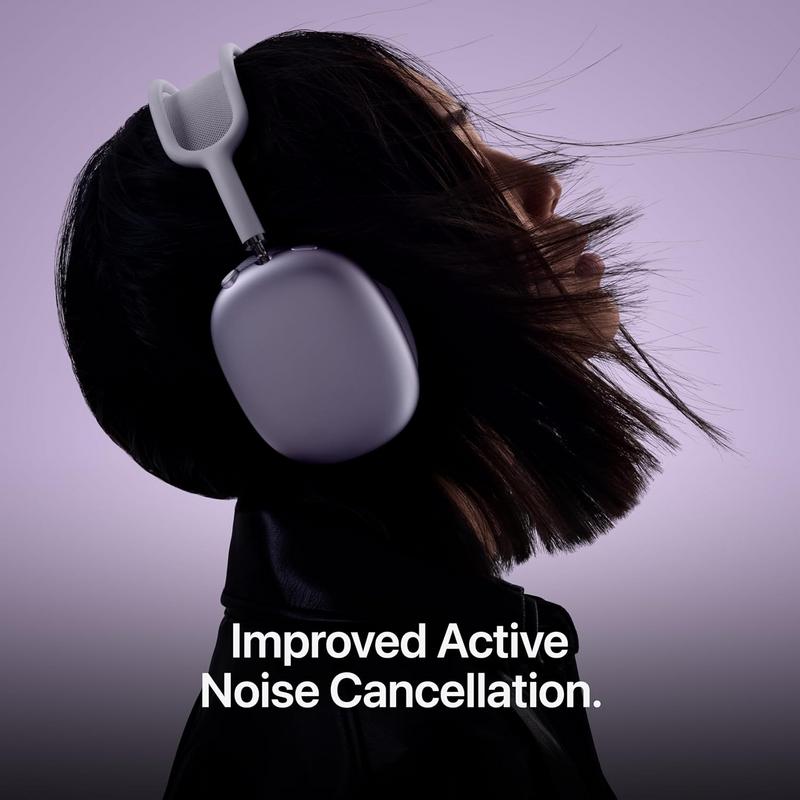
The modern soundscape is often a fragmented experience, a blend of environmental noise and digital streams. For many, the choice of audio device has become a subtle extension of daily intention, dictating how deeply one engages with their immediate surroundings. Over-ear headphones, once a niche for dedicated audiophiles, have quietly carved a significant space within the everyday Apple ecosystem, altering not just how sound is consumed, but how personal space is managed in an increasingly open world. This quiet normalization reflects a broader adaptation to the demands of focus and tranquility amidst constant digital and ambient input.
The transition from earbuds to full-cup designs often signals a shift in desired immersion. Whether navigating a busy urban commute or settling into a home office, the act of putting on over-ear headphones often precedes a mental preparation for focused work or undisturbed leisure. This ritual establishes a clear boundary, an unspoken signal to oneself and others that a particular kind of auditory engagement is about to begin. It’s a behavioral cue, subtle yet potent, that delineates moments of concentration from the general ebb and flow of daily life.
Consider the small, habitual movements: reaching for the familiar cool touch of the anodized aluminum, adjusting the telescopic arms with a precise click, and settling the soft earcups over the ears. This physical interaction isn’t merely functional; it’s a tactile prelude to the auditory experience. The weight and presence of the device become part of the body’s extended sensory map, a reassuring heft that promises a certain quality of sound and a degree of sonic isolation. It’s a quiet, almost unconscious ritual that punctuates the beginning of a dedicated audio session.
The unique charging approach of certain premium over-ear headphones introduces its own set of minor behavioral adjustments. The “Smart Case,” for instance, subtly influences charging anxiety. Instead of a nightly charge, many develop a routine of simply returning the headphones to their soft enclosure, implicitly trusting the system to manage power conservation. This can lead to small, late-night checks – a gentle lift of the corner of the case, a glance at a tiny LED, a quick mental calculation of remaining hours – before placing them back on a nightstand, ready for the next day’s demands. It’s a low-level background process that becomes entirely normalized.
Within the broader Apple ecosystem, these headphones often become a fluid extension of the user’s audio source. The automatic switching between an iPhone, iPad, and MacBook Pro, while occasionally requiring a brief manual nudge, largely works as an invisible connective tissue. This expectation of seamless transition fosters a dependence on a cohesive audio experience across devices, where sound is not tethered to a single screen but follows the user’s attention, creating an almost unconscious preference for devices that speak the same digital language.
For those who travel, these headphones transform bustling environments into manageable personal cocoons. On a crowded flight, the gentle hum of engine noise recedes into the background, replaced by a chosen podcast or album. In a busy cafe, the clatter of plates and chatter of conversations dim, allowing for a focused work session. This act of auditory self-containment becomes an essential tool for navigating modern mobility, creating pockets of quietude and concentration wherever one happens to be.
The presence of such dedicated audio hardware often redefines the roles of other audio accessories. Wireless earbuds might remain the choice for quick calls or gym sessions, but the over-ear option is reserved for moments demanding greater sonic fidelity or extended comfort. This subtle stratification of audio tools isn’t a replacement but an expansion, allowing for a more nuanced approach to sound consumption based on the specific context and duration of listening. Each device serves a distinct, quietly defined purpose within the user’s daily workflow.
The quiet integration of premium personal audio has become a noteworthy element in many daily routines, solidifying its place within the Apple experience. Recent listings of these particular headphones reflect reductions compared with earlier availability, a factual observation within the broader landscape of evolving consumer access to such devices.
This product has recently appeared more often in conversations around portable Apple setups and everyday charging routines.
Check current availability here
How do over-ear headphones integrate with multiple Apple devices?
Many premium over-ear headphones are designed to automatically switch audio sources between linked Apple devices, such as an iPhone, iPad, or MacBook, depending on active usage.
What are common charging habits for high-end Apple over-ear headphones?
Users often develop routines centered around their charging case, relying on its power-saving features, leading to less frequent direct charging and occasional checks of battery status.
How do these headphones influence travel and daily portability?
Their design often encourages use in public or travel settings, allowing individuals to create a personal audio space and reduce ambient distractions, enhancing focus or relaxation.
Do these headphones replace other Apple audio accessories in daily workflows?
Typically, premium over-ear headphones complement, rather than replace, smaller accessories like earbuds, serving different contexts that demand higher fidelity, comfort, or enhanced noise management.
Verdict
The evolution of personal audio within the Apple ecosystem showcases a quiet but persistent behavioral adaptation. As individuals seek greater focus and immersion in their daily lives, the deliberate choice of over-ear headphones has become a defining ritual. This shift speaks to an unspoken demand for control over one’s auditory environment, transforming mundane moments into opportunities for deeper engagement or thoughtful solitude. It underscores how seemingly small technological adjustments can profoundly reshape our interaction with both digital content and the world around us.
"Note: Readers like you help support The Apple Tech. We may receive a affiliate commission when you purchase products mentioned on our website."