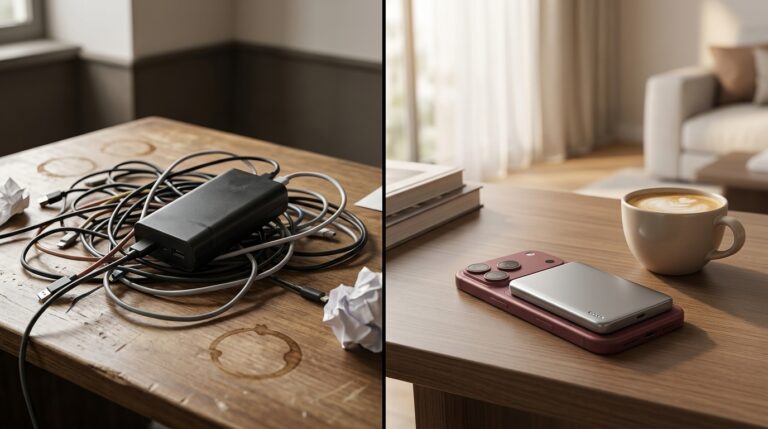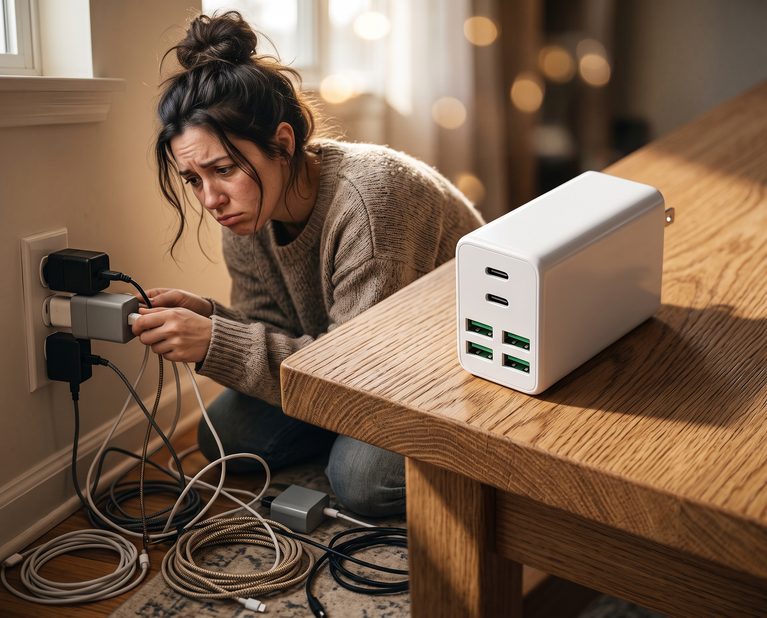

Power strips in shared spaces—hotel rooms, airport lounges, coffee shops—are almost always full. A bulky charger that covers two outlets is unusable in those contexts. A compact charger that occupies only its own outlet becomes the obvious choice. The selection criteria shifted from “does it charge fast enough” to “will it fit where I need it to fit.”
The thirty-watt power delivery became the default baseline. It was fast enough for an iPhone or iPad, sufficient for most use cases, and didn’t require the larger form factor that higher wattage adapters demanded. People stopped asking how much power they needed and started assuming thirty watts was the answer unless they were charging a laptop.

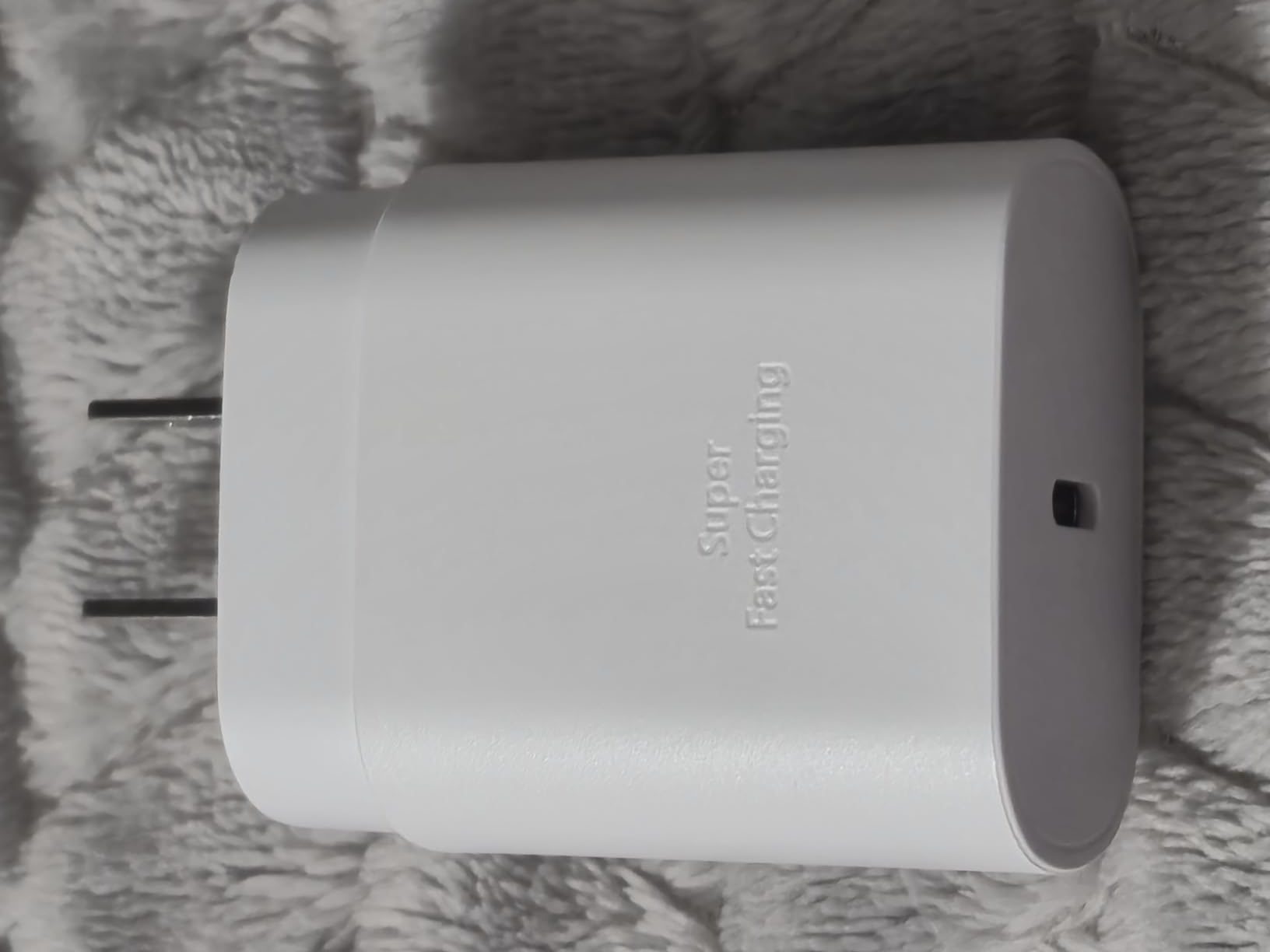
Super fast charging was a marketing term that reflected Samsung’s language, but the adapter worked across ecosystems. An iPhone charged at its maximum supported speed; a Galaxy phone did the same. The adapter didn’t care about brand loyalty. That cross-compatibility mattered in households with mixed device ecosystems, where a single charger could serve multiple people’s phones without requiring separate adapters.
The cube shape minimized the space the adapter occupied, but it also meant the prongs were close together, which could be awkward in certain outlet configurations. Some outlets had tight spacing; others had the sockets far apart. The adapter worked better in some environments than others, and people who traveled frequently sometimes carried two different adapters to cover both scenarios.
SIMILAR
iPhone and MacBook users are compensating for a port problem Apple created
iPhone users are eliminating the tangled cable from every car charging session
iPhone users are transforming nightstands into silent charging infrastructure
Galaxy S25 compatibility was speculative—the adapter listing anticipated a device that hadn’t been released yet. But the mention reflected how adapters were sold: as future-proof investments. People bought adapters not just for their current phone but for the next one, assuming the charging standard wouldn’t change dramatically. That assumption usually held, but the transition from Lightning to USB-C had shown that major shifts still happened.
The lack of a cable in the package was both a cost-saving measure and a nod to the reality that most people already owned cables. Including a cable would have made the adapter more expensive and added bulk to the packaging. People who needed a cable bought one separately; people who already had cables appreciated the lower price.
Pricing reflected how commoditized the category had become. Previously listed at $9.99, current listings hover around $8.49. That’s inexpensive enough that people bought multiples without hesitation—one for home, one for the office, one for a travel bag. The adapter became a disposable tool, something replaced routinely rather than repaired or maintained.
The real shift was in how people thought about charging infrastructure. The adapter wasn’t a device-specific accessory; it was a generic piece of infrastructure that happened to work with specific devices. People stopped matching chargers to phones and started thinking of chargers as interchangeable components in a broader power ecosystem. The adapter that was compact, fast enough, and widely compatible became the default choice, not because it was the best at any one thing, but because it worked well enough in every context.
"Note: Readers like you help support The Apple Tech. We may receive a affiliate commission when you purchase products mentioned on our website."