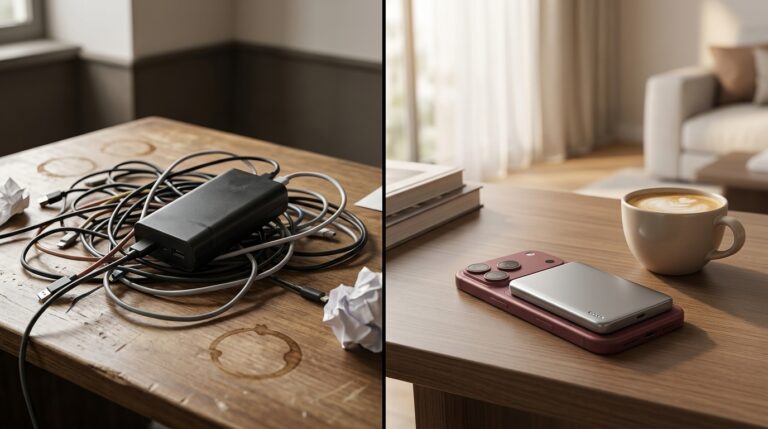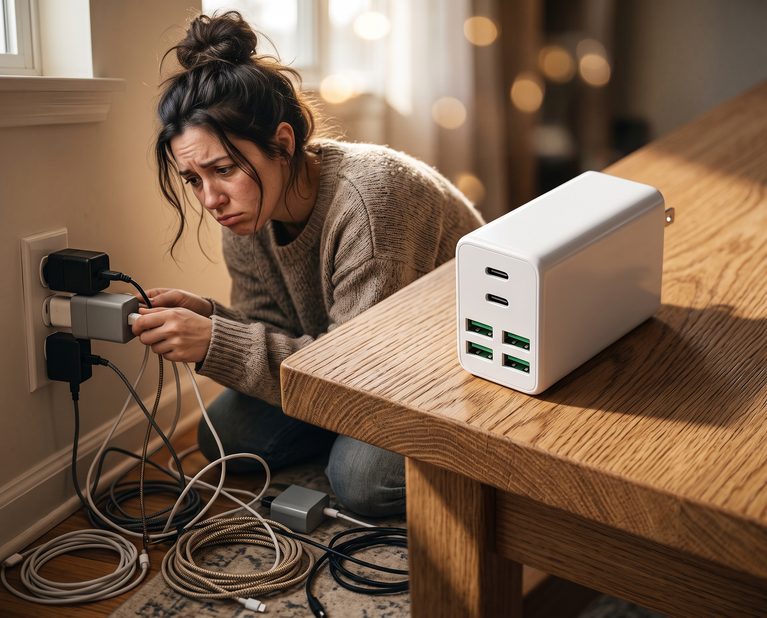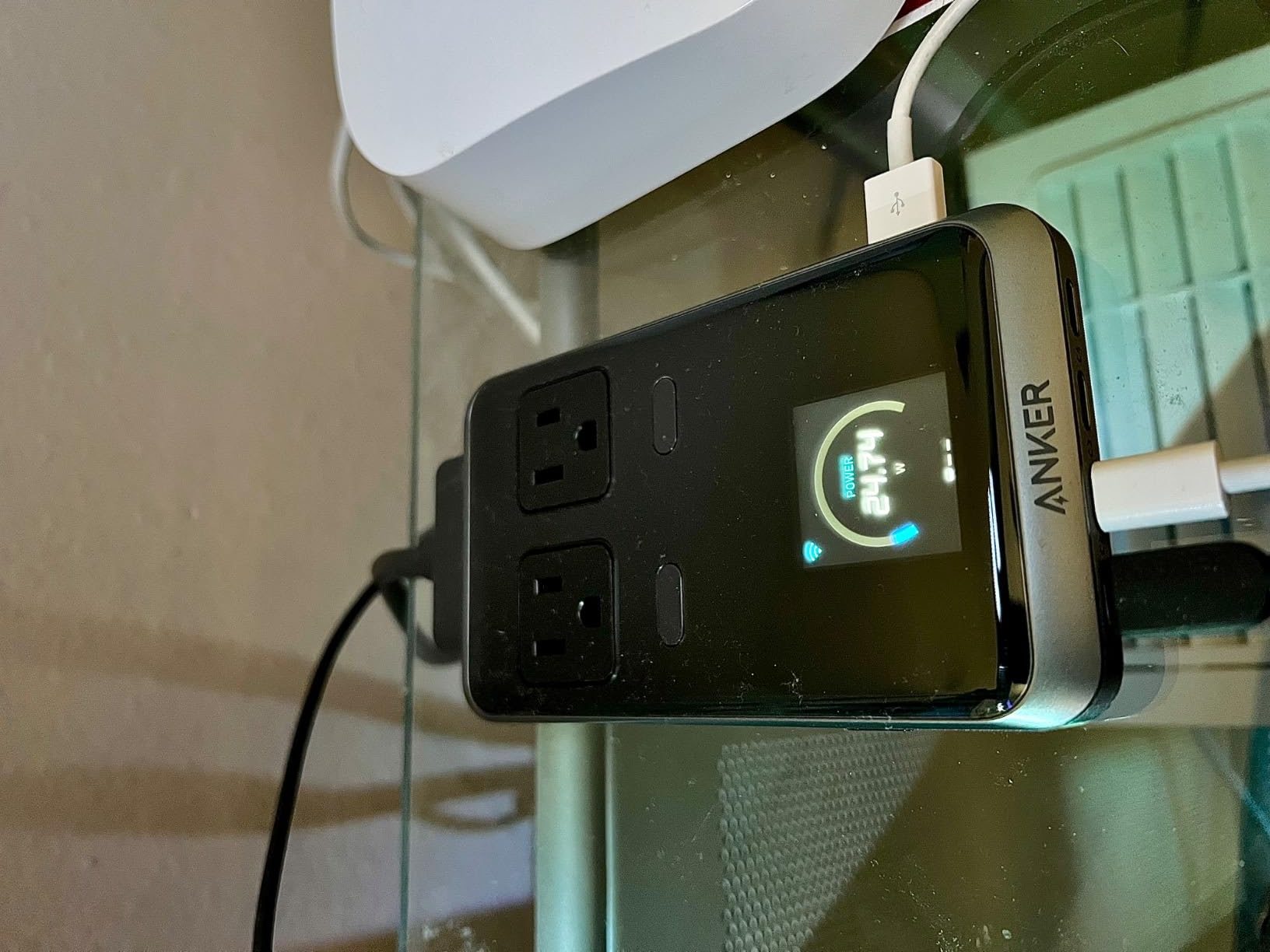
Home office desks tell a consistent story: too many devices, not enough places to plug them in. A MacBook, an iPhone, an iPad, wireless earbuds, an external monitor, a desk lamp, maybe a speaker. Each claims its own power requirement, and standard wall outlets offer two or four ports while ecosystems demand eight or ten.
Traditional power strips solved quantity but created new problems. They’re designed for large plugs and awkward adapters, which means USB devices still need their own power bricks, which take up multiple slots and dangle cables everywhere. The visual clutter is one issue. The functional inefficiency—using a large outlet slot for a small USB adapter—is another.

Charging stations designed for desktop use compress the infrastructure. They combine traditional AC outlets for devices that need them with multiple USB-C and USB-A ports that can handle phones, tablets, and accessories directly. The power distribution happens inside the station, eliminating the need for individual adapters.
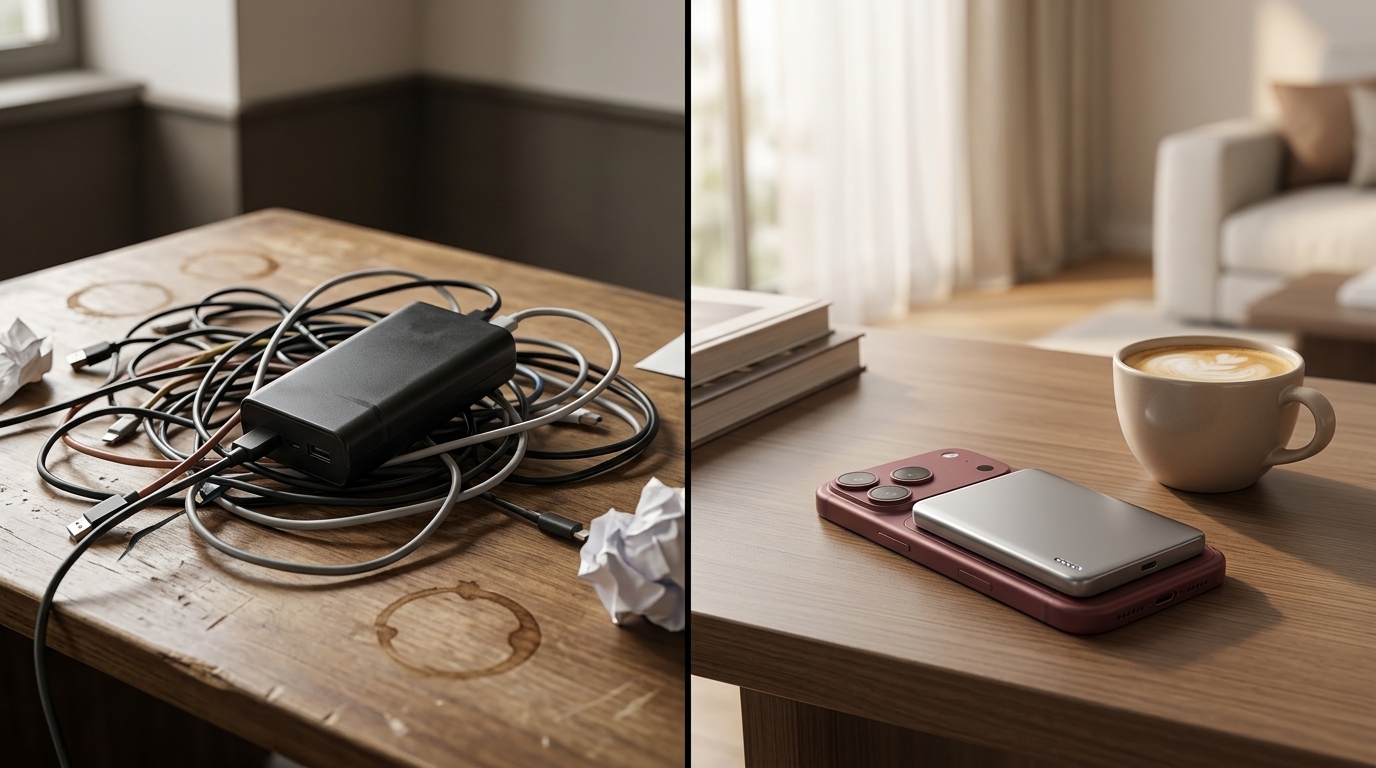
The behavioral shift is spatial. Devices that once scattered across the desk, each with its own cable running to its own outlet, now converge on a single hub. Cable management becomes simpler because there are fewer cables to manage. Desk real estate opens up because power bricks disappear.
SIMILAR
iPhone and MacBook users are compensating for a port problem Apple created
iPhone users are eliminating the tangled cable from every car charging session
iPhone users are transforming nightstands into silent charging infrastructure
The detachable cord matters more than it appears to at first glance. Desks sit in different relationships to wall outlets—sometimes nearby, sometimes across the room. A five-foot extension cord integrated into the station means the hub can sit on the desk surface while the wall connection happens wherever it needs to.
These stations represent a higher tier of infrastructure investment, typically ranging from ninety to one hundred thirty dollars for variants with robust power delivery and comprehensive port selection. Previously listed at $129.99, current listings hover around $89.99 for eight-in-one configurations that balance AC and USB distribution.
The shift is quiet but persistent: power access becomes something managed centrally rather than negotiated outlet by outlet.
"Note: Readers like you help support The Apple Tech. We may receive a affiliate commission when you purchase products mentioned on our website."