The portable charger has shifted from occasional accessory to daily carry item. It sits in bags, pockets, and car cup holders not because a trip is planned, but because the assumption has changed. The iPhone’s battery life is treated as insufficient by default, regardless of how the day unfolds.
This behavior isn’t driven by technical failure. Most iPhones make it through a typical day without external power. But usage patterns have intensified to the point where “typical” no longer applies. Streaming video during commutes, using navigation for multiple stops, participating in back-to-back video calls—all of these drain the battery faster than the device was designed to accommodate during its launch cycle.
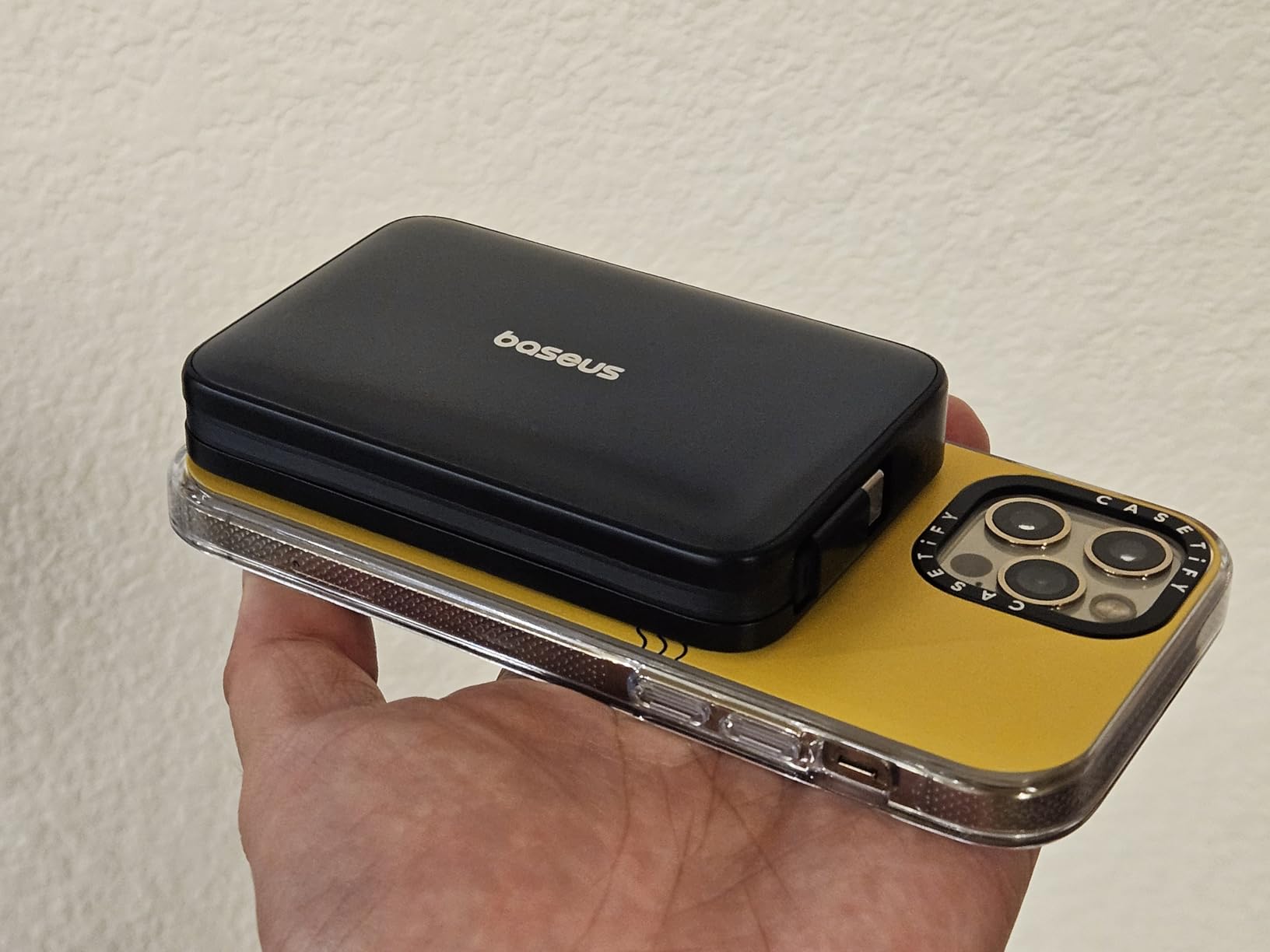
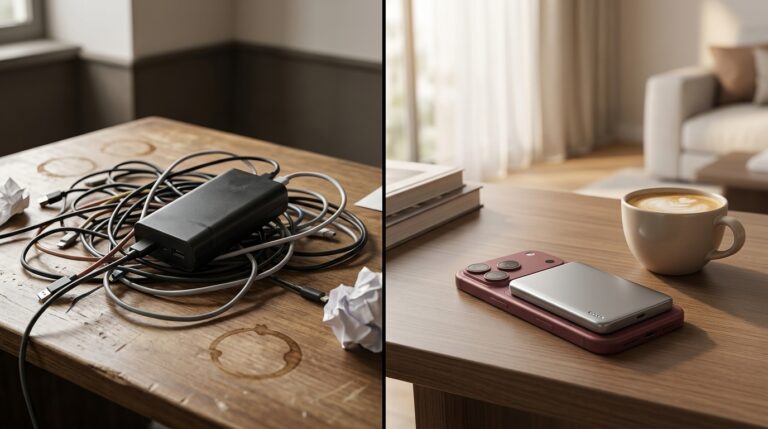
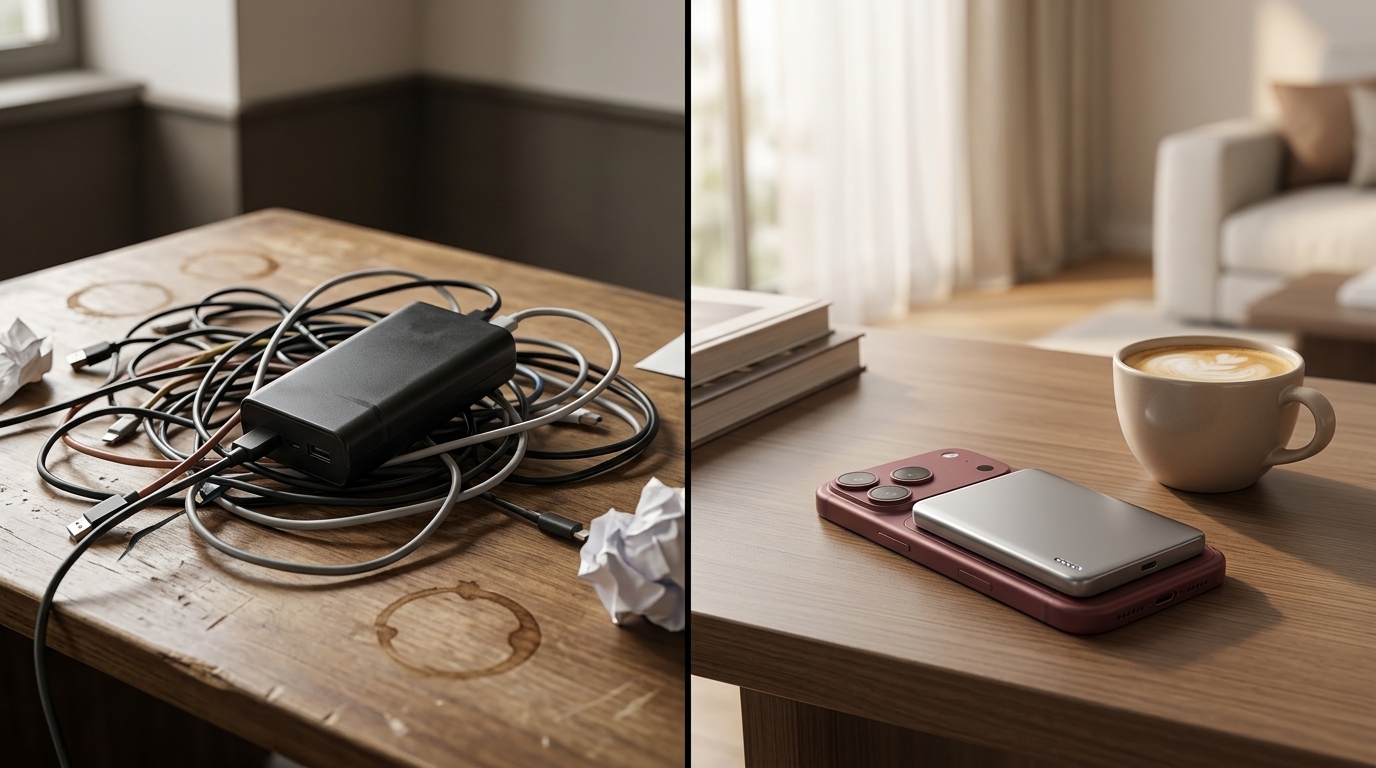
The integration of built-in cables into power banks reflects how often these devices are now used. A cable that stays attached means one less thing to remember, which reduces the friction of charging on the go. The power bank becomes as self-contained as the iPhone itself, ready to connect without requiring a separate accessory.
Magnetic attachment through MagSafe has made this behavior even more seamless. The power bank snaps onto the back of the iPhone and charges without interrupting use. The phone stays in hand, the screen remains visible, and power flows in the background. Charging is no longer a stationary activity that requires finding an outlet and waiting.
That convenience has created a new dependency. iPhone users who once recharged overnight now top up throughout the day, which means the device rarely reaches low battery. The power bank prevents the friction of running out of charge, but it also means users are never far from a charging source. The ecosystem expands to include not just the iPhone, but the battery that keeps it running.
SIMILAR
Why iPhone users are carrying standalone noise machines instead of relying on sleep apps
Apple Watch charging became a bedside ritual, here's why the placement matters more than expected
iPhone users are quietly giving up the cable and most dont realize why it happened so gradually over time
The shift has also changed how people think about battery health. If the iPhone is going to be supplemented by external power anyway, the urgency to preserve internal battery capacity diminishes. Some users charge more frequently, use higher brightness settings, or leave power-intensive apps running longer, knowing the power bank will compensate.
Apple’s design philosophy emphasizes all-day battery life, but real-world usage has outpaced that promise. The portable charger isn’t a backup anymore—it’s infrastructure. It’s part of the daily kit, as essential as the iPhone itself.
Previously listed around $70, current versions of high-capacity portable chargers with built-in cables now appear closer to $53 in some listings.
"Note: Readers like you help support The Apple Tech. We may receive a affiliate commission when you purchase products mentioned on our website."