
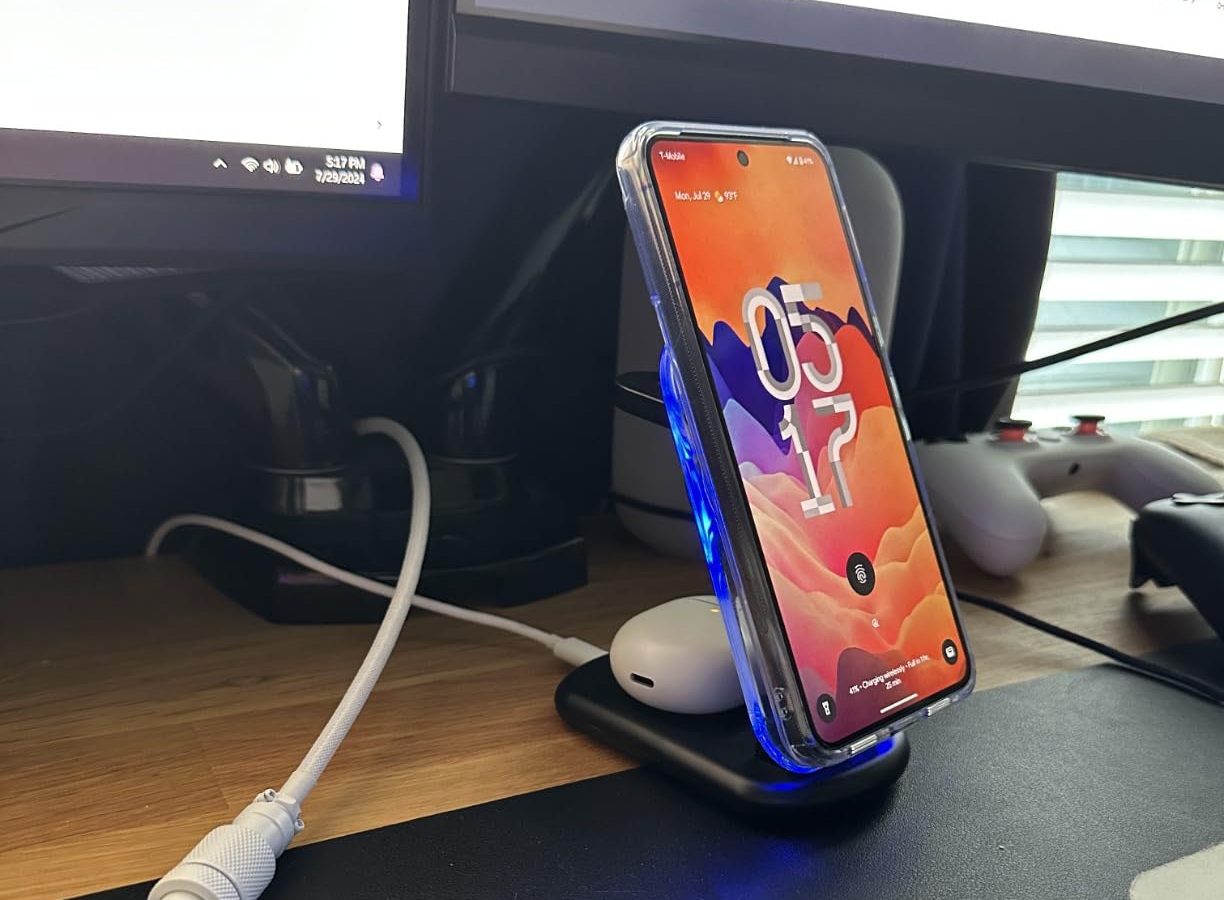
The three-in-one charging stand has become a fixture in many Apple households: iPhone, Apple Watch, AirPods, all powered from a single base. It’s efficient and tidy, but it also means every device in the ecosystem occupies the same permanent spot. That clustering creates a new behavioral pull—everything is always charged, always visible, always available.
Foldable versions of these chargers represent a different instinct. A stand that collapses into a compact cube can be tucked into a drawer or packed into a bag, which means the charging setup becomes temporary. The devices no longer have a fixed home. They charge, then the infrastructure disappears.

This design appeals to users who feel the constant presence of their devices has become intrusive. A charging stand on a nightstand means the iPhone, Watch, and AirPods are all within arm’s reach at night, all emitting small lights, all ready to interrupt sleep. Folding the charger and putting it away creates physical distance, which makes it harder to reflexively check notifications.
The travel framing is secondary. While foldable chargers are marketed as portable, their real appeal is the ability to dismantle the ecosystem at home. Users are choosing setups that let them control when and where their devices are charged, rather than committing to a permanent charging zone that anchors the devices in place.
SIMILAR
Why iPhone users are carrying standalone noise machines instead of relying on sleep apps
Apple Watch charging became a bedside ritual, here's why the placement matters more than expected
iPhone users are quietly giving up the cable and most dont realize why it happened so gradually over time
The inclusion of a night light in some models reflects a competing instinct: the charger should also serve as ambient infrastructure, something that stays out all the time. That feature suggests manufacturers aren’t sure whether users want the charger to be visible or hidden, so they’re building for both behaviors.
Apple’s MagSafe standard has enabled this shift. Magnetic alignment means charging no longer requires precise cable placement, which makes foldable stands practical. A stand that collapses doesn’t need to expose fragile connectors. The magnets do the work, even after the stand has been packed and unpacked repeatedly.
The tension here is between convenience and presence. A charging stand that’s always set up makes it effortless to keep devices powered. A foldable charger makes it effortless to remove that infrastructure entirely. The choice reflects how users feel about the ecosystem’s gravitational pull.
Previously listed around $48, current versions of foldable multi-device charging stands now appear closer to $40 in some listings.
"Note: Readers like you help support The Apple Tech. We may receive a affiliate commission when you purchase products mentioned on our website."