

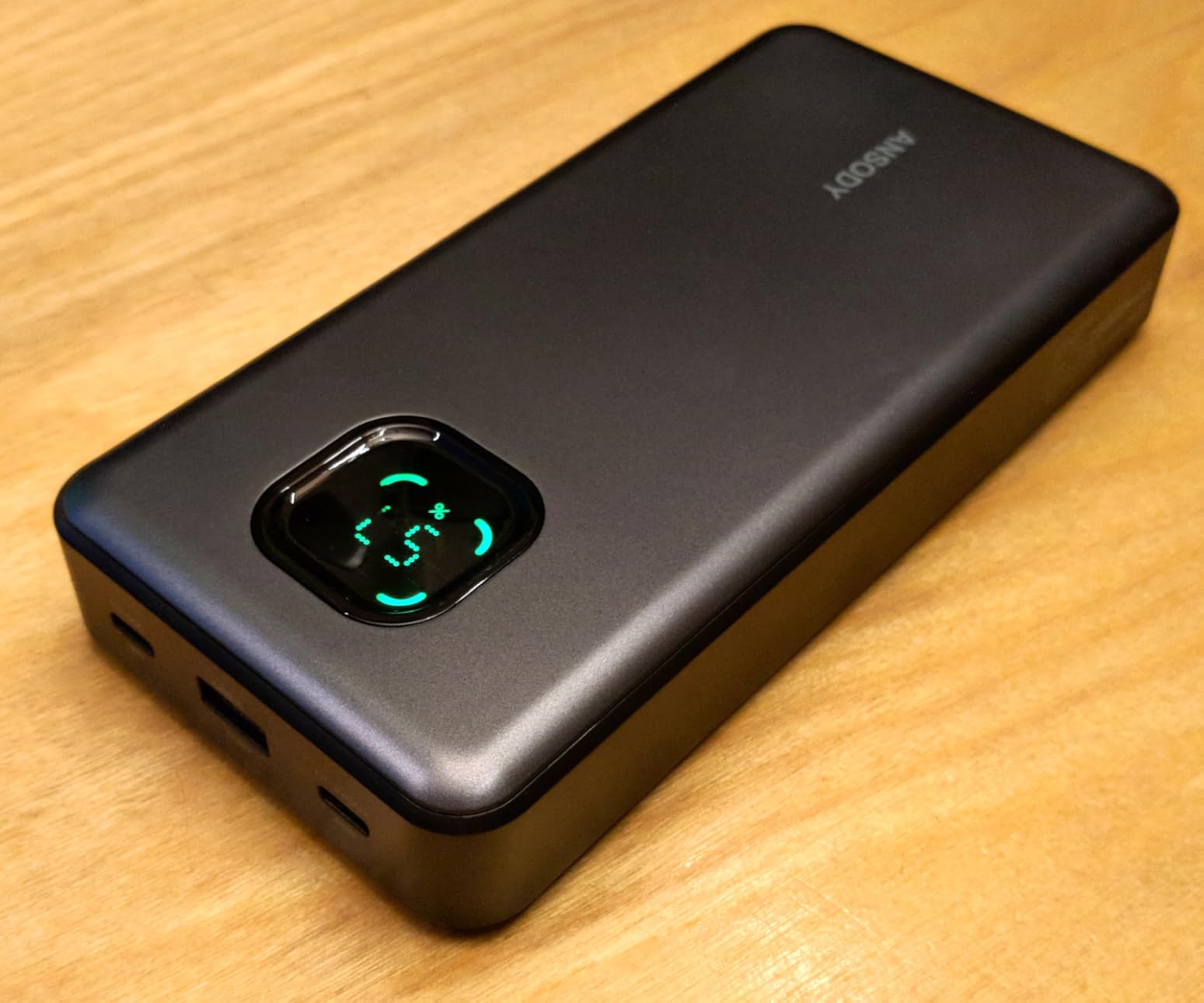
The appeal isn’t maximum capacity—it’s enough capacity without the weight penalty. For iPad users who move between home, office, and transit, the 25,000mAh battery pack has become the Goldilocks solution: enough power for a full day of work, light enough to toss in a tote bag without thinking twice.
This mirrors a broader behavioral shift. Tablets have stopped being “entertainment devices” and started being primary computers for a subset of professionals—writers, designers, field workers—who value portability over raw horsepower. The iPad, especially with a keyboard case, is their MacBook. And like any primary machine, it needs reliable, portable power.

But these users don’t carry backpacks. They carry messenger bags, crossbody slings, or small daypacks. Every ounce matters. A 50,000mAh battery pack might deliver two full charges, but it also weighs close to a pound. A 10,000mAh pack is lighter, but runs out too quickly if you’re also charging an iPhone and AirPods throughout the day.
The 25,000mAh range hits a strange equilibrium. It’s heavy enough to feel substantial, but not so heavy that it becomes a consideration when choosing a bag. It delivers enough power to eliminate range anxiety, but not so much that you’re carrying unused capacity everywhere you go.
What’s interesting is how this has changed the rhythm of charging itself. Instead of nightly plug-ins, users charge the battery pack every two or three days, whenever it dips below a certain threshold. The devices themselves—iPad, iPhone, earbuds—charge opportunistically throughout the day, whenever there’s a spare moment and a USB-C cable within reach.
This creates a kind of distributed charging ecosystem. No single device is ever “dead,” because the power source is always in the bag. But no single device is ever “fully charged,” either, because there’s no need. The goal is continuity, not full batteries.
Previously listed at $49.99, current listings hover around $39.97. The pricing reflects commoditization, but also an acceptance: for certain kinds of users, the battery pack is no longer optional. It’s infrastructure.
"Note: Readers like you help support The Apple Tech. We may receive a affiliate commission when you purchase products mentioned on our website."