
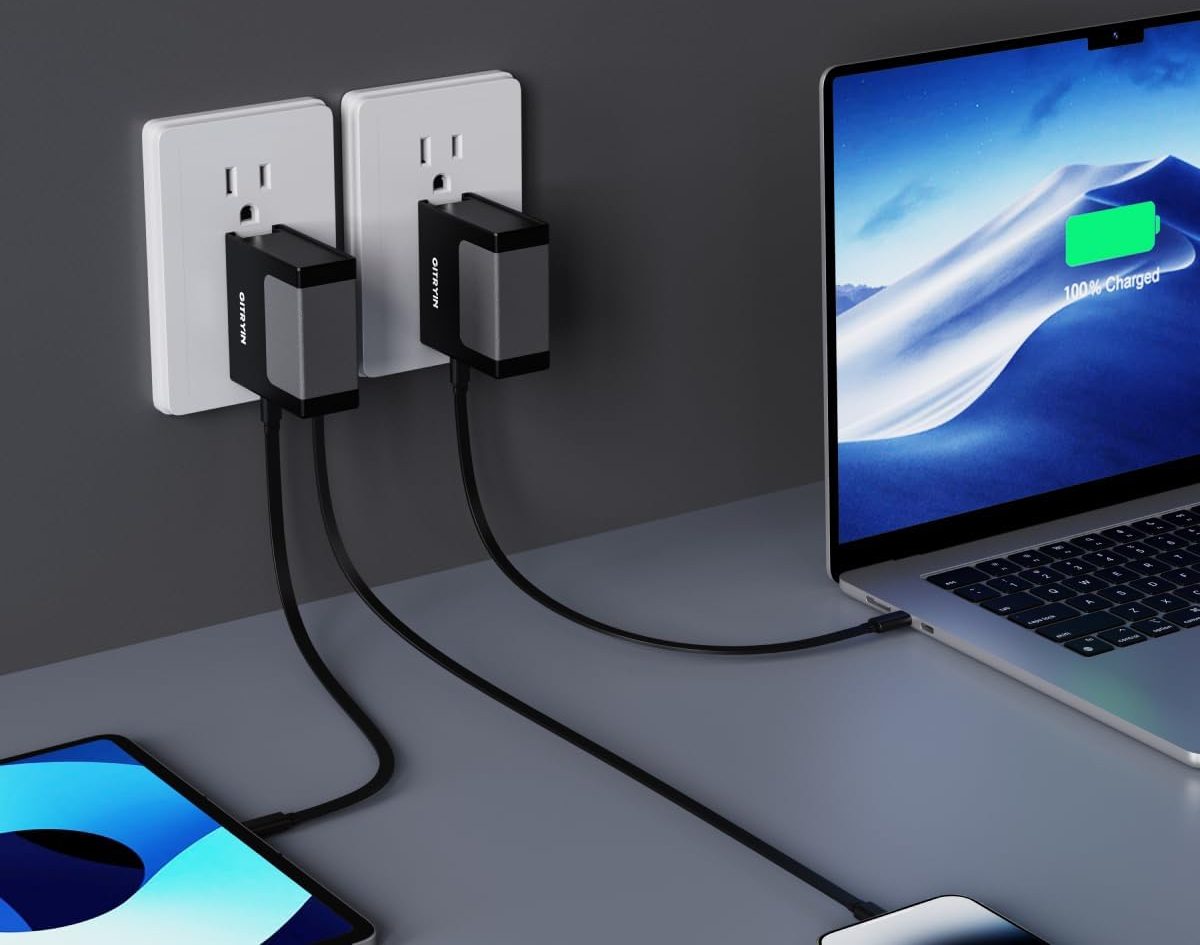
There’s a specific frustration that emerges in hotel rooms, airports, and coffee shops—the realization that the outlet is never where you need it to be. It’s behind furniture, under desks, or positioned at floor level three feet from any surface where you’d actually set a device. The standard solution is to carry a longer cable, which solves the distance problem but creates a different one: what to do with 6.5 feet of cable when you only need three, and where to put all that excess length when you’re packing to leave.
Retractable cables existed for years in the form of bulky spring-loaded mechanisms that eventually stopped retracting smoothly. The newer approach is simpler—a thin cable that winds around a spool built into the charger itself. Pull out what you need, and when you’re done, it coils back into its housing without requiring any particular technique or force. The cable that lives inside the charger doesn’t tangle, doesn’t get left behind, and doesn’t make you choose between reaching the outlet and reaching the nightstand.
The 33.5-inch length hits a specific threshold. Too short, and you’re still stuck positioning your phone on the floor or awkwardly close to the wall. Too long, and the retraction mechanism becomes bulky or the excess cable doesn’t spool neatly. This length reaches from most floor outlets to most bedside tables, from under-desk outlets to desktop surfaces, from airport floor boxes to adjacent seating. It’s not infinite flexibility, but it covers the majority of real-world charging scenarios without requiring you to carry something that feels like extension cord infrastructure.
Foldable prongs seem like a minor detail until you’ve had a charger puncture something in your bag or snag repeatedly when you’re trying to retrieve it. The flat profile when folded means the charger becomes a smooth rectangle that slides into laptop sleeves, jacket pockets, or the small organizational pouches people use for cables and adapters. The difference between foldable and fixed is measured in millimeters, but those millimeters accumulate into whether something is genuinely portable or just technically carriable.
Forty watts occupies an interesting position in the charging speed hierarchy. It’s not the absolute fastest—some phones can accept 65 watts or more. But it’s fast enough that most phones charge in roughly an hour, which is fast enough for the breakfast-shower-pack routine in hotel rooms, fast enough for the coffee shop work session, fast enough that you don’t feel like you’re waiting on the device. Higher wattages generate more heat and stress batteries more aggressively. Forty watts feels like the point where speed and longevity find reasonable balance.
The built-in cable eliminates a category of forgetting. When the cable detaches, you can leave it plugged into the wall while packing the charger, or pack the charger while the cable is still connected to your phone. The number of hotel housekeeping departments holding orphaned Lightning and USB-C cables suggests this happens constantly. When the cable is permanently attached, leaving the charger behind means leaving the whole unit, which is more noticeable. The integration isn’t about convenience as much as it’s about reducing the failure modes of distracted packing.
USB-C compatibility matters differently now than it did three years ago. Phones, tablets, laptops, headphones, portable batteries—most personal electronics have converged on the same connector. A single charger that can adequately power any of them means one less thing to track, one less decision about which charger to pack. The cable is fixed, but the device on the other end can rotate through whatever needs power that day. The flexibility moved from the hardware to the use case.
Black remains the default color for charging accessories, which reveals something about how people want them to behave. Visibility would be helpful for not leaving them behind. But camouflage seems preferable—the charger should disappear into bags, blend into dark outlets, avoid drawing attention on cafe tables. It’s infrastructure, not statement piece. The color choice is about being forgettable in the right ways.
What’s interesting is who this product is for. Not people who need to charge four devices simultaneously. Not people who want the smallest possible charger regardless of cable situation. It’s for people who’ve identified a specific friction point: cable management while traveling. The retractable mechanism adds bulk compared to the minimal USB-C bricks Apple ships. But for the person who’s arrived at a hotel, plugged in their phone, and then stared at the coiled mess of excess cable on the nightstand wondering why this is still a problem they’re solving manually, the trade-off reverses. Slightly larger charger, significantly reduced irritation.
The thirty-dollar price point positions this in the “nice to have” category rather than essential infrastructure. It’s not cheap enough to be an impulse purchase, not expensive enough to require serious consideration. It’s the amount people spend when they’ve identified a problem clearly enough to know they want it solved but not so urgently that they need the solution immediately. It’s permission to fix something annoying, which is a different calculation than permission to buy something new.
"Note: Readers like you help support The Apple Tech. We may receive a affiliate commission when you purchase products mentioned on our website."