
The way people position their devices while driving has shifted as iOS navigation became essential rather than optional. Dashboard real estate is now contested space.
There’s a specific moment when someone decides their car’s factory cup-holder phone solution isn’t working anymore. Usually it happens during navigation—when you’re trying to follow directions on an unfamiliar highway and the phone sits too low, forcing your eyes down and away from traffic for too long. The cognitive load becomes obvious. You need the screen closer to your sight line.
This isn’t about convenience in some abstract sense. It’s about how completely iOS maps have replaced the mental model of getting lost and figuring it out. Most people under forty don’t maintain a backup navigation strategy. There’s no printed map in the glove box. They haven’t memorized major routes. The iPhone holds all of that knowledge, which means its position in the car suddenly matters in ways it didn’t when phones were just for calls.
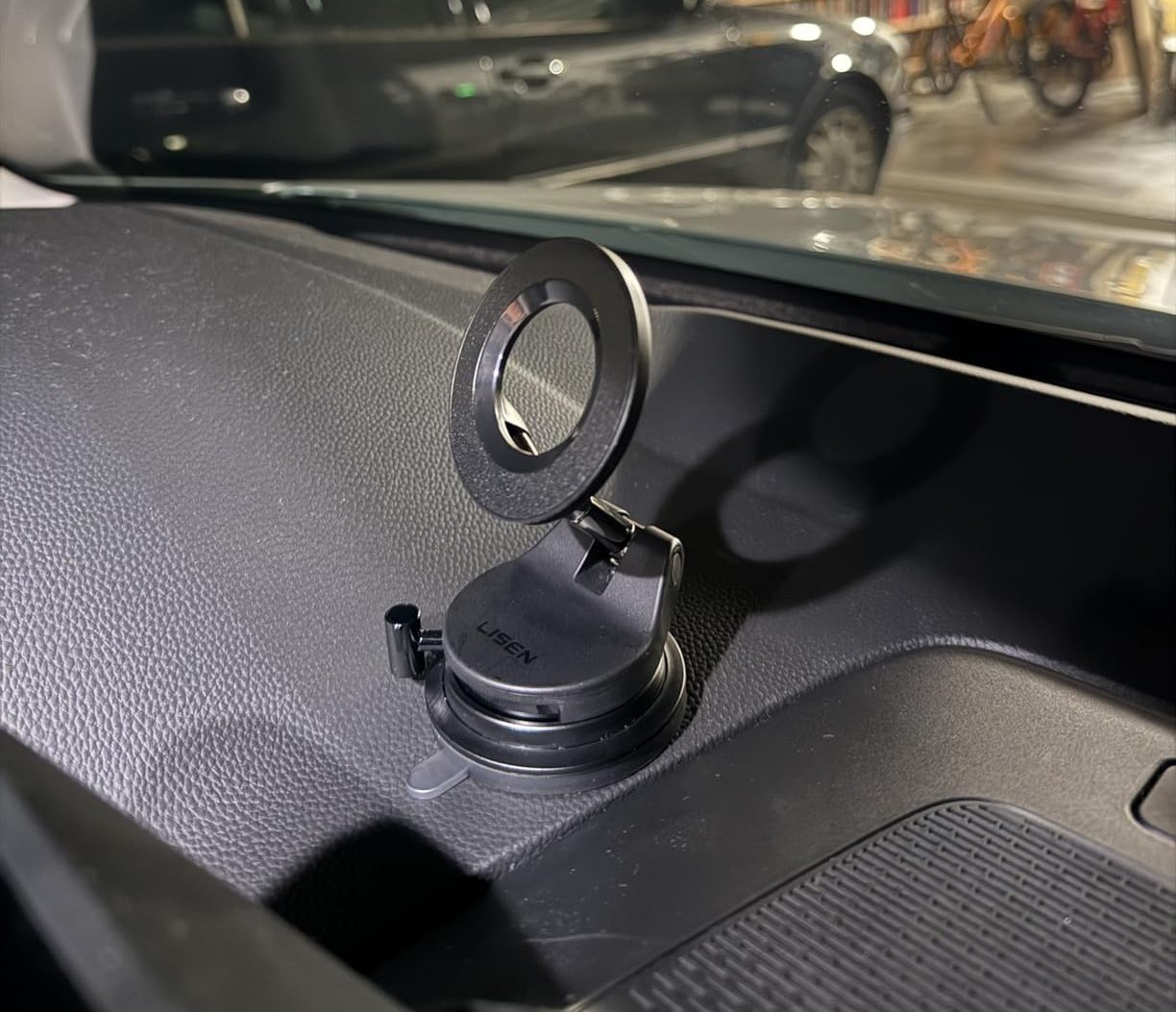
What emerged is a scramble for better placement. People started attaching magnetic mounts to air vents, dashboards, windshields—anywhere that brought the phone into peripheral vision while keeping hands on the wheel. The mounts themselves have proliferated into dozens of designs, each solving for slightly different dashboard geometries or phone case thicknesses.
The magnetic element is what made this shift possible. Older mounts used clamps or grips that required two hands to insert and remove the phone. That created friction at both ends of every trip. You’d skip mounting the phone for short drives, then find yourself needing navigation anyway and trying to prop it somewhere inadequate. Magnetic attachment reduced the barrier to basically zero.

This also changed how people think about their phone’s accessibility during drives. It’s not just for navigation anymore. It’s controlling music, displaying incoming calls, showing message previews, running podcast apps. The phone has become the car’s entertainment and communication interface by default. Car manufacturers are still catching up to this reality with Apple CarPlay integration, but many vehicles on the road predate that solution.
There’s also a safety calculation happening that’s rarely articulated. People know they shouldn’t handle their phone while driving, but they also know they will glance at it. A mount positioned well means those glances are shorter and less dangerous than reaching for a phone in a cup holder or lap. It’s harm reduction rather than elimination.
The result is that iPhone users have essentially retrofitted their vehicles with what car designers should have anticipated years ago—a dedicated, accessible location for the device that actually runs their driving experience. The car’s built-in systems didn’t keep pace with how quickly smartphones became essential infrastructure.
Previously listed at $29.99, magnetic windshield and dashboard mounts now current listings hover around $9.99(CODE WG2FCCZW).
"Note: Readers like you help support The Apple Tech. We may receive a affiliate commission when you purchase products mentioned on our website."