
There’s a specific kind of iPhone user emerging across forums, social media, and casual conversations: the update refusenik. These aren’t people who forget to install new software or who delay updates by a few weeks. They’ve made a deliberate decision to stop at a particular iOS version and stay there indefinitely, regardless of what Apple announces or how many notification badges accumulate on their Settings app. The reasons they give vary in specifics but converge on a central anxiety: that updating will make their phone worse, not better.
This skepticism didn’t appear overnight. It’s the product of years of accumulated experiences, anecdotal evidence shared between users, and a persistent belief that Apple uses software updates as a mechanism to encourage hardware upgrades. The theory goes something like this: new iOS versions are optimized for new iPhone models, and when installed on older devices, they introduce performance penalties that make the phone feel slower, drain the battery faster, and generally degrade the user experience to the point where buying a new device starts to feel necessary. Whether this is intentional design, inevitable technical limitation, or perception bias remains contested, but the belief itself has become widespread enough to influence behavior.
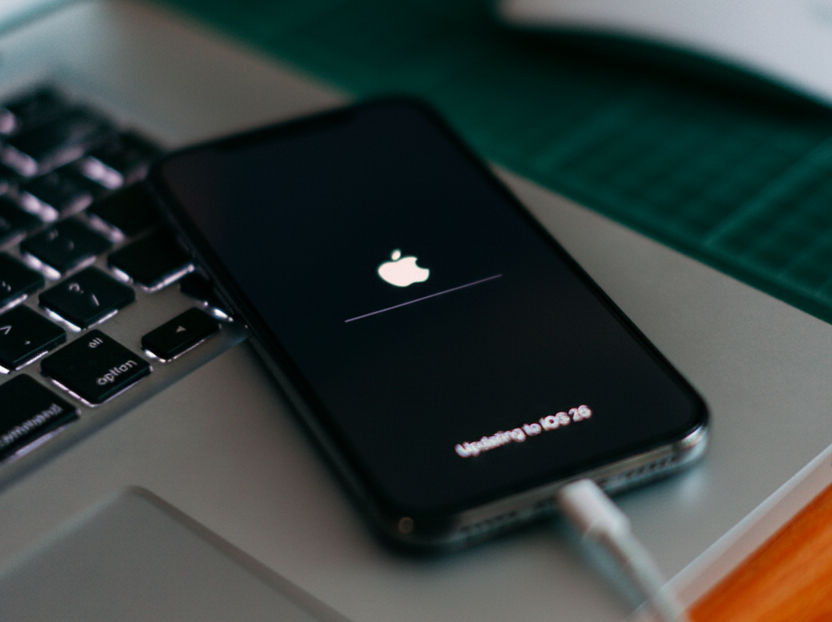
The current resistance centers on users who stopped at iOS 18, installed on devices like the iPhone 15 Pro Max, and who now refuse to move to iOS 26 despite multiple prompts from Apple. The notifications start as gentle suggestions, small badges on the Settings icon. Then they escalate to warnings framed around security, suggesting that staying on older software exposes the device to vulnerabilities and puts personal data at risk. These warnings carry weight because they invoke genuine concerns about privacy and digital safety, but for users who’ve decided not to update, they read as manipulation rather than helpful guidance.
What’s interesting is how these users describe their decision-making process. They talk about battery health percentages as if they’re monitoring vital signs, checking obsessively for signs of decline. They describe performance in subjective but consistent terms: the phone feels smooth, apps open quickly, everything responds the way it did when the device was new. The fear is that updating will break this equilibrium, that the moment they install iOS 26, they’ll notice lag where there was none, background processes consuming energy in ways they didn’t before, and a general heaviness to interactions that wasn’t present on iOS 18.
The features offered in newer iOS versions don’t help the case for updating. When users look at release notes and see changes like redesigned icons, minor interface tweaks, or features that feel incremental rather than transformative, the calculus shifts. Why risk performance degradation for a slightly different home screen appearance? Why accept potential battery drain for features that don’t address actual pain points in daily usage? The cost-benefit analysis, from this perspective, tilts heavily toward staying put.
This creates a strange standoff between Apple and a segment of its user base. Apple builds its ecosystem reputation on seamless integration, continuous improvement, and the idea that software updates make devices better over time. But when users start perceiving updates as threats rather than enhancements, that foundational assumption breaks down. The company can issue security warnings, it can eventually stop supporting older iOS versions in new app releases, it can make staying behind increasingly inconvenient. But it can’t force trust where trust has eroded.
SIMILAR
This 71-inch iPhone tripod with wireless remote drops to $12.74 from $44.99
iPhone 17 Pro Max clear cases fall to $11 as users debate protection trade-offs
Apple Watch braided band pricing hits $7.59, testing user replacement patterns
The behavioral pattern extends beyond individual decisions. People share their iOS version choices in online communities, comparing notes on battery health, performance metrics, and whether specific versions introduced problems. iOS 18 has developed a reputation in these circles as stable, efficient, and worth preserving. Users treat it almost like a vintage software release, something to protect rather than replace. They swap tips on how to disable automatic updates, how to dismiss notification prompts, how to maintain their chosen version in the face of Apple’s encouragement to upgrade.
What complicates this further is the legitimate security dimension. Older iOS versions do eventually accumulate vulnerabilities that Apple patches in newer releases. Staying on legacy software isn’t without risk, and those risks compound over time as new exploits are discovered and security researchers publish their findings. Apple’s warnings about data exposure aren’t entirely fearmongering. But users who’ve chosen to stay behind often accept this trade-off consciously, deciding that the known stability of their current setup outweighs the abstract possibility of a security breach.
The friction becomes more acute when apps start requiring newer iOS versions. Developers build for current software, and eventually, apps stop supporting older systems. Banking apps, messaging platforms, productivity tools—all eventually draw a line and stop functioning on legacy iOS versions. This forces update resisters into a corner, where they either have to upgrade to maintain access to essential services or find workarounds and alternative apps that still support their chosen iOS version. Some users describe this as Apple’s long game, a slow squeeze that makes staying behind increasingly untenable.
For those on newer devices like the iPhone 16 or iPhone 17 who are already running iOS 26, the advice circulating in these communities is counterintuitive: don’t update further. Lock in at the version that came with the device, monitor performance and battery health, and resist the urge to install point releases or future major versions. This represents a fundamental shift in how some people think about software. Updates are no longer seen as necessary maintenance. They’re seen as potential threats to device longevity.
The underlying question is whether this behavior is rational or rooted in misconception. Apple has consistently denied that it deliberately slows down older devices through software updates, except in specific cases like the battery throttling controversy from several years ago, which the company eventually addressed with transparency and user controls. Independent testing of iOS versions on older hardware produces mixed results, with some reviewers finding negligible performance differences and others documenting measurable slowdowns. Battery drain is particularly difficult to isolate, since so many variables affect it—background app activity, cellular signal strength, usage patterns, battery age itself.
But perception doesn’t require objective proof to become behavioral reality. If enough people believe that updating will harm their device, and if they’ve had experiences—direct or through others—that reinforce that belief, they’ll act accordingly. The iPhone becomes something to preserve rather than something to evolve with. Software updates transform from routine maintenance into calculated risks.
This mindset also reflects a broader fatigue with the pace of change in technology. Not everyone wants annual interface redesigns, new features that require learning curves, or changes to workflows that were functioning perfectly well. For some users, the iPhone has reached a point of sufficient capability, where iOS 18 does everything they need it to do, and additions beyond that feel like unnecessary complexity. The update refusal becomes a way of saying: this is enough, I don’t need more, leave my device alone.
What Apple faces is a trust problem that can’t be solved with better marketing or more compelling feature lists. Users who’ve decided updates are harmful won’t be convinced by release notes or keynote presentations. They need evidence from their own usage, and since they’ve chosen not to update, that evidence never arrives. The only way the belief system breaks down is if staying behind becomes genuinely unsustainable—if security breaches occur, if critical apps stop working, if the friction of maintaining an old iOS version outweighs the perceived benefits.
The notification badge remains, persistent and ignored. The warnings about security risks continue to appear. Apple’s messaging around the importance of staying current hasn’t changed. But for a growing number of iPhone users, those messages land differently now. They’re not reminders to improve the device. They’re pressure to accept a change that feels risky, that carries the potential to undo the stability they’ve carefully maintained. The decision to stay on iOS 18 forever might not be forever in practice, but it represents something more enduring: a loss of faith in the idea that updates always make things better, and a willingness to resist the ecosystem’s designed path forward in favor of protecting what already works.
"Note: Readers like you help support The Apple Tech. We may receive a affiliate commission when you purchase products mentioned on our website."