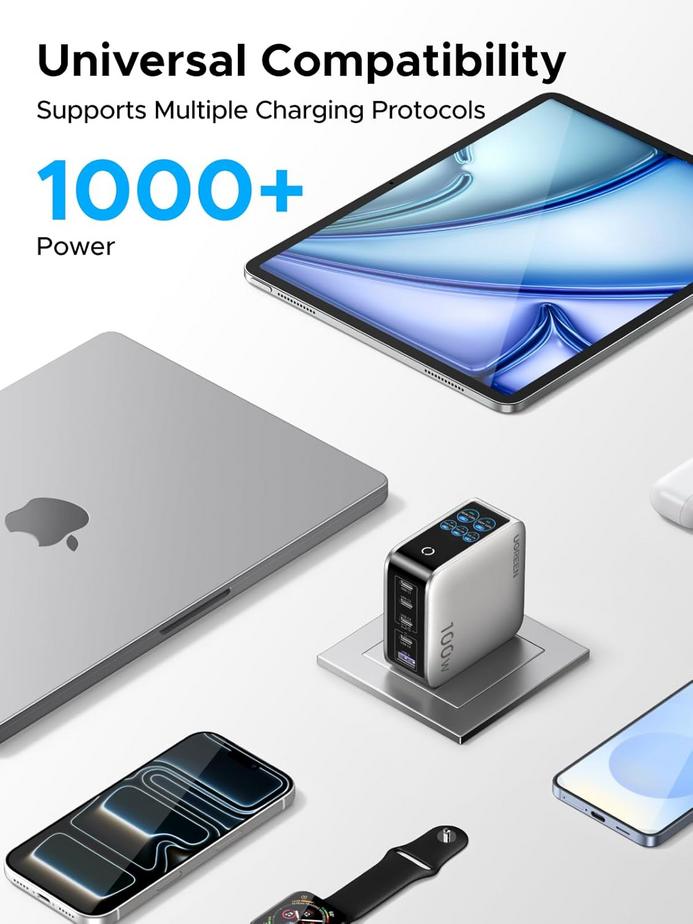


Apple’s MacBook marketing emphasizes all-day battery life—up to eighteen hours of video playback, enough to work from dawn to dusk without seeking an outlet. But those benchmarks assume a specific kind of work: local file editing, static screen brightness, minimal background processes. They don’t account for the modern remote work reality, where a laptop runs Zoom for four hours straight, Slack pings constantly, browser tabs multiply into the dozens, and the screen stays bright enough to combat coffeeshop glare.
Under that load, the MacBook’s battery drains faster than Apple’s estimates suggest. A full charge might last six hours of sustained video conferencing, maybe eight if you dim the screen and close unnecessary apps. For users working full days from cafes, airports, or coworking spaces where outlets are scarce or already claimed, that gap between promised endurance and actual performance becomes a daily negotiation.
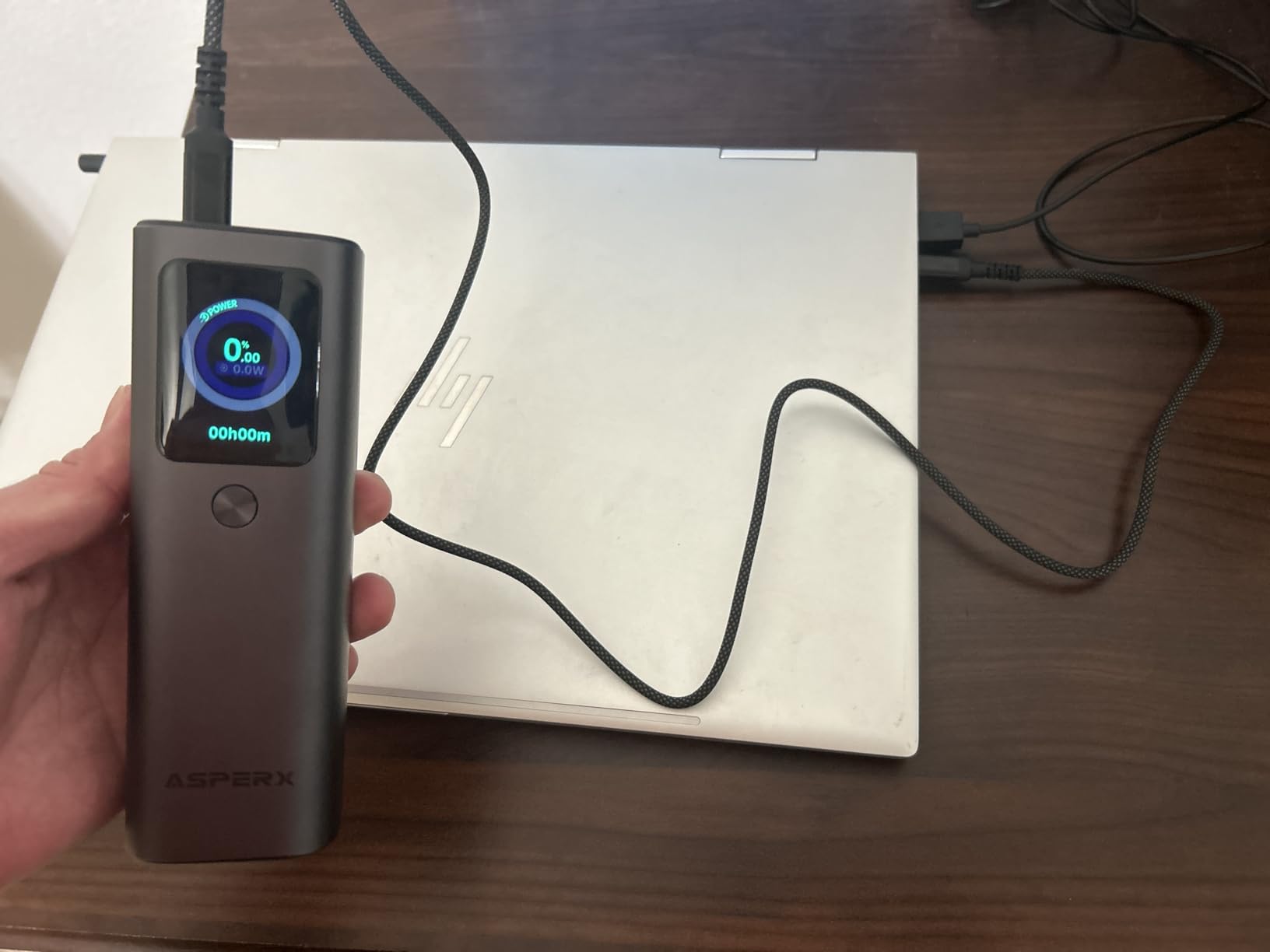
The high-wattage laptop power bank emerged as the solution. Not a phone-focused battery pack scaled up, but a purpose-built device capable of delivering 165 watts—enough to charge a MacBook Pro at full speed while it’s actively in use. It’s not a top-off for emergencies. It’s a second battery, carried deliberately, deployed mid-afternoon when the MacBook drops below 40% and the nearest outlet is occupied or nonexistent.
What makes this behavior notable is its prevalence among users who bought MacBooks specifically for their battery life. These aren’t people pushing aging laptops beyond their capacity. They’re using current-generation hardware, optimized by Apple’s silicon, and still finding the battery insufficient for the workday they’re actually living. The power bank becomes an admission that the “all-day” promise works only if your day looks like Apple’s test conditions, and most days don’t.
SIMILAR
iPhone and MacBook users are compensating for a port problem Apple created
iPhone users are eliminating the tangled cable from every car charging session
iPhone users are transforming nightstands into silent charging infrastructure
The retractable cables add a layer of practicality. A MacBook, an iPhone, and an iPad might all need charging simultaneously during a long work session. The power bank handles all three, cables extending from a single device, eliminating the tangle of separate chargers and adapters. It’s a mobile charging hub, consolidating what would otherwise require three separate power sources into one object that fits in a laptop bag.
Airport work reveals the friction most clearly. TSA-approved means the power bank can pass through security, making it viable for frequent travelers. But the need for TSA approval in the first place signals how essential this accessory has become—it’s not optional gear for edge cases, but baseline infrastructure for anyone whose work involves moving between locations without guaranteed outlet access.
What’s interesting is how this setup mirrors the broader shift in how work happens. The office had outlets everywhere—under desks, along walls, in conference rooms. The MacBook’s battery only needed to survive the commute. But remote and hybrid work mean spending hours in spaces not designed for sustained laptop use. Coffee shops with two outlets for thirty patrons. Airport gates with charging stations monopolized by early arrivals. Coworking spaces where outlet access is first-come, first-served and everyone arrives with multiple devices.
The power bank becomes a second battery you carry not because the MacBook’s battery failed, but because the workday expanded beyond what any single charge was designed to survive. A full day of video calls, collaborative editing, and constant connectivity drains the battery faster than Apple’s benchmarks account for, and the gap gets filled with aftermarket hardware that treats the laptop’s internal battery as insufficient by default.
Previously listed at $89.99, current listings hover around $56.99. That pricing reflects the power bank’s role as professional infrastructure—expensive enough to signal serious use, essential enough that remote workers budget for it the same way they budget for a laptop stand or noise-canceling headphones.
The aluminum unibody design is telling. It’s not consumer electronics styling—it’s prosumer, built to match the MacBook’s aesthetic, signaling that this isn’t an emergency backup but a permanent part of the mobile work setup. The power bank sits next to the MacBook in the bag, not buried at the bottom. It’s deployed regularly, not occasionally. And for a generation of remote workers navigating inconsistent outlet access and battery life that doesn’t quite match the promise, it’s become as essential as the laptop itself.
"Note: Readers like you help support The Apple Tech. We may receive a affiliate commission when you purchase products mentioned on our website."