

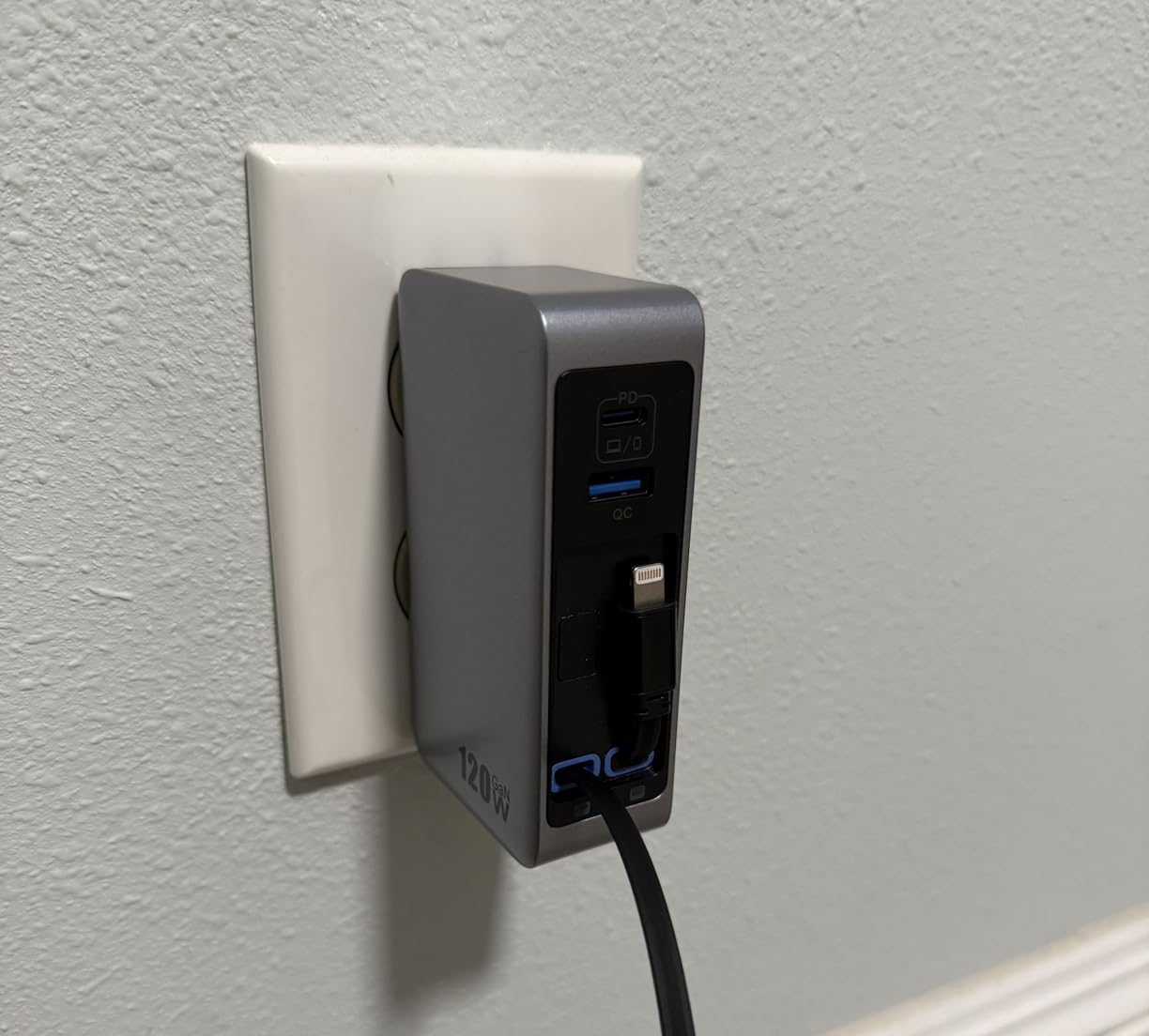
The laptop charged from one cable, the phone from another that pulled out of the same block—no separate adapters needed. For MacBook users who also carry an iPhone and iPad, the traditional travel kit included three items: a laptop power adapter, a phone charger, and cables for each. Each piece occupied bag space and required its own outlet or power strip position.
High-wattage chargers with integrated retractable cables collapse this complexity. A 120W output handles MacBook Pro charging at nearly full speed, while built-in retractable cables simultaneously charge an iPhone and other devices. The foldable plug makes the entire assembly compact enough to slip into a laptop sleeve’s accessory pocket.
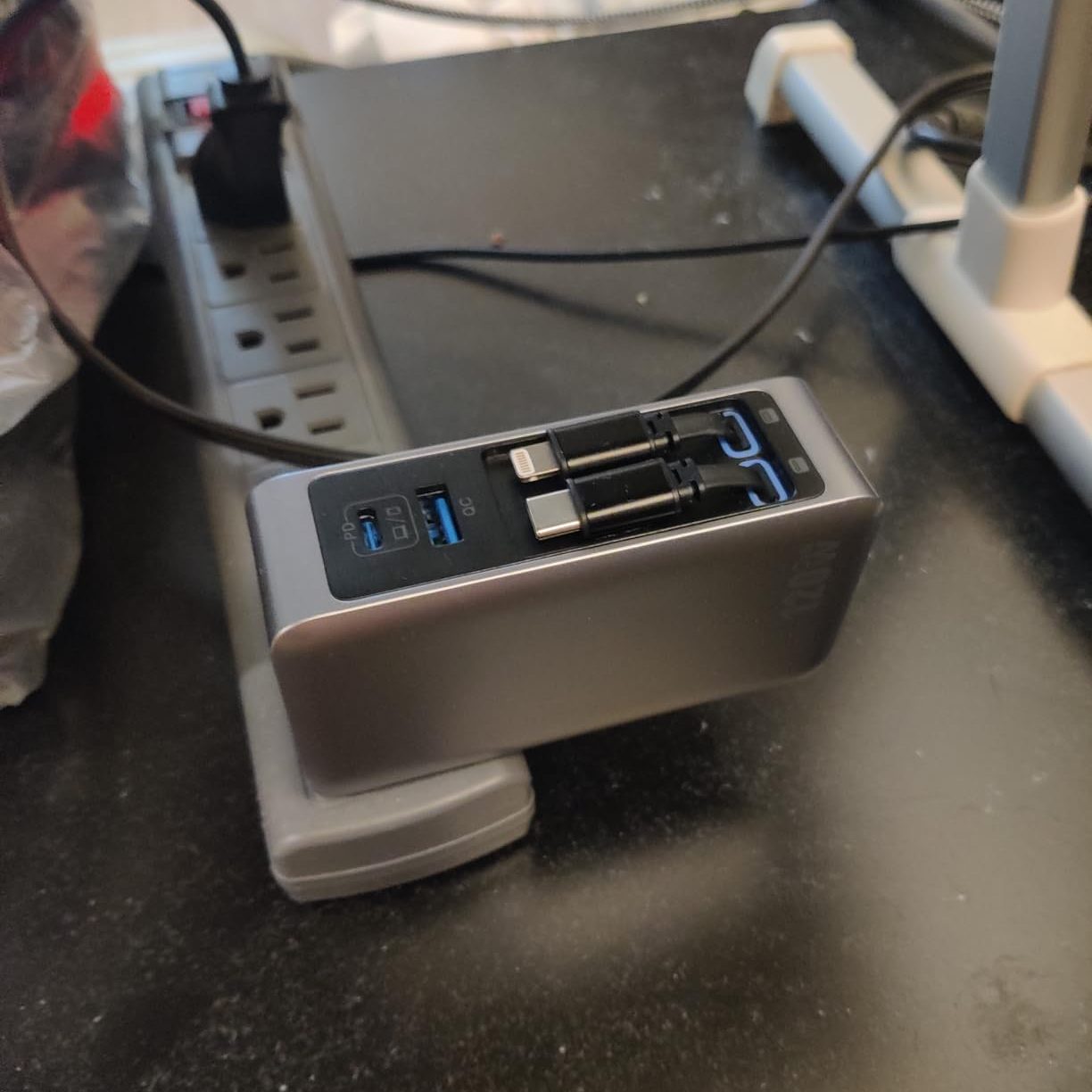
This consolidation matters most for people who work from multiple locations daily—coffee shops, co-working spaces, client offices. Each location has different outlet availability and configuration. Carrying multiple chargers means multiple things to unpack and repack. A single charging station simplifies the ritual of setting up and breaking down a temporary workspace.
The 65W laptop adapter specification is revealing. It’s not quite enough for MacBook Pro 16-inch models under heavy load, which can draw more than 65W when running intensive tasks while charging. But it’s sufficient for maintaining charge during normal work, and more than enough for overnight charging when the laptop is closed. The compromise trades maximum charging speed for reduced carrying weight.
But integrated cables create inflexibility. If you need to charge something across the room, you can’t just grab a cable—the entire charging block has to move, which means unplugging everything else connected to it. Separate cables and chargers are modular. All-in-one designs are efficient but rigid.
What’s interesting is how GaN technology enables this entire category. Fourth-generation gallium nitride chargers run cool enough that packing 120W into a device small enough to fit in your hand doesn’t create safety concerns. Five years ago, this much power in this small a form factor would have been thermally impossible.
Previously listed at $39.95, current listings hover around $31.94. The pricing positions these as premium travel accessories rather than basic necessities, appealing to users for whom consolidation and portability justify paying more than they would for separate, lower-cost components.
"Note: Readers like you help support The Apple Tech. We may receive a affiliate commission when you purchase products mentioned on our website."






