
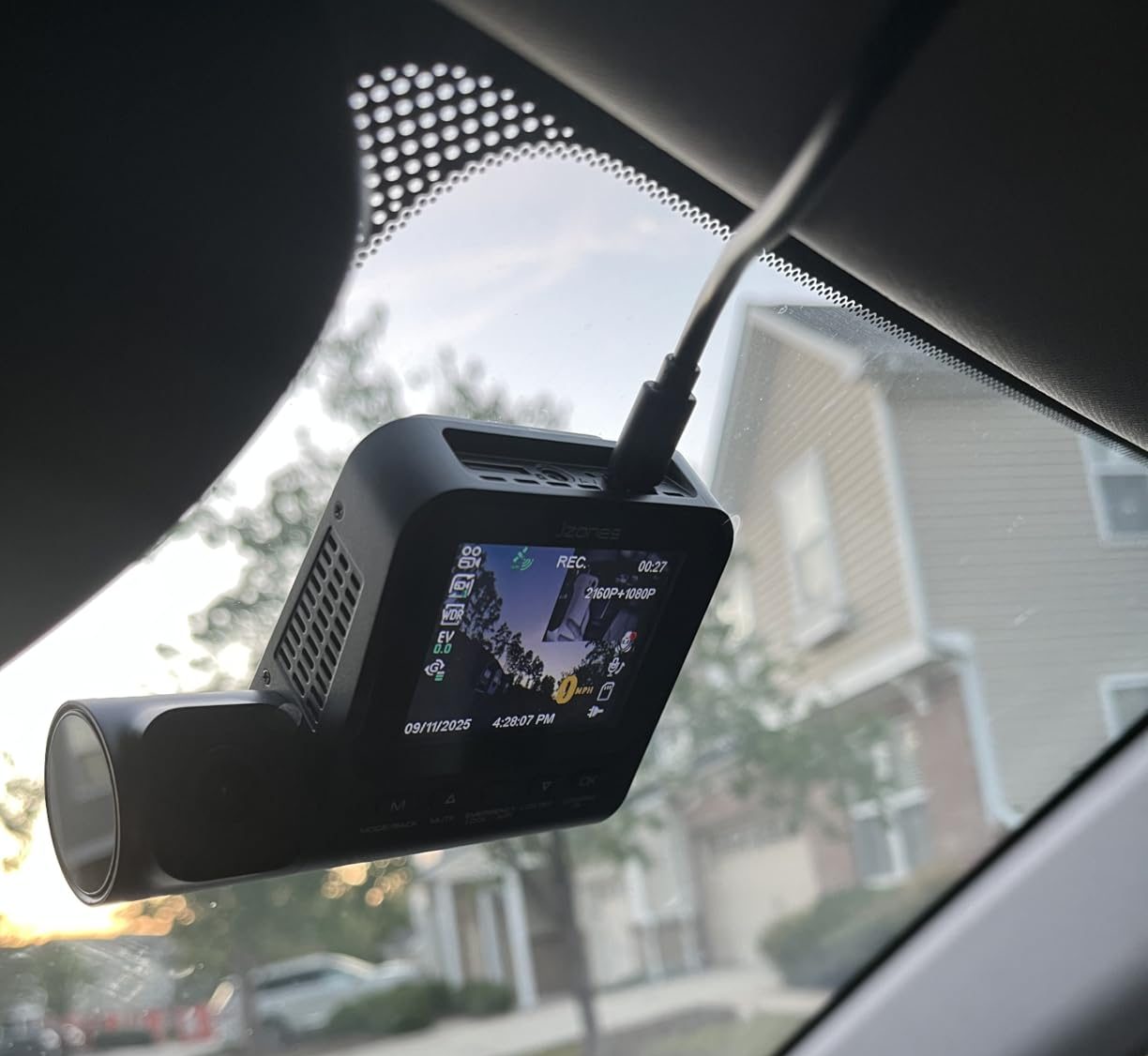
There’s a moment that happens to many drivers, usually after a close call or a friend’s accident story, when they realize they’ve been operating a two-ton vehicle in public spaces with no documentary record of what happens around them. The decision to install a dashboard camera rarely feels proactive. It feels overdue, like finally getting around to something you should have done years ago but kept putting off because nothing bad had happened yet.
The dual-channel configuration has become standard not through technological necessity but through collective pattern recognition. Forward-facing cameras capture what you hit. Rear-facing cameras capture what hits you. The split matters most in parking lots and at intersections, where fault determination often hinges on whose story sounds more plausible. When both directions are recorded, the story stops being a story. It becomes footage, and footage doesn’t negotiate.
Night vision changed the equation for anyone who drives after sunset, which is essentially everyone. Early dashboard cameras were effectively blind in low light, capturing headlight glare and little else. Current sensors can distinguish license plates, lane markers, and pedestrian clothing in conditions where human eyes are already straining. The upgrade isn’t about seeing better than you can—it’s about ensuring the camera can see as well as you remember seeing when you’re asked to describe what happened three weeks later.
GPS integration matters in ways that aren’t obvious until an insurance adjuster asks for specifics. The timestamp proves when. The location data proves where. The speed log proves how fast. These details exist whether or not you remember them, which is the entire point. Memory is negotiable. Sensor data, less so. The camera becomes a second witness that doesn’t get confused, doesn’t misremember, and can’t be accused of bias.
Twenty-four-hour parking mode represents a philosophical shift in automotive ownership. Your car is unattended vastly more often than it’s driven. Shopping trips, work parking, overnight street parking—these are the hours when damage occurs without witnesses, when hit-and-runs happen because the other driver assumes no one will ever know. Continuous recording means that assumption no longer holds. The camera isn’t there because you expect something to happen—it’s there because you’ve accepted that you can’t predict when it will.
WiFi 6 seems like spec sheet inflation until you’re standing next to your car trying to transfer a 4K video file to your iPhone to show a police officer or text to your insurance company. The speed difference between WiFi generations is measured in seconds versus minutes, but those minutes accumulate into frustration when you’re already dealing with an incident. The ability to pull footage immediately, without cables or card readers, without going home first—that’s when the wireless capability justifies itself.
The included storage card matters more than it should, not because 64GB is particularly generous but because it removes one more decision point between purchase and installation. These cameras exist in a category of products people buy because they feel they should, not because they want to research specifications. The fewer choices required, the faster the device moves from box to windshield. Convenience isn’t a feature here—it’s the removal of friction that might delay implementation.
What’s quietly changed is the baseline assumption about accountability on roads. Fifteen years ago, dashboard cameras were associated with Russian drivers dealing with insurance fraud. Now they’re becoming as common as backup cameras, adopted not because driving has become more dangerous but because trust in post-incident resolution has eroded. When everyone’s word is equal, evidence becomes the tiebreaker. When evidence is cheap and automatic, the incentive to install it overwhelms any privacy concerns about recording public spaces.
The 4K resolution feels like overkill until you’re trying to read a license plate in footage recorded while moving at highway speed. The detail level isn’t about cinematic quality—it’s about forensic utility. Can you identify the make and model of a vehicle three cars ahead? Can you read street signs in the background? Can you distinguish whether a traffic light was yellow or red from 100 feet away? The pixel density matters because the footage only matters when something goes wrong, and by then, more detail is always better than less.
Some portion of drivers still operate without cameras, either through inertia or principle. But the cultural momentum is clear. The question has shifted from “why would you record every drive?” to “why wouldn’t you?” Insurance companies offer discounts. Lawyers request footage. Police departments prefer it. The technology has become cheap enough and reliable enough that not having it increasingly feels like an unforced risk. The 10% pricing adjustment just accelerates what already felt inevitable.
"Note: Readers like you help support The Apple Tech. We may receive a affiliate commission when you purchase products mentioned on our website."