Someone left the space heater on in the basement. You’re already in bed, the lights are off, and the realization arrives with that particular middle-of-the-night clarity. You could get up and walk downstairs, flip the switch, come back. Or you could open your phone and turn it off from under the covers. This is the entire value proposition, distilled.
Smart outlets started as novelty. A way to schedule a lamp, maybe, or turn off a coffee maker remotely. But as more devices entered the house—fans, chargers, humidifiers, air purifiers—the outlets became less about automation and more about correction. The ability to fix small mistakes without physically retracing your steps. The heater that should have been off two hours ago. The decorative lights that no one remembered to unplug.
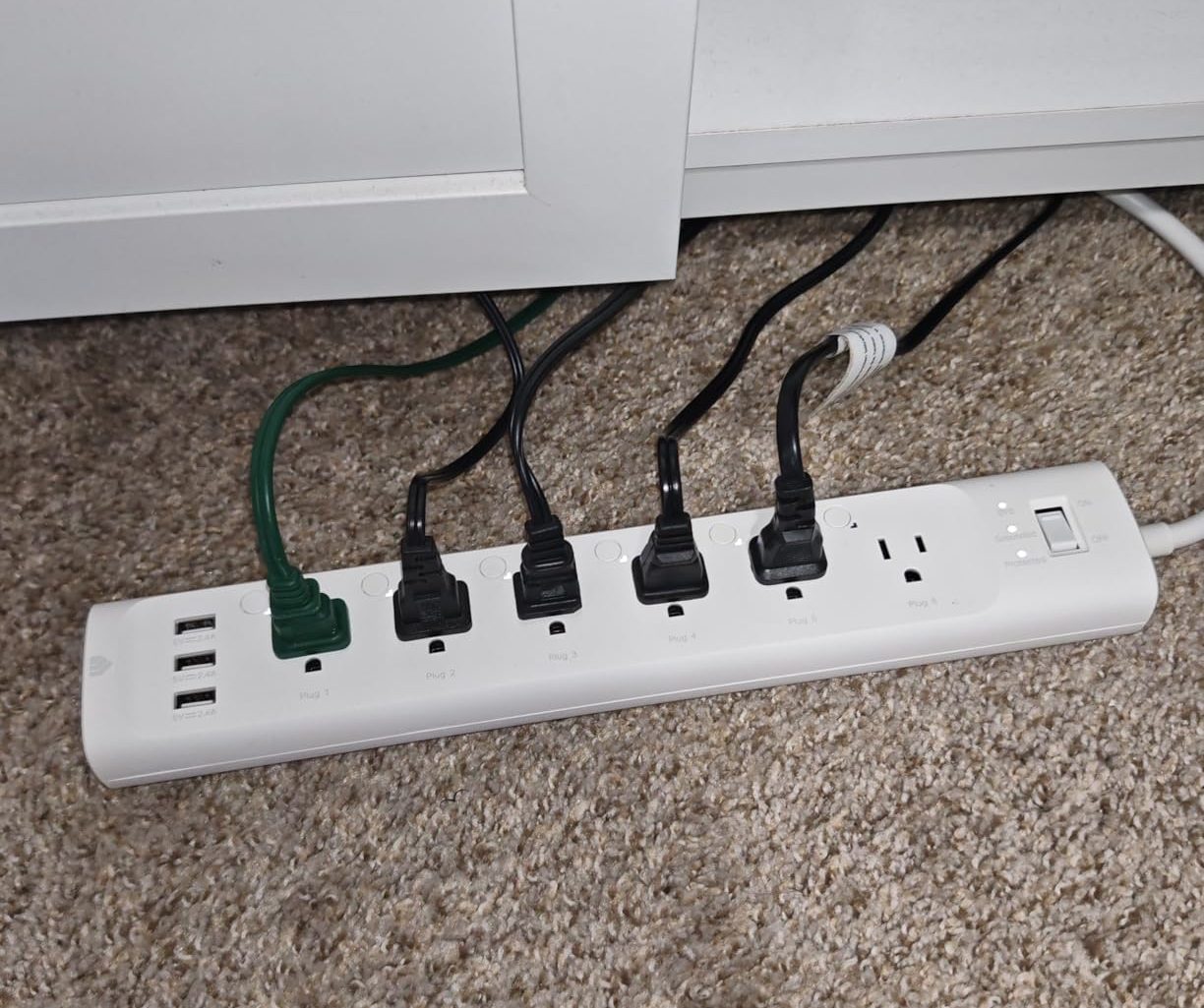
Apple’s HomeKit brought these scattered controls into a single interface, but the real shift happened when people stopped thinking about outlets one at a time. Instead of a lamp in the living room and a fan in the bedroom and a charger in the kitchen, each with its own tile in the Home app, people started clustering. One power strip, six outlets, all controllable as a group or individually. The entire desk setup powers down with one tap. The entertainment center shuts off together. The bedroom becomes a zone, not a collection of unrelated devices.

This changes the relationship with what’s plugged in. When everything flows through individually addressable outlets, visibility increases. The outlet becomes a proxy for intention—what stays on, what gets forgotten, and what should have been turned off three hours ago. The iPhone charger that’s been drawing phantom power since 2022. The router that doesn’t need to run overnight. The holiday lights that never quite got undecorated.
There’s a secondary effect: outlets become portable infrastructure. The power strip that governed the home office during remote work moves to the garage when the home office becomes a guest room again. The outlets reassign themselves to new devices, new purposes. The ecosystem adapts faster than the architecture.
People mention surge protection when explaining why they bought a smart strip, but the real reason is usually simpler. They wanted to stop walking downstairs at midnight to check if the iron was unplugged. They wanted the basement lights to stop staying on for three days straight. They wanted to turn off the window fan from bed without getting up when the temperature finally dropped.
The habit that emerges isn’t scheduling or automation—it’s selective override. Most things stay manual. But the ability to undo a mistake remotely, to turn something off without confirming it in person, becomes a kind of background insurance. Previously listed at $80, current listings hover around $40 for multi-outlet hubs that work directly with the Home app, no separate bridge required. The pitch is convenience, but the actual use is error correction, one forgotten outlet at a time.
"Note: Readers like you help support The Apple Tech. We may receive a affiliate commission when you purchase products mentioned on our website."