

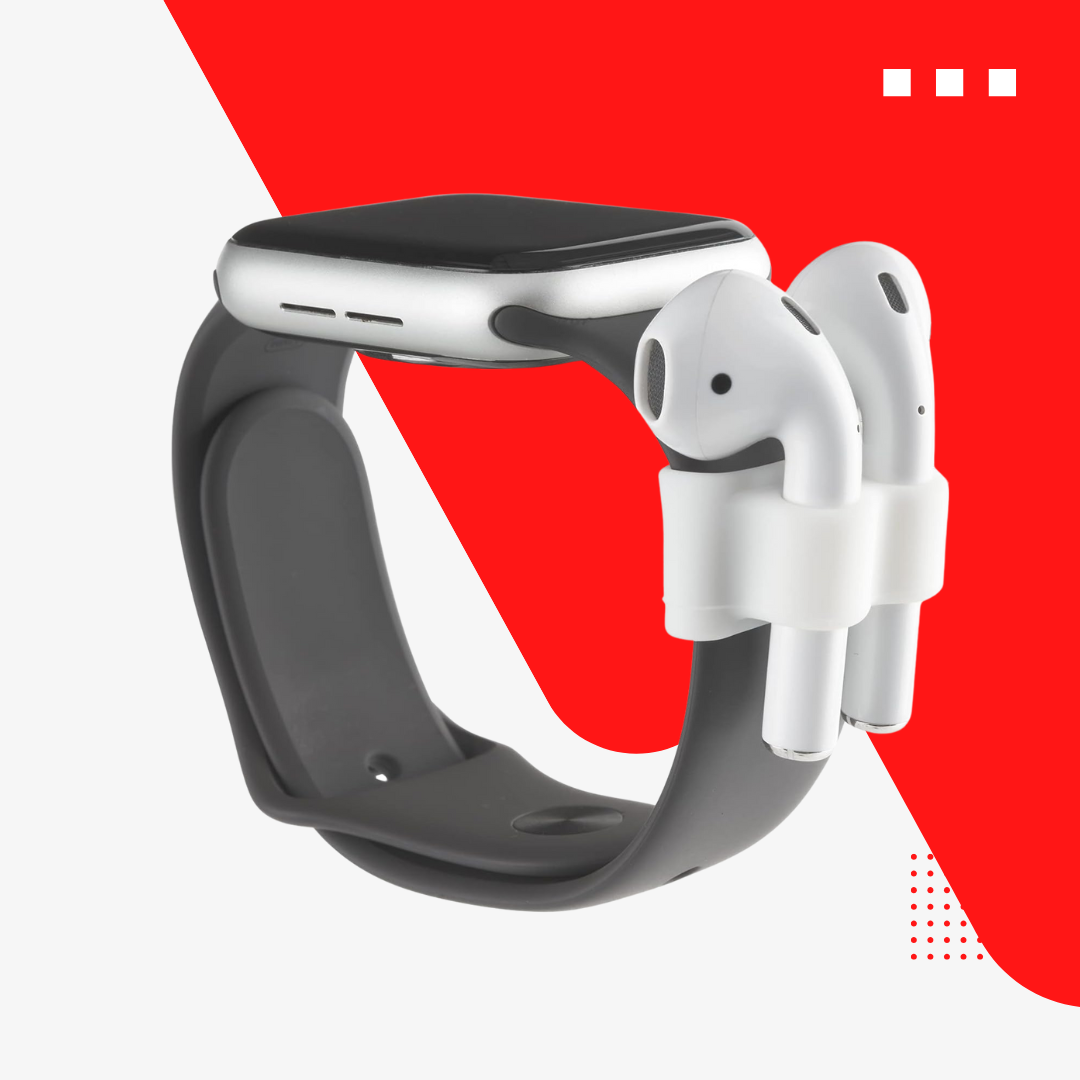
As Apple Watch and AirPods both become essential daily gear, the friction of carrying two separate wireless devices has pushed users toward accessories that merge them into a single wearable system.
The Apple Watch tracks workouts. AirPods provide the soundtrack. These two devices are nearly inseparable during runs, gym sessions, or commutes, yet Apple offers no integrated way to carry them together. The Watch stays on your wrist all day, but the AirPods live in a pocket or bag, creating a split between two devices that are almost always used in proximity to each other.
This separation creates small but persistent friction. You reach for your AirPods and realize they’re in a jacket you’re no longer wearing. Or they’ve fallen to the bottom of a bag, forcing you to dig through other items while standing on a train platform. The AirPods case is small enough to misplace and smooth enough to slide into places you don’t intend. Find My can locate them, but only after you’ve already noticed they’re missing.
Wristband-mounted holders address this by attaching the AirPods case directly to the Apple Watch band. The case clips or slides onto the band, usually on the underside of the wrist, creating a combined carrying system. Your Watch and AirPods become a single unit that you put on and take off together. The solution is inelegant—it adds bulk to the wrist, the case protrudes visibly, and the ergonomics aren’t natural—but it eliminates the pocket-checking ritual.

This workaround reflects a broader tension in Apple’s ecosystem. The company designs individual products beautifully, but the connective tissue between them—how they physically coexist, how you transport them together, how you manage them as a system rather than as discrete objects—often gets left to users to figure out. The Watch and AirPods integrate seamlessly through software. Bluetooth pairing is instant. Audio switches automatically. But physically keeping them together requires aftermarket accessories that Apple doesn’t make.
The placement on the wrist changes how you interact with the AirPods case. Opening it requires more deliberate movement. You can’t casually flip it open with one hand the way you might when it’s in your pocket. The case becomes less accessible in some ways, more secure in others. You’re trading convenience of access for certainty of location. The AirPods are always where the Watch is, which means you always know where they are, even if reaching them requires more effort.
Workouts highlight both the utility and the awkwardness of wrist-mounted AirPods storage. You don’t need to carry a separate pocket or armband for your phone and AirPods—everything you need for a run exists on your wrist. But the added weight and bulk affect comfort, especially during activities that involve wrist movement. The case shifts slightly with each arm swing. You become aware of its presence in a way you’re not with the Watch alone.
The accessory exists because Apple hasn’t addressed this use case natively. The Watch has no integrated storage for AirPods. The AirPods case has no attachment point for Watch bands. The two products were designed independently, and while they work together wirelessly, they don’t acknowledge each other’s physical presence. Users who want them combined have to add hardware that was never part of Apple’s vision for how these devices should be carried. Previously listed at $15, current listings hover around $5.99 for holders compatible with various AirPods models. The low price reflects how utilitarian these accessories are—they solve a problem simply, without elegance, filling a gap that Apple left open.
"Note: Readers like you help support The Apple Tech. We may receive a affiliate commission when you purchase products mentioned on our website."



